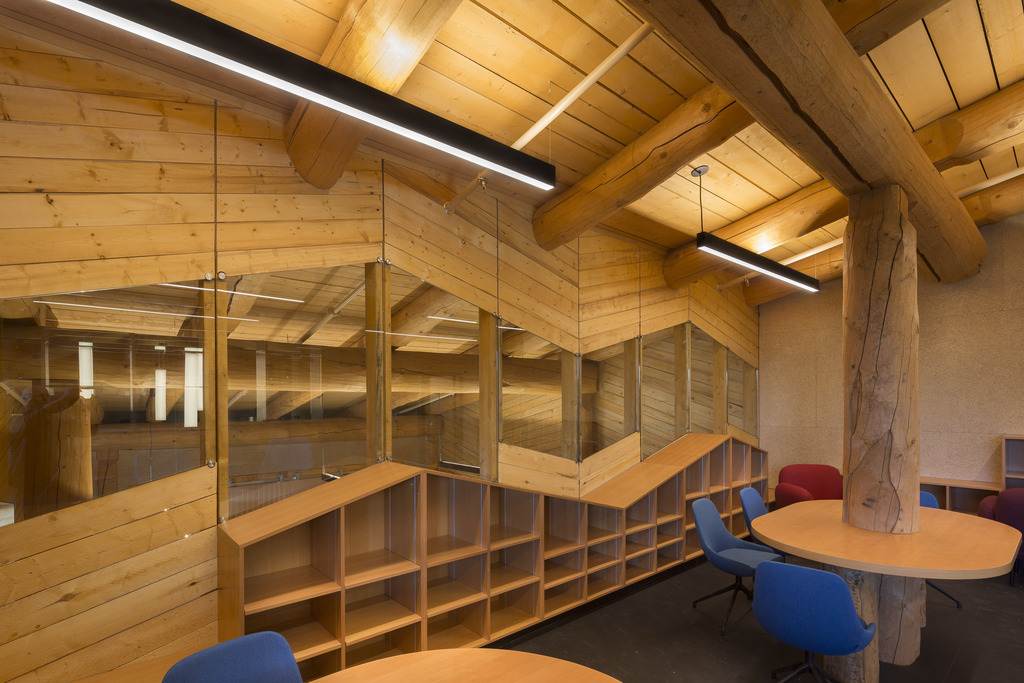
Category: First Nation

Profile of an Indigenous community where Write to Read BC installs a library.

  • Gitanmaax

    About the community

    The Gitanmaax Band are Gitxsan people live where the Skeena and Bulkley rivers meet, in north-western BC near Hazelton. Gitanmaax was the name of the winter village, which became the current reserve. Gitanmaax means People who Fish by Torchlight.

    The Gitanmaax Band currently has about 800 members living in the community, and about twice as many more living elsewhere.

    Every 2 years, members elect a Chief and 12 council members. Each council member is appointed a portfolio of services that the band administration delivers to the community:

    • Community-member services, including education, social development, child and youth wellbeing, and health.
    • Infrastructure and community services, including lands, housing, public works, and public safety.
    • Professional services, including administration, finance, economic development, band membership, legal counsel, and company management.

    About the library

    Write to Read BC installed a library in Gitanmaax, in collaboration and partnership with the community and council. The library is in the community school, and includes display cases for important cultural objects, wooden models of traditional Indigenous housing, and books about a range of Indigenous cultures and lands.
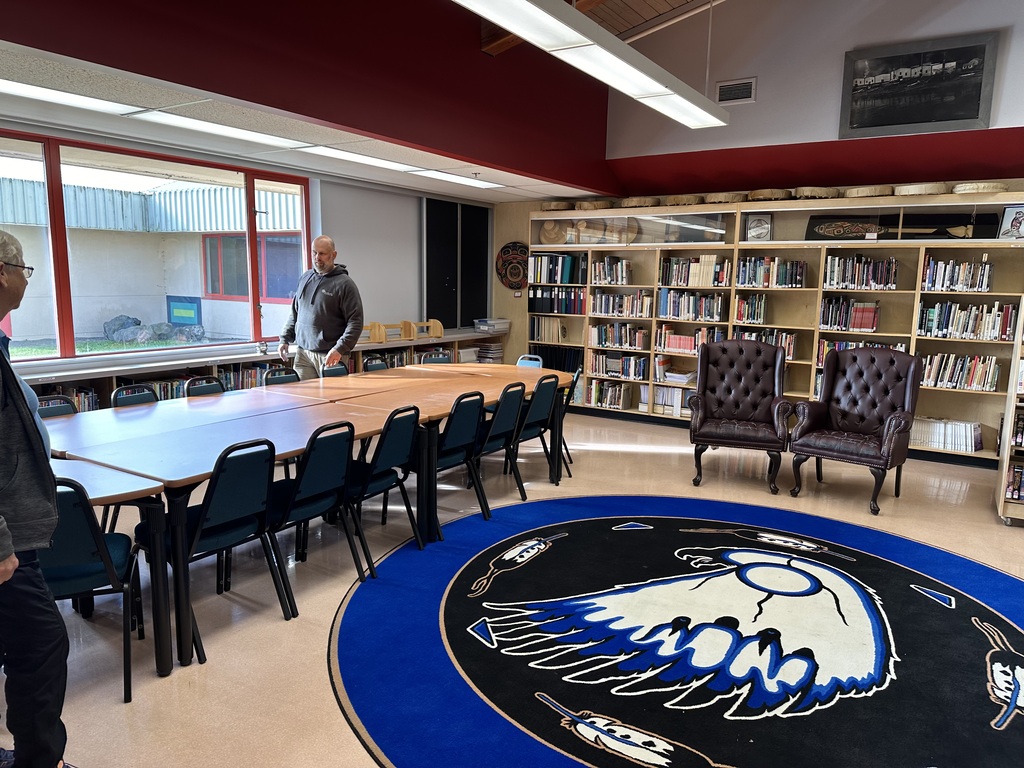
    Hazelton school library, installed by Write to Read BC, with space for working and meeting.
    The newly installed books and important cultural objects.

    The library has tables and seating for working and meeting. Along one wall, it has computers and screens to allow remote attendance at online courses and conferences, in its learning centre.
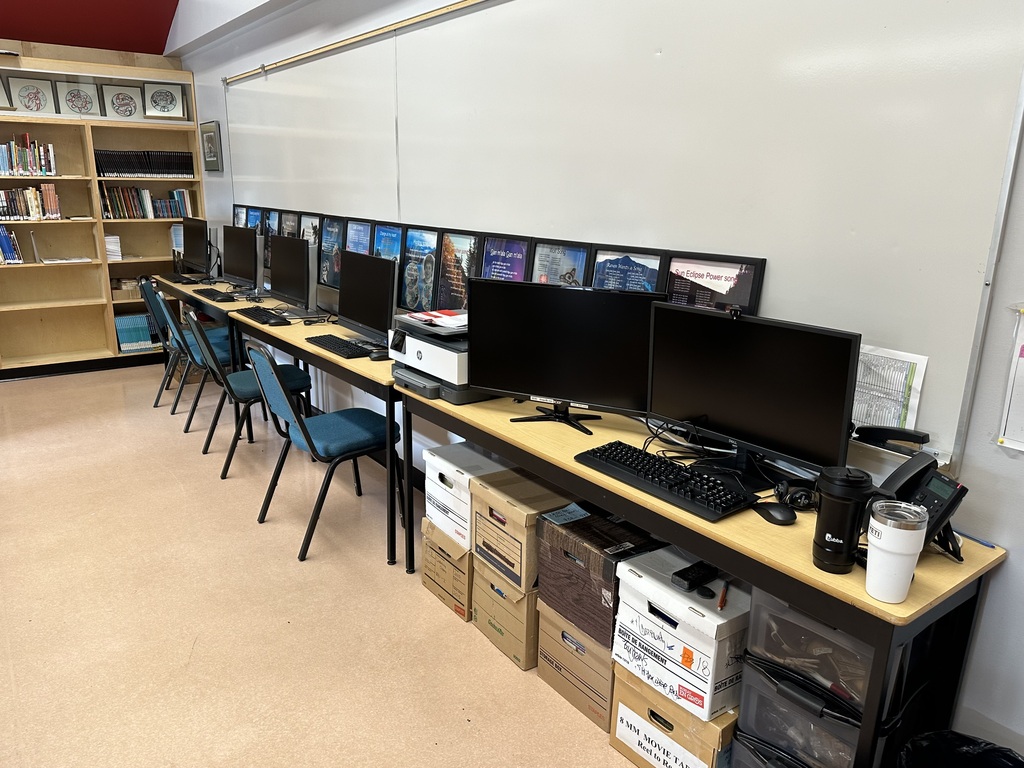
    The learning centre in the Hazelton school library.
    Four workstations and a printer, with the capacity to grow the library’s learning centre.
  • Lheidli T’enneh

    About the community

    The Lheidli T’enneh Band, previously the Fort George Indian Band, are Dakelh and Carrier people who lived where the Nechako River joins the Fraser River, and traditionally included the city of Prince George, BC. Lheidli T’enneh means “The People from the Confluence of the Two Rivers.

    The band used temporary and seasonal settlements across their territory, and archeological evidence shows fishing camps along the Nechako and Fraser rivers as well as in the Beaverly area. The Lheidli T’enneh did not have permanent settlements in what is modern day Prince George until the 1820s arrival of the Hudson’s Bay Company post, Fort George, after which they also began keeping gardens.

    The band government focuses on:

    • Natural resources and stewardship, including hunting permits, lands, fisheries, and related laws.
    • Community services, including health, family development, employment and training, social assistance, and education.
    • Engineering and operations, including ancient forest enhancement, infrastructure asset management, housing, IT, and water treatment.

    The community also has an Elders society whose purpose is to protect and encourage Lheidli T’enneh traditions, language, and culture through access and education.

    About the library

    In a partnership, Write to Read BC and the Lheidli T’enneh Band are designing a library. As the project continues, the library may be installed in 2025 or 2026.

  • Daylu Dena, Lower Post

    About the community

    Daylu Dena, or Lower Post, are Kaska Dena, a tribal council of people in northern BC, the Yukon, and Northwest Territories. Lower Post is on the Alaska Highway, at the northern border of BC and the Yukon, near Watson Lake. About 300 people live in Lower Post. Daylu Dena are a matriarchal society with interrelated families.

    Traditionally, Kaska Dena were a nomadic nation travelling across 100,000 km² of traditional territory to hunt and trap, and trade with neighbouring Nations. In some ways the nomadic life continues as community members continue to follow the seasons, and hunt and gather. Environmental protection is a focus, as is economic development.

    The Daylu Dena Council runs a company that provides a broad range of construction services and heavy-equipment rental across the Yukon and northern BC, ranging from roadworks and earthworks to residential construction, and from labour procurement to environmental remediation.

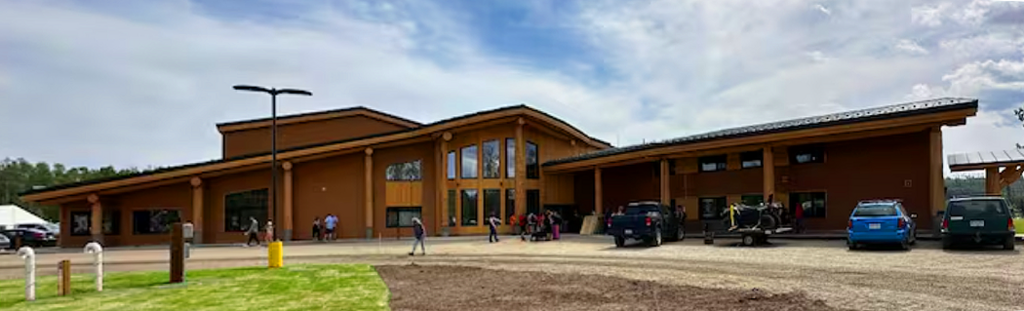
    The community completed a cultural and administrative centre in spring 2024—a building intended as offices for the council, and Services BC. It has a gymnasium, coffee shop, kitchen, library, and more.

    The civic building in Lower Post.
    The building will also house an Indigenous library.

    About the library

    The library that Write to Read BC installed in Daylu Dena’s civic building focuses on Indigenous books. The library opened in the spring of 2024.

    The partially installed library in Daylu Dena cultural and administrative building.
    The library was furnished with shelves under the contract for the entire building. Write to Read BC’s library response team helped install the books, computers, and screens.
  • Xeni Gwet’in

    About the community

    Xeni Gwet’in First Nations Government, part of the Tŝilhqot’in Nation, is about 200 km west of Williams Lake, BC. Tŝilhqot’in is often translated as People of the River, or People of the Blue Water. 

    About one third of the Xeni Gwet’in community’s 400 members lives on their traditional territory. The people in Xeni Gwet’in maintain their land and their system of governance, as they always have. The land is a unique ecosystem, mountainous, crossed by glacial waterways and covered in forest. The government works towards community self-governance, with an emphasis on unity, respect, trust, and pride in the Tsilhqot’in heritage, language, and culture. The goals of Xeni Gwet’in government are to conserve the natural resources of its territory, keep the ecosystem healthy, in an economically sustainable way.

    The band runs the local roads yard as well as a gas-bar, and built a housing subdivision with its own electrical grid, since the community is not connected to the main BC Hydro grid. The band manages its health program, and the local school serves Kindergarten to Grade 8 in three classrooms. Its teachers are long-term residents.

    About the library

    In partnership with the community, Write to Read BC discussed the vision for a library, which was then designed and constructed.