Haida people have occupied Haida Gwaii since time immemorial. Their traditional territory includes parts of southern Alaska, the archipelago of Haida Gwaii, and its surrounding waters.
Pre-contact, the Haida population was in the tens of thousands in several dozen towns throughout the islands. During the time of contact its population fell to about 600, due to introduced diseases such as measles, typhoid, and smallpox. Today, Haida people make up half of the 5,000 people living on the islands. Haida reside throughout the islands but are concentrated in two main centres, Old Massett at the north of Graham Island and Skidegate at the south. Besides these two communities there are 2,000 more Haida scattered throughout the world, including in Vancouver and Prince Rupert.
The Haida Nation collectively holds Title to its territories and the cultural and intellectual property rights of the Haida Nation. All people of Haida ancestry are citizens of the Haida Nation. Every Haida citizen has the right of access to all Haida Gwaii resources for cultural reasons, and for food or commerce, as reflected in the laws of the Haida Nation.
About the library
Old Massett village council operate the library, which was the third library Write to Read BC installed. Its sponsors included Rotary Club of Langley Central, and Britco Structures (now Boxx Modular).
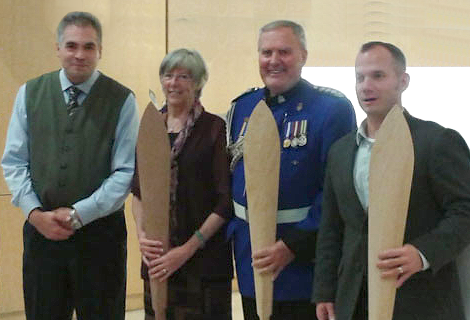
The library officially opened in a ceremony attended by many community members and representatives of Britco and Government House. The opening was followed by a dinner in the community hall. With its books and through Internet access, the library has made a difference in Old Massett.
Ceremonial paddles at the opening ceremony of the library.
Yunesit’in, previously Stone, is part of the Tsilhqot’in First Nation. It’s territory is about 110 km west of Williams Lake, in BC’s west-central interior Chilcotin region, along the south side of the Tsilhqox River. Its offices are located at the town of Hanceville, about 20 north of the Yunesit’in nation. The nation’s language is Chilcotin.
Yunesit’in ancestral stories define the community’s spiritual relationship to the land and the animals; it explains how the land was shaped, and teaches the basis of Yunesit’in law. Yunesit’in have a special relationship with horses, which remain a foundation of their culture.
Yunesit’in are a hardworking people who hunt and fish, and who value the land for its healthy food. The traditional knowledge of how to live from the land is passed, through families, to each generation.
About the library
This was the second library installed by Write to Read BC. Sponsors included Rotary Club of Williams Lake, Rotary Club of Sechelt, Rotary Club of Commerce City in Colorado USA, and Britco Structures (now Boxx Modular).
Historically, the Halalt First Nation had villages on Willy Island (offshore from the town of Chemainus) and in the lower Chemainus Valley. Today, Halalt reserves are found on Willy Island and in the lower Chemainus Valley (although only the latter reserve is occupied).
The Halalt originate from the village of Xeláltxw, which means ‘marked houses’ or ‘painted houses’, a reference to the fact that the house posts in this village were decorated. According to information collected by Rozen (1985), this village was once located in the Cowichan Valley, at the spot where the Silver Bridge currently crosses the Cowichan River, at the south-eastern edge of the city of Duncan. According to Cowichan oral history, the forefathers of both the Cowichan and Chemainus people (Siyóletse and St’éts’en, respectively) originated from this village.
The residents of this village later relocated to a village at the north end of Willy Island, the largest of the Shoal Islands located just off the mouth of the Chemainus River, perhaps in the early part of the 19th Century. When they moved, they took the village name with them. Rozen (1985) reports that, historically, there were at least five or six houses in the village in Willy Island. Although the entire island was designated an Indian Reserve (Halalt Island No. 1), the village was abandoned in the 1920s and the residents moved to the Westholme reserve on the lower Chemainus River (Halalt No. 2).
About the library
This is the fourth library Write to Read BC installed, in partnership with the community. Sponsors included Rotary Club of Steveston, and Britco Structures (now Boxx Modular).
An independent researcher is evaluating the long-term impacts and community perspectives of the Write to Read BC Project, at our request. Working closely with Indigenous leaders, educators, and community members, this research “will culminate in an assessment report that will guide the re-framing and Indigenization of the Write to Read BC Project.”
The assessment is provided by a program at Simon Fraser University that helps SFU graduate students collaborate with non-profit groups and community groups. The program supports research projects that provide plain-language answers to community-driven research questions at low or no cost to the community partner.
collaborate with Indigenous leaders, educators, and community members to gather perspectives on the impact of active and inactive learning centres.
conduct interviews, facilitate protocol-guided information-sharing sessions, and ensure respectful, ethical data collection.
assist in developing “case stories” from selected communities, ensuring informed consent and cultural sensitivity.
document and organize qualitative data to inform the final project report and analysis.
Literature and media review
The study will:
conduct a literature review focusing on the intersections of Indigenous knowledge systems and colonial education practices.
review and summarize “grey literature” and media related to the Write to Read BC project, including speeches, audio/video recordings, and planning documents.
gather and analyse quantitative data on educational outcomes (such as Kindergarten to Grade 12 graduation rates, post-secondary enrolment) in communities with Write to Read BC centres.
identify gaps in the literature or data and recommend additional resources to address these gaps.
Data analysis and reporting
The study will:
analyse qualitative and quantitative data to understand changes in community engagement, cultural connectedness, language revitalization, and educational impacts associated with Write to Read BC learning centres.
assist in preparing interim reports, summaries, and visual presentations to share findings with project stakeholders.
draft a final report, weaving Indigenous knowledge, community insights, and statistical data into a cohesive narrative.
assist in developing recommendations for future iterations of Write to Read BC and strategies to support its ongoing sustainability and alignment with Indigenous sovereignty.
The Tsilhqot’in National Government represents Tl’etinqox (Anaham), Tsi Deldel (Redstone), Yunesit’in Government (Stone), Xeni Gwet’in First Nation Government (Nemiah), Esdilagh (Alexandria), and Tl’esqox (Toosey).
The Toosey First Nation (or Tl’esqox First Nation) is a Tsilhqot’in First Nation in the Fraser Canyon region of BC. It is 50 km west of Williams Lake. Its Indian Reserves include:
Baptiste Meadow Indian Reserve No 2, on Riske Creek, 5 km northwest of the Riske Creek post office, 2.6 km².
Toosey Indian Reserve No. 1, on Riske Creek, 6 km west of its mouth on the Fraser River. 23.4 km².
Toosey Indian Reserve No. 1A, west of Indian Reserve No. 1, about 0.1 km².
Toosey Indian Reserve No. 3, 5 km east of the mouth of Riske Creek, 0.5 km².
Toosey Chief Frances Laceese in 2014
The reserves are about 40 km south of Williams Lake. Many run and work on farms and cattle ranches, or work in trapping or logging. The band has a woodlot license.
Elders provided information about Tŝilhqot’in land use, language, history, traditions, and laws, which played and will play an important role in legal decisions about Title for the Tŝilhqot’in Nation. This information helps protect important sites from logging and mining operations. It also has a purpose in education about Tŝilhqot’in culture, history, laws, and language.
About the library
This was the first library that Write to Read BC installed. Sponsors included Rotary Club of Williams Lake Daybreak, Rotary Club of Langley Central, and Britco Structures (now Boxx Modular).
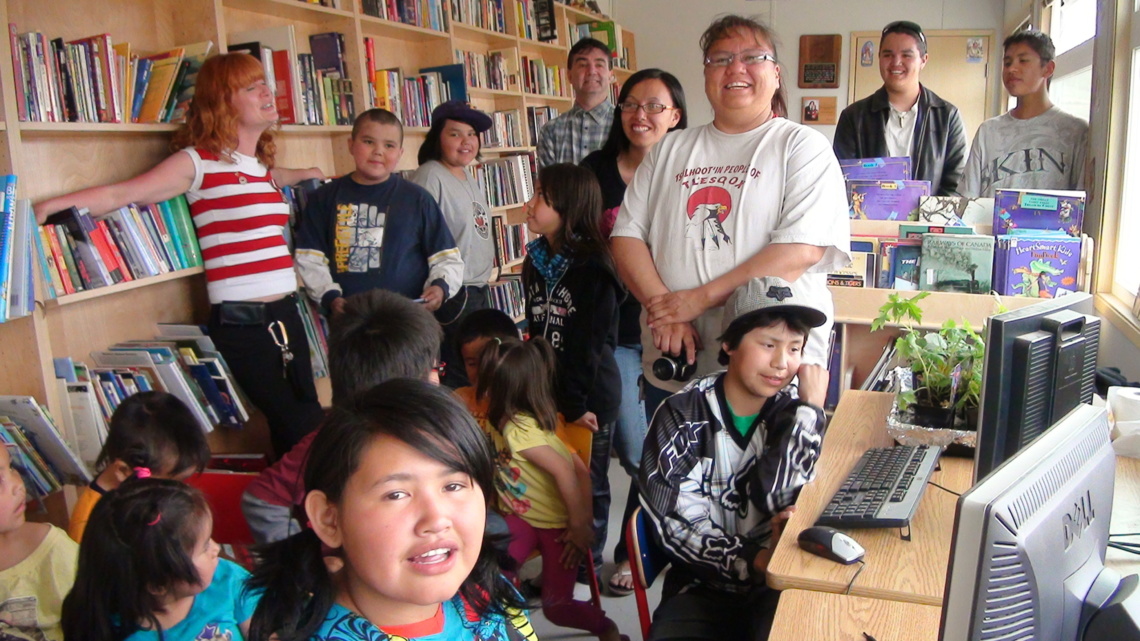
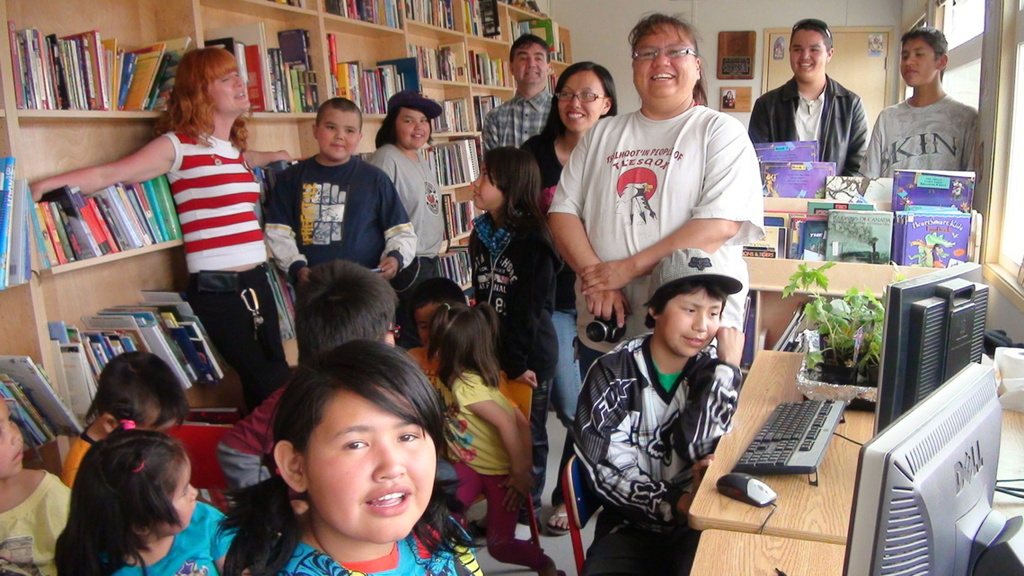
Community members in the library’s learning centre at the Tl’esqox library.
The present-day Heiltsuk Band of Indians, formerly Bella Bella, are the main descendants of Hailhzaqvla-speaking peoples who inhabited an area of approximately 15,000 km² in the central coastal region of BC. Heiltsuk traditional territory extends from the southern tip of Calvert Island, up Dean and Burke Channels as far as Kimsquit and the head of Dean Inlet to the northeast, and up the Mathieson and Finlayson Channels to the north. It includes Roscoe, Cousins, and Spiller Inlets, Ellerslie Lake, the outer coast regions of Milbanke Sound, Queens Sound, the Goose Island Group, and Calvert.
The word Heiltsuk
Heiltsuk, according to grandmother Hilistis Beatrice Brown’s personal communication, originally referred to all Aboriginal people or groups elsewhere. For example, the Gitsxan would have been referred to as Heiltsuk. Over time, as Indian Bands and reserves were established, the present-day Heiltsuk Band was initially registered as the Bella Bella Band, then renamed to Heiltsuk as its formal Title name.
There is also reference to Heiltsuk meaning to speak and act in the right way, which reflects a traditional value that was a foundation of our principles and relations.
Heiltsuk College
The Heiltsuk College is a First-Nation-owned community college in Bella Bella. It offers post-secondary academic programs and training. Waglisla Adult Learning Centre is a seamless adjunct of Heiltsuk College and it offers upgrading programs from basic literacy to Adult Dogwood Grade 12 graduation. This educational institution has been in place for approximately 40 years and is housed in a church basement and in two aging portable trailers.
Aboriginal Student Transitions handbook
Based on the history of successful transitions of Heiltsuk College students from Bella Bella to off-reserve continued education or training, IAHLA took notice and wanted to research what made our college unique in this way. When Joann Green was an instructor, she developed a College Survival Skills mini-course that was a mandatory course for any student who planned to leave the community to attend further education or training elsewhere. Its focus is life skills training, but also gave students a practical tool for navigating systems in the city, such as the transit buses, applying for rental housing, etc. The student supports didn’t end when a student left town—they continued to be supported long distance and received encouragement, Heiltsuk food gifts, or whatever else was required to make their transitions easier. IAHLA worked together with UVIC and NVIT to do create the Handbook, and out of this came the ongoing practice of hosting aboriginal students on campuses in order to give them direct experiences and inspire them to move forward. Several Heiltsuk university students have participated and benefited from this initiative including Jessica Humchitt, who is enrolled in Health Sciences at SFU. This wrap-around service is seen as a best practice because it is a natural process that not only supports but also dignifies students.
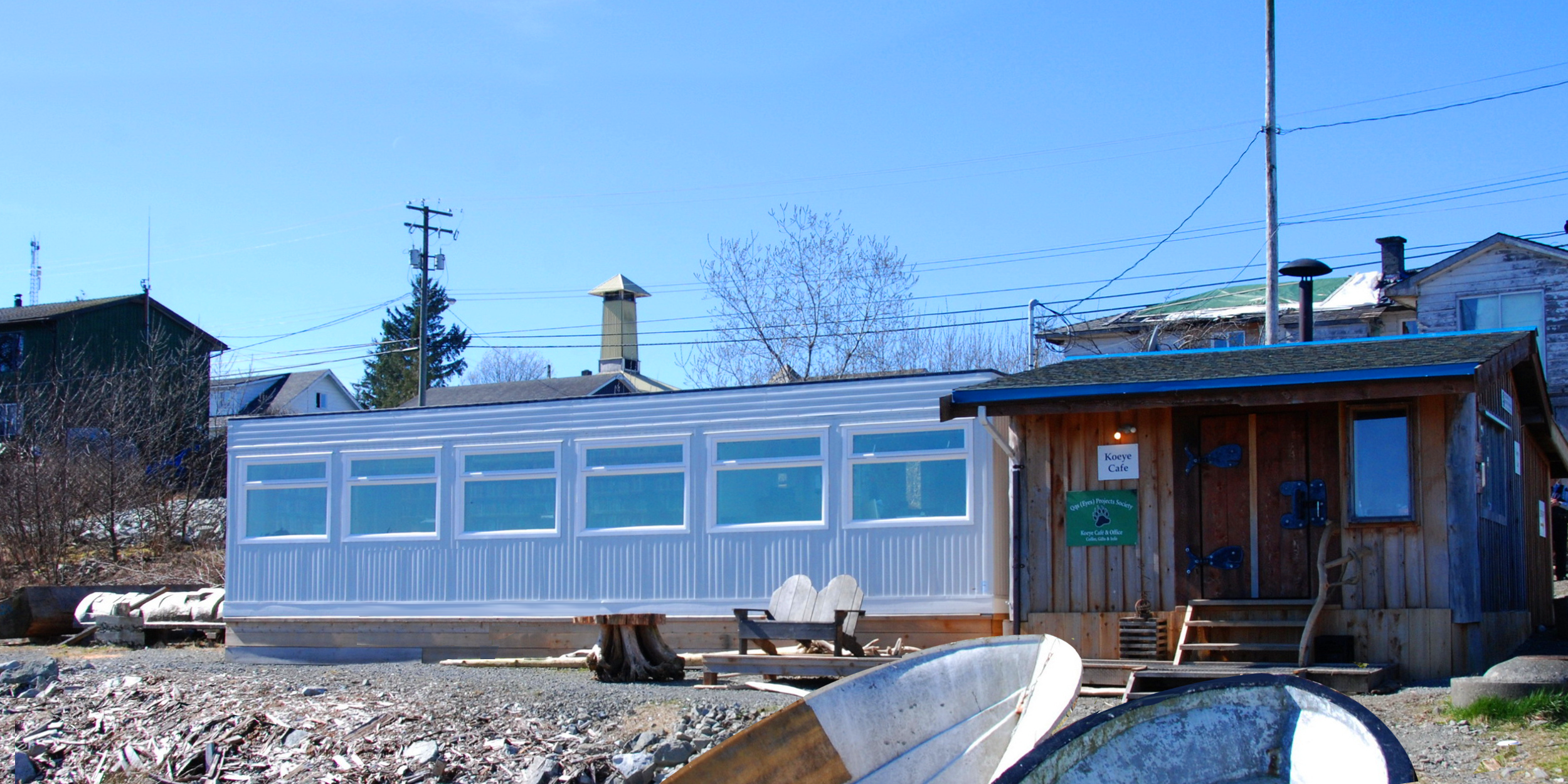
Facing the shore is the Write to Read BC library in Bella Bella, along with a wooden deck, chairs, table of the Koeye Café. Two boats are pulled up onto the shore.
About the library
In 2019, the community planned an immediate temporary space for an Employment Centre, and a multipurpose structure that would include Heiltsuk College, MCFNTS, and Employment and Training Centre by 2020.
The Bella Bella library is the fifth Write to Read BC library. Sponsors included Rotary Club of Steveston, and Britco Structures (now Boxx Modular).
Leaders of Lheidli T’enneh First Nation, educators, and Write to Read BC volunteers have discussed the community’s vision for an indigenous-led library. A library offers support for programs that interest the community.
Also, the library’s collection will represent Indigenous communities.
Daylu Dena, or Lower Post, are Kaska Dena, a tribal council of people in northern BC, the Yukon, and Northwest Territories. Lower Post is on the Alaska Highway, at the northern border of BC and the Yukon, near Watson Lake. About 300 people live in Lower Post. Daylu Dena are a matriarchal society with interrelated families.
Traditionally, Kaska Dena were a nomadic nation travelling across 100,000 km² of traditional territory to hunt and trap, and trade with neighbouring Nations. In some ways the nomadic life continues as community members continue to follow the seasons, and hunt and gather. Environmental protection is a focus, as is economic development.
The Daylu Dena Council runs a company that provides a broad range of construction services and heavy-equipment rental across the Yukon and northern BC, ranging from roadworks and earthworks to residential construction, and from labour procurement to environmental remediation.
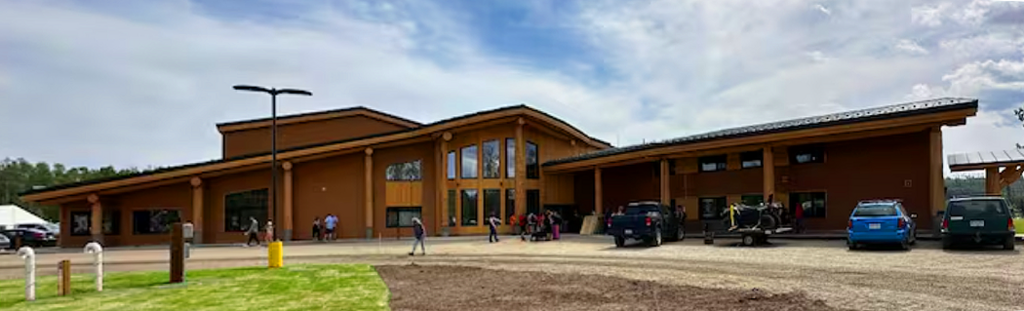
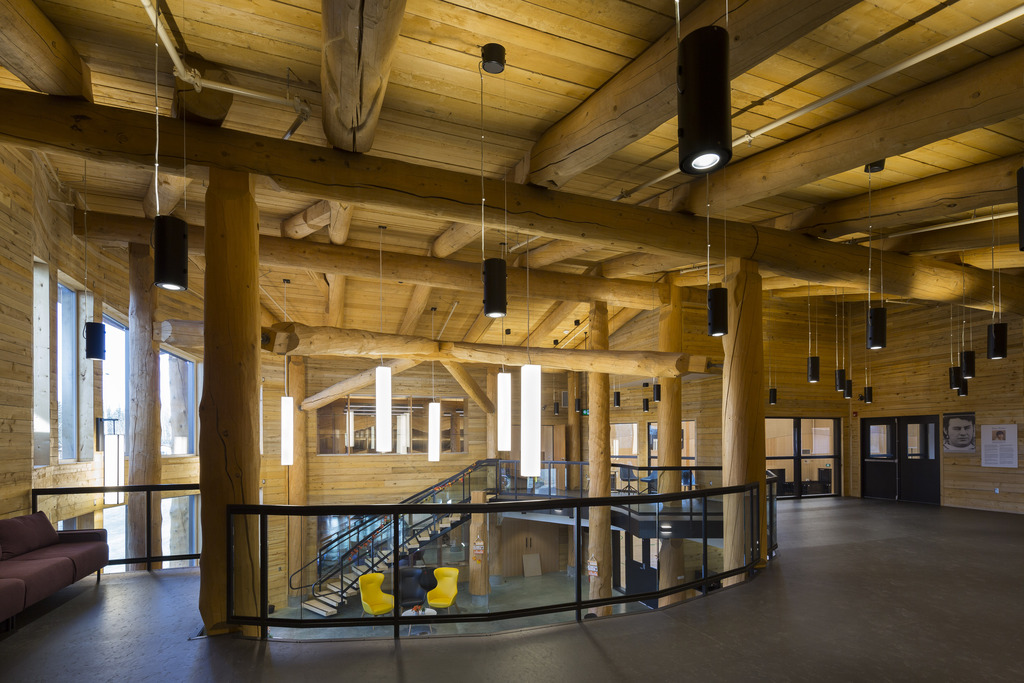
The community completed a cultural and administrative centre in spring 2024—a building intended as offices for the council, and Services BC. It has a gymnasium, coffee shop, kitchen, library, and more.
The building will also house an Indigenous library.
About the library
The library that Write to Read BC installed in Daylu Dena’s civic building focuses on Indigenous books. The library opened in the spring of 2024.
The library was furnished with shelves under the contract for the entire building. Write to Read BC’s library response team helped install the books, computers, and screens.
Write to Read BC’s co-leads met to plan the installation of books and equipment in the Daylu Dena civic building by the end of the year.
The building was completed a year ago, and the community and Write to Read BC are both eager to see the library installed.
Since the library was built as part of a larger contract, it came fully finished with shelving and furniture. Write to Read library response team only needed to provide the books and computers, including a monitor. This reduced the need for financial input from Write to Read BC.
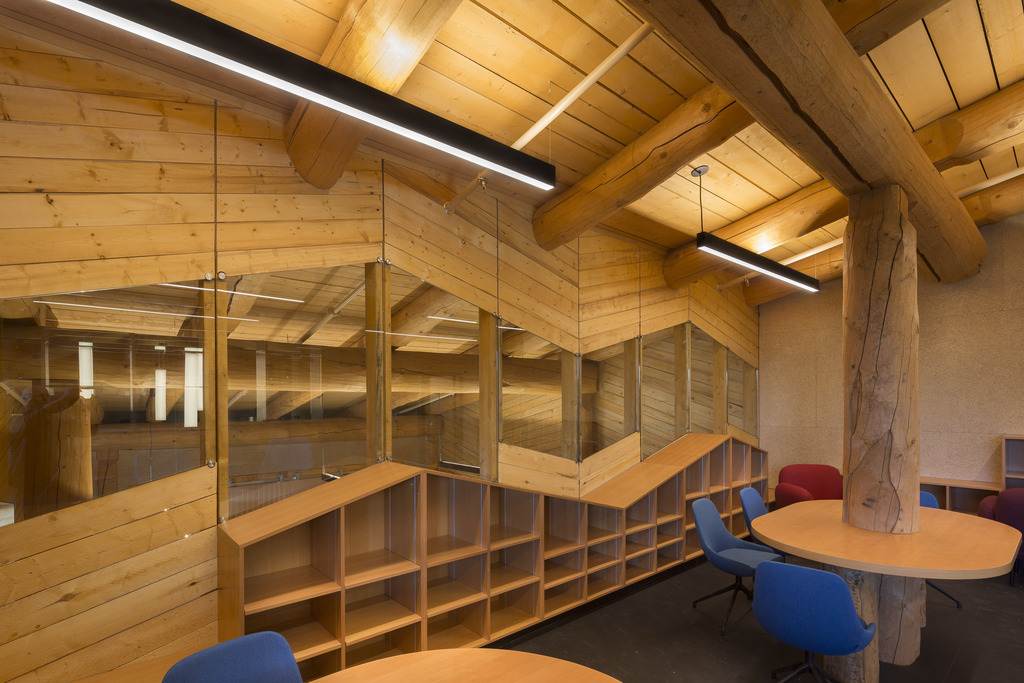
The library is on the upper level, with a glass wall to admit plenty of light.
This month, Write to Read BC’s design response team visited Daylu Dena, just south of Watson Lake, BC. Visitors included lead architect Scott Kemp and Ryan Arsenault.
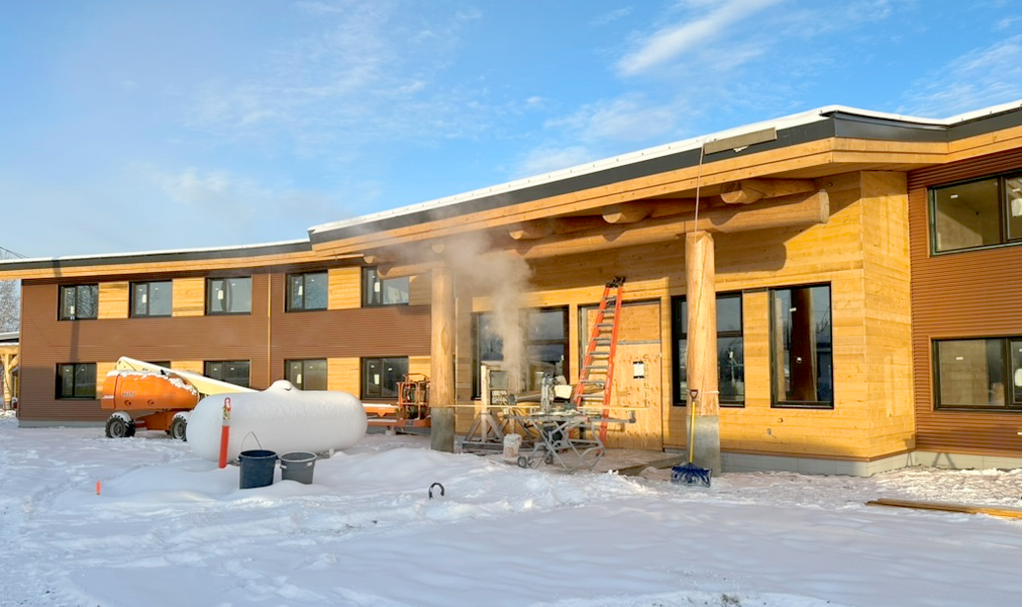
For our visit in late 2023, the Daylu Dena civic building was a winter construction site.
The community is constructing a cultural and administrative building that will be completed in 2024. The building will have:
a Service BC office for driver’s licensing and other government business.
administration offices and a council chamber for Daylu Dene community business.
an adjoining room for the judge’s chamber, so the council chamber can be used as a court room.
a large gym.
a commercial kitchen and a coffee shop.
a recording studio, and language room.
An Indigenous library
Of course, the Daylu Dena civic building will also have a Write to Read BC library, the first to be stocked only with Indigenous books.
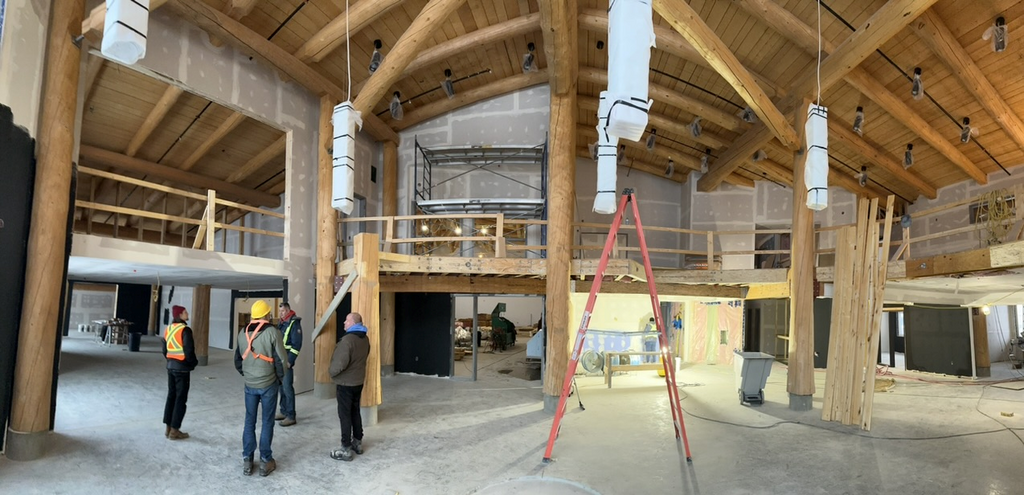
Write to Read BC volunteers inside the construction site, looking up at the future location of the library.
The library is planned for the top floor, overlooking the foyer. Its glass wall will admit lots of light.
There team will return in 2024 to help plan the library with the community.