Tag: communities

  • Oweekeno library opens

    The library opening in Oweekeno was both formal and festive. A Wuikinuxv Elder blessed the building, and Chief Rose Hackett cut the ribbon alongside Judith Guichon, lieutenant-governor of BC and Peter Hansen of Rotary Club Lionsgate.
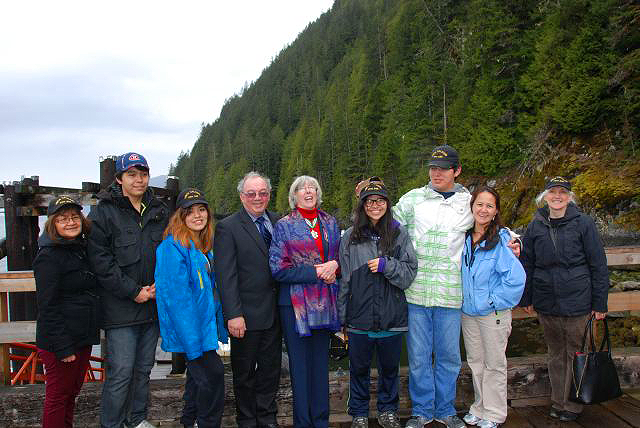
    Oweekeno volunteers.
    Volunteers in Oweekeno celebrate the Wuikinuxv community’s new library.

    The Chief also presented a ceremonial paddle to the lieutenant-commander of the navy ship HMCS Calgary, at a community dinner with navy crew members, in the Big House.

    Local youth then sailed the Rivers Inlet area aboard HMCS Calgary for four hours, as guests.

    Also in attendance were members of the RCMP on their regular visit to Oweekeno.

    This library was sponsored by the members of the Rotary Club Lionsgate of North Vancouver, who raised the necessary project funds. The modular building was donated by Britco Structures.

    The Oweekeno community will employ a librarian to supervise the building. Write to Read BC’s library response team collaborated with local volunteers on the selection and cataloguing of books.

    Oweekeno is on the BC coast, south of Bella Bella, accessible only by boat or plane.

    The cost of the project was $60,000. Moving the modular building by sea from Vancouver to Rivers Inlet cost $20,000, which the Jack Gin Foundation paid.
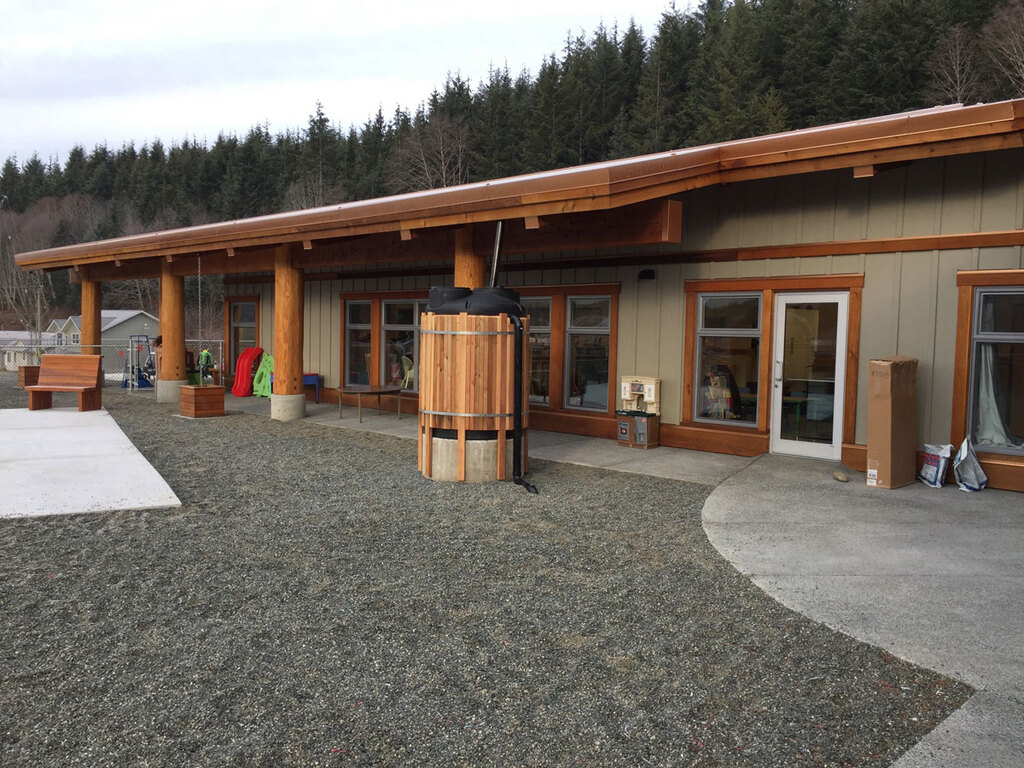
  • Quatsino preschool plans library

    This small, BC community is in the process of designing and building a new pre-school with the help of Scott Kemp, who is also our Write to Read BC architect.

    The community is adding to the building design a portion that will serve as a community library. This project is a partnership with Write to Read BC.

    Quatsino is located northwest of Port Hardy, on the BC coast.

  • Quatsino library, daycare open

    Write to Read BC volunteers joined the village of Quatsino to officially open its new library on February 7, 2017. Quatsino community leaders and lieutenant-governor of BC Judith Guichon also joined the ceremony.

    The village is on Vancouver Island, 15km south of Port Hardy. Most of its residents of Quatsino work in forestry, fishing, and eco-tourism.

    Quatsino library and daycare centre.
    The beautiful Quatsino library in ludes a day care centre.
  • Ditidaht library opened by royals

    The village of Ditidaht opened its library in mid-September 2014, with community fanfare and visiting dignitaries. The library is the result of a partnership with Write to Read BC.

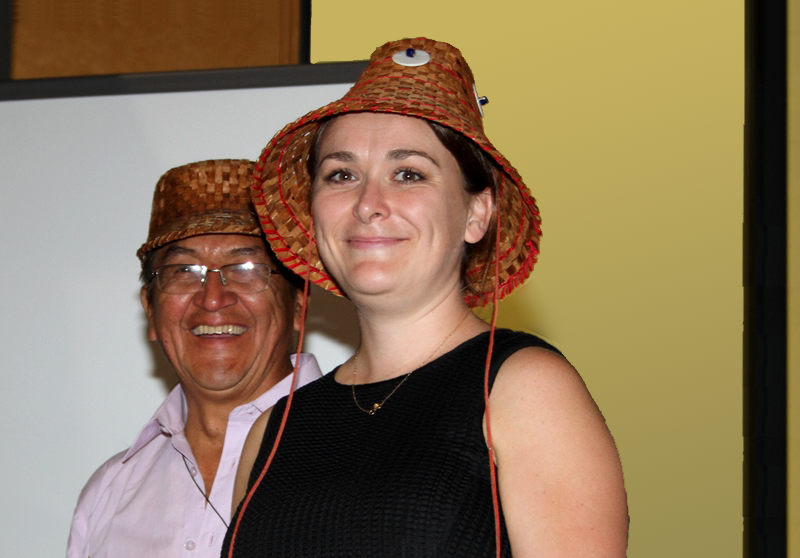
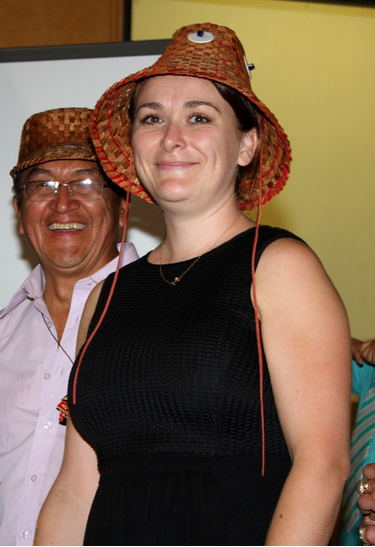
    Cutting the ribbon were British royals, Prince Edward and Princess Sophie. Edward formally asked the permission to be on Ditidaht titled lands. Sophie was given a cedar band for her head, which had been woven for the occasion by one of Ditidaht’s eldest citizens, Sophie wore the headband throughout the visit. The royals were accompanied by the lieutenant-governor of BC Judith Guichon.

    In addition to celebrating the library, the ceremony honoured Ditidaht schoolteacher Eva Clarke for envisioning a space for storytelling, theatre, and reading aloud. Clarke, with the Rotary Club and Write to Read BC, was instrumental in getting the library installed.

    With this new library and community gathering place, the community hopes to promote literacy and learning for its younger members.

    Ribbon-cutting ceremony at the Ditidaht library opening in September, 2014 on Vancouver Island, BC.
  • Libraries for isolated BC areas —CBC

    On 27 May 2014, CBC reported six new libraries have been installed in isolated, Indigenous communities across BC. Each new library adds to the 200 First Nations that already have a library.

    CBC credits Write to Read BC, along with Bob Blacker and former lieutenant-governor of BC, Steven Point.

    At its start, the project recruited retired librarians to solicit book donations. Write to Read BC soon had over 30,000 new and used books to assess and catalogue from their headquarters in a donated storage locker.

    The work is ongoing, with more libraries planned.

  • Tiny library ferried to Metlakatla

    Metlakatla, just north of Prince Rupert, recently welcomed a small, portable library. The entire building was placed on a trailer and then transported from BC’s Lower Mainland by ferry, to serve Metlakatla.

    Loading the ''Hobbit Hous'' on the ferry.
    The first step: loading the library onto the ferry.

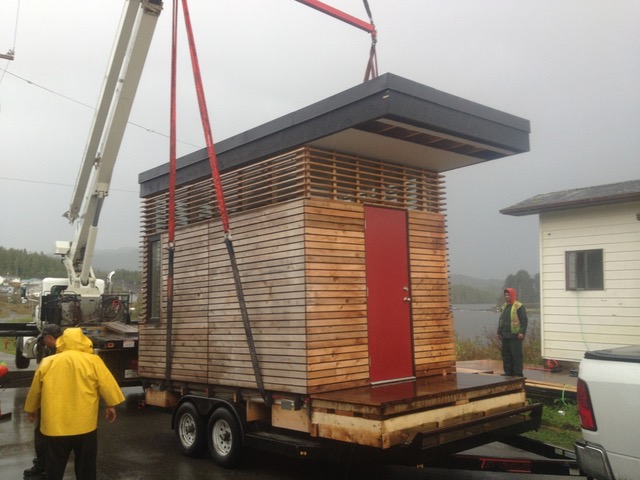
    The library is a compact, 10 m² studio with built-in shelving. It has cedar rainscreen cladding, R20 insulation, tilt-and-turn windows, and high-efficiency LED lighting. The library was donated by Western Camera Building president John MacFarlane. Western Camera is known for constructing tiny buildings for use as offices, storage facilities, and—in this case—as a library.

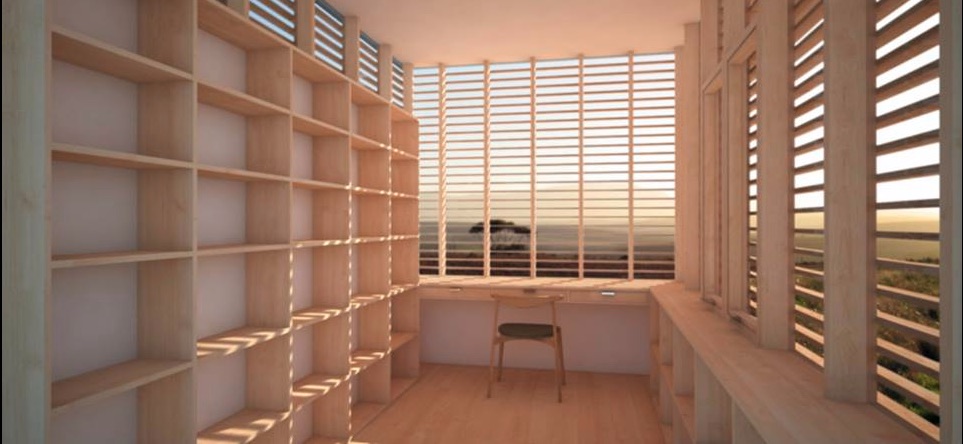
    Inside of the library provided by Camera Buildings, showing shelves, windows, and desk space.
    The interior of the library shows space for hundreds of books, and seating for computer use by one person at a time. The floors are easy to clean. Some of the windows open.

    Based on the National Building Code for above-ground walls, insulation rated R20 exceeds both the “Good” and “Better” standards for above-ground walls in all zones across BC.

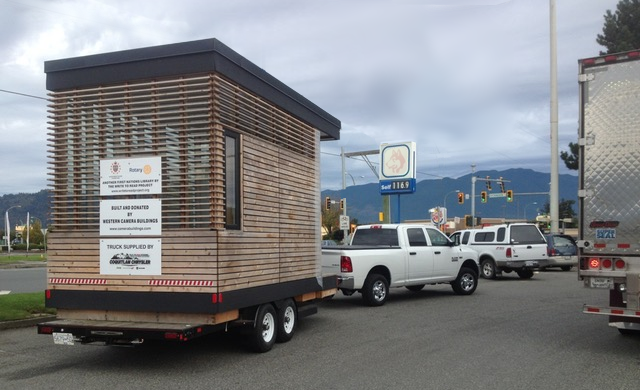
    Metlakatla's 10 m² library on its way.
    The community library, on a trailer, on its way to Metlakatla.

    The library, which the community nicknamed Hobbit House, made the overwater portion of the trip by ferry, a service that BC Ferries provided for free.

  • Digital diary project in Ditidaht

    On a recent visit to Ditidaht, one Write to Read BC volunteer brought along a digital camera rto donate to the school. He described the camera as “an old Panasonic Lumix SLR” but adds: “It’s amazing what can be accomplished using digital technology. Computers and digital cameras have changed the world in which we live. Pretty soon everybody will be a movie maker.”

    That includes the 10 high school students at Ditidaht’s community school.

    The Lumix camera has a 24× zoom, a Leica glass lens, built-in image stabilization to reduce motion blur, and a memory card. It shoots great photos. It was given to the teacher for use by the high school students.

    Students to make a digital diary

    From January to June 2014, high school students will use the camera to take photos of their daily life: going to school, playing, at home, with friends, in the community. Students can also take photos in the woods and on the water.

    The camera’s memory card can store thousands of images, and the students are encouraged to photograph everything they see. Their teacher, Eva Clarke, will select the best images and store them on a computer.

    The learning objectives of this project are to:

    • learn digital photography.
    • learn to see and document village life.
    • self-publish a book—perhaps an e-book.

    A digital diary that shows what life is like in the Ditidaht village can introduce people to a place few will ever get to visit in person. By using a camera, connecting people from elsewhere to an isolated community like Ditidaht is as easy as point and shoot.

    The project runs from January to June, 2014.

    Eva Clarke, a Ditidaht school teacher.
    Ditidaht teacher Eva Clarke will choose the best images that students take of their life in and around the village.
  • Write to Read BC keeps sponsor

    In her 2013 annual statement, Judith Guichon, lieutenant-governor of BC, said she will continue to build on the literacy program developed by Steven Point, the preceding lieutenant-governor of BC.

    Point developed the Write to Read BC project by partnering with several Rotary Clubs in the province.

    Steven Point was Lieutenant Governor of BC from September 2007 to November 2012.
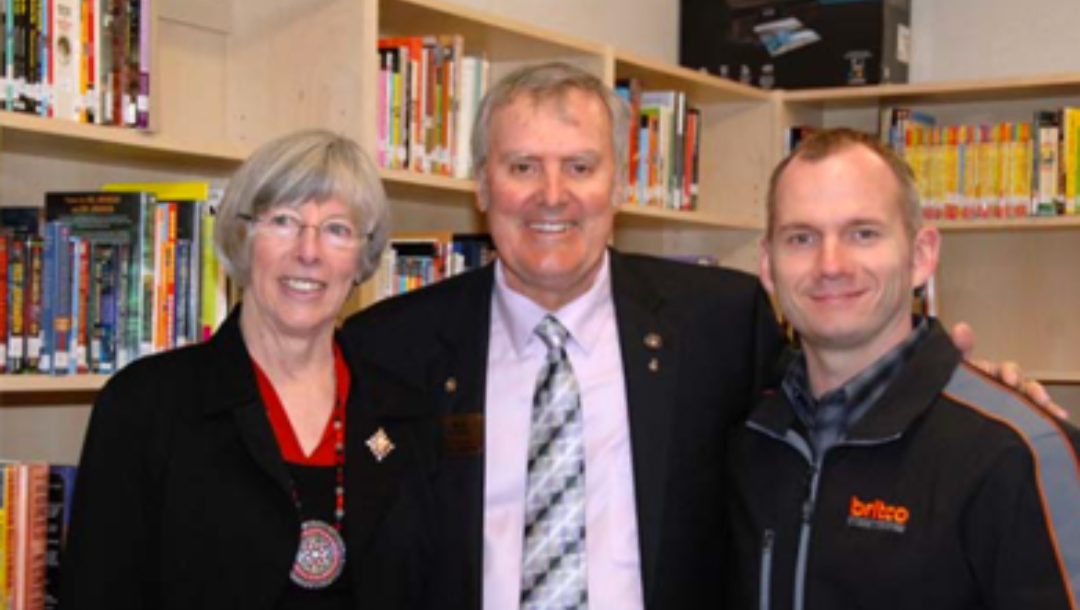
    Steven Point (middle) pictured in a newly installed library. Point was lieutenant-governor of BC from September 2007 to November 2012.
  • Yunesit’in library opens

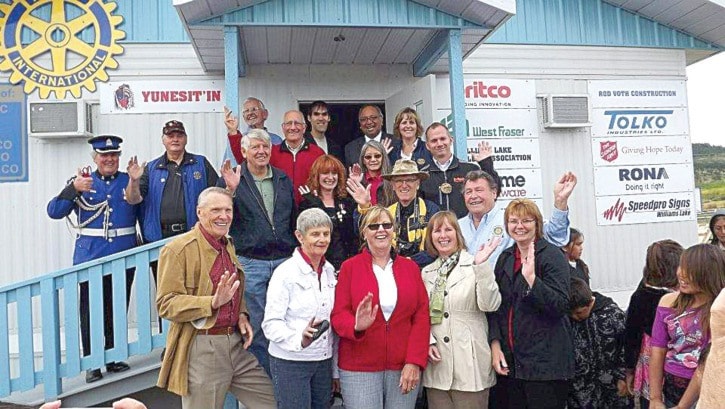
    On September 11, 2012, the BC community of Yunesit’in, Stone, opened a library, thanks to Write to Read BC.

    The Rotary Club of Williams Lake joined the community to install and open the facility. The Rotary Club of Sechelt gave a $15,000 grant for books. Steven Point, the lieutenant-governor of BC, attended the opening.

    Point said the library is an example of what can be accomplished when people work together.

    Britco donated a 10×40-foot trailer that was used during the 2010 Olympics by the media, and transported it to Stone. The Rotary Club Williams Lake purchased a second trailer. The community itself told its partners their vision: a library and a community centre.

    Two connected modules house a library and a community centre for the Yunetsin'in community in Stone.
    People celebrate the opening of a combined library-community centre.
  • Profile: Gordon Yusko

    Throughout his career Gordon Yusko worked in and with libraries and the communities they serve, in most regions of BC. For decades, he has volunteered in community-led libraries. He was also Program Administrator at Simon Fraser University’s Indigenous Student Centre.

    As a retiree, through Write to Read BC, Yusko continues to work for libraries in isolated communities across the province. He supports the project’s co-leads, Bob Blacker and Dr Shirley-Pat Gale, as they partner with First Nations to install indigenous-led libraries.

    Before that, from 2012 to 2019, Yusko served on a program that supports Indigenous community efforts to preserve records that document cultural and social history, as well as Indigenous languages. By 2019 over 35 Indigenous communities had received training and financial assistance through this work. This was a collaboration with Barber Learning Centre, UBC iSchool, Museum of Anthropology, and similar programs in Washington state, USA.

    Photo of Gordon Yusko.
    In one of his earliest jobs, Yusko’s work was commended in Hansard, the BC legislature’s official record of its proceedings, for library-based research work for ministers, the press gallery, and policy researchers.

    Yusko also helped guide a NOIIE funding partnership for dozens of teachers of kindergarten to grade 12 students. NOIIE, or Network of Inquiry and Indigenous Education, supports further education of Indigenous students in culturally sensitive ways.

    Write to Read BC’s work has been similarly supportive by equipping the libraries it installs with learning centres that can offer remote attendance at courses and conferences, online.