Tag: Internet

  • Saving education in Gitsegukla: video

    When Gitsegukla elementary school principal Louise Ormerod talks about her school’s journey from failure to success—not just for the Kindergarten to Grade 7 students, but also for adult learners in the community—Write to Read BC gets part of the credit.

    School risked getting shut down

    In 2018 the BC Ministry of Education assessed the school. It failed. The ministry said the school would be closed if it didn’t resolve the 21 violations ministry auditors found. The community also knew the school was poor. Some families left the community so their children could get an education. New teachers quickly left.

    But two years later, when auditors returned, they found a vast improvement. The school was “teaching to the curriculum” and meeting BC Ministry of Education standards. Auditors observed the school had found the resources every elementary school needs. Literacy rates increased 400%. Teachers stayed.

    Community commitment, a plan, and a library

    Ministry auditors told Ormerod that hers was the only audited school that did not have a single violation that year. Ormerod credits her staff and the community’s commitment to saving education in their community. She says Write to Read BC not only played a role, but made it easy, by being prpared and by knowing who to call to solve various problems. As for the library Write to Read BC installed, Ormerod says, “we had the best library and learning centre we could have ever asked for to support that learning.”

    The story on video

    In this 9½-minute video of an online talk, Ormerod tells the story of her school’s journey.

    School principal Louise Ormerod talks about improving literacy and numeracy at her school.

    Ormerod also gives advice to other schools who want to develop a library of their own:

    • Give the library a formal opening, with all the fanfare it deserves, to acknowledge the accomplishment. Gitsegukla school missed theirs because of Covid-19 restrictions.
    • Identify a champion who’s passionate about maintaining the facility once it’s launched.
    • Open the library after hours, so adult community members can use the library, and can attend online courses by using the library’s learning centre.
    • Get trained to manage a digital lending system.

    Ormerod credits the expertise and connections of Write to Read BC’s volunteers, and the fundraising efforts of the Rotary Club for helping to make success possible for Gitsegukla Elementary and the whole community.
  • Daylu Dena, Lower Post

    About the community

    Daylu Dena, or Lower Post, are Kaska Dena, a tribal council of people in northern BC, the Yukon, and Northwest Territories. Lower Post is on the Alaska Highway, at the northern border of BC and the Yukon, near Watson Lake. About 300 people live in Lower Post. Daylu Dena are a matriarchal society with interrelated families.

    Traditionally, Kaska Dena were a nomadic nation travelling across 100,000 km² of traditional territory to hunt and trap, and trade with neighbouring Nations. In some ways the nomadic life continues as community members continue to follow the seasons, and hunt and gather. Environmental protection is a focus, as is economic development.

    The Daylu Dena Council runs a company that provides a broad range of construction services and heavy-equipment rental across the Yukon and northern BC, ranging from roadworks and earthworks to residential construction, and from labour procurement to environmental remediation.

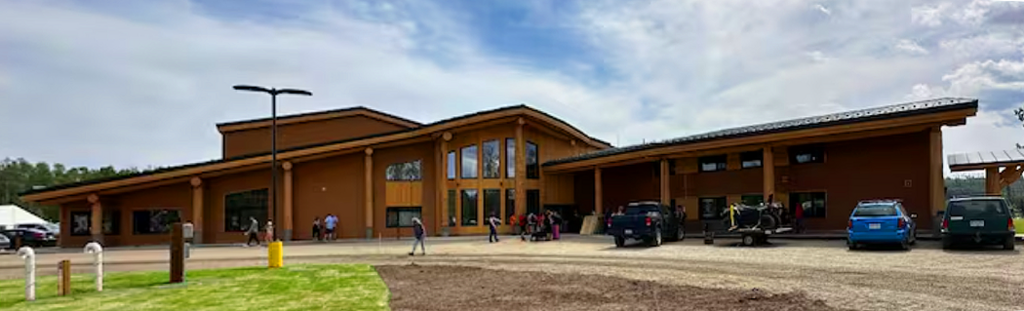
    The community completed a cultural and administrative centre in spring 2024—a building intended as offices for the council, and Services BC. It has a gymnasium, coffee shop, kitchen, library, and more.

    The civic building in Lower Post.
    The building will also house an Indigenous library.

    About the library

    The library that Write to Read BC installed in Daylu Dena’s civic building focuses on Indigenous books. The library opened in the spring of 2024.

    The partially installed library in Daylu Dena cultural and administrative building.
    The library was furnished with shelves under the contract for the entire building. Write to Read BC’s library response team helped install the books, computers, and screens.
  • Preparing to install Daylu Dena library

    Write to Read BC’s co-leads met to plan the installation of books and equipment in the Daylu Dena civic building by the end of the year.

    The building was completed a year ago, and the community and Write to Read BC are both eager to see the library installed.

    Since the library was built as part of a larger contract, it came fully finished with shelving and furniture. Write to Read library response team only needed to provide the books and computers, including a monitor. This reduced the need for financial input from Write to Read BC.

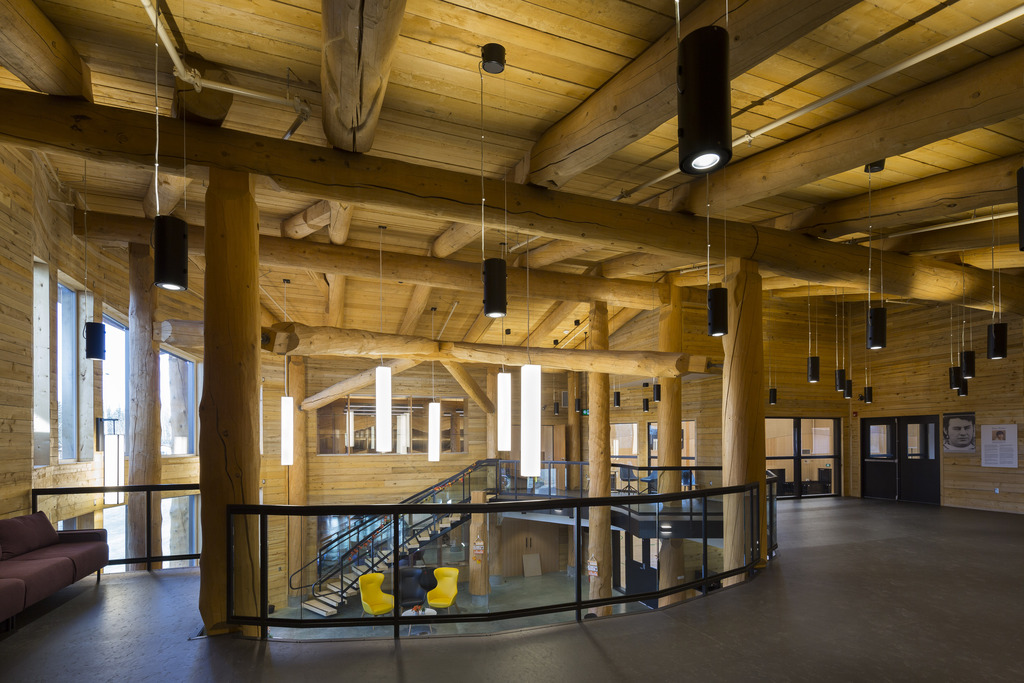
    Foyer and offices upstairs in Dalyu Dena's cultural and adminsitration building.
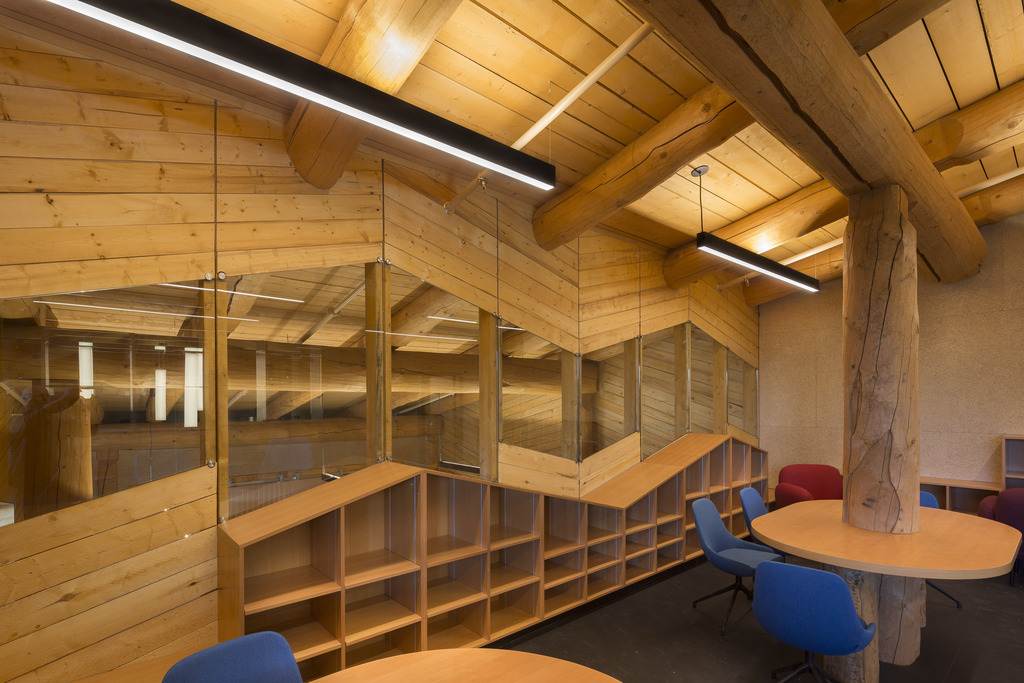
    The library is on the upper level, with a glass wall to admit plenty of light.
  • Visit to Daylu Dena’s civic-building site


    This month, Write to Read BC’s design response team visited Daylu Dena, just south of Watson Lake, BC. Visitors included lead architect Scott Kemp and Ryan Arsenault.

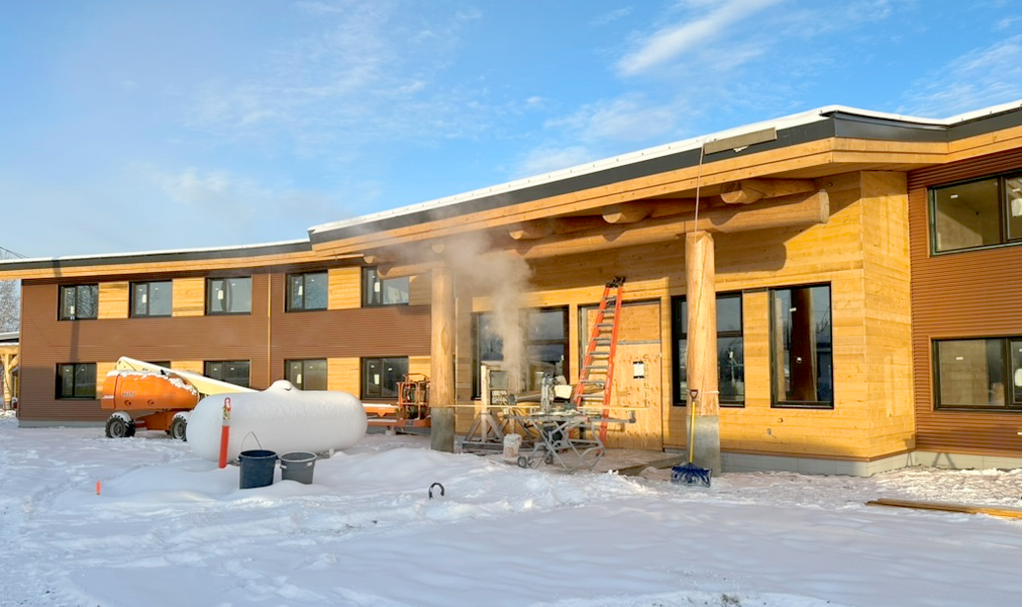
    Daylu Dena civic building: a construction site in winter.
    For our visit in late 2023, the Daylu Dena civic building was a winter construction site.

    The community is constructing a cultural and administrative building that will be completed in 2024. The building will have:

    • a Service BC office for driver’s licensing and other government business.
    • administration offices and a council chamber for Daylu Dene community business.
    • an adjoining room for the judge’s chamber, so the council chamber can be used as a court room.
    • a large gym.
    • a commercial kitchen and a coffee shop.
    • a recording studio, and language room.

    An Indigenous library

    Of course, the Daylu Dena civic building will also have a Write to Read BC library, the first to be stocked only with Indigenous books.

    A site visit to the cultural and administration building as construction approaches completion.
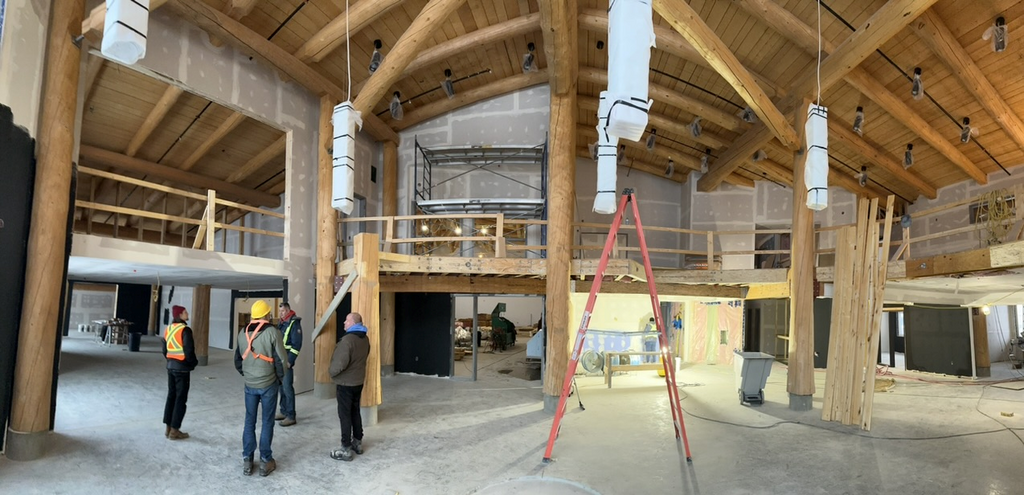
    Write to Read BC volunteers inside the construction site, looking up at the future location of the library.

    The library is planned for the top floor, overlooking the foyer. Its glass wall will admit lots of light.

    There team will return in 2024 to help plan the library with the community.

  • Write to Read BC expands Indigenous networking

    Several members of isolated BC communities attended a virtual conference about Indigenous communities. The conference, sponsored by Libraries, Archives and Museums Nova Scotia, included breakout sessions.

    During the breakout sessions, members discussed their experience with Write to Read BC, and made new connections with people from Indigenous communities in other provinces.

    Virtual conferences don’t just give remote attendees access to people in other communities. They expose attendees to other ideas and perspectives, and to a broad body of knowledge and potential for collaboration.

  • Nisaika Kumtuks library opens

    Write to Read BC celebrated the grand opening of its 16th library and learning centre, Nisaika Kumtuks school, the little school with a huge heart.

    Lieutenant-governor of BC Judith Guichon attended, along with members of the school.

    One of the students, David, greeted Guichon, before taking part in a procession. The children performed a drumming song, and read a story for Guichon. To conclude the ceremony, the school library received its formal name—one that its students chose.

    In addition to books that appeal to students from Kindergarten to Grade 4, the school also offers online attendance to online courses and conferences from its learning centre. The library is equipped with four iPads, 2 all-in-one Hewlett Packard computers, and a TV with video conferencing capabilities. This benefit the students as well as their parents. School principal Heather Goodall will open the school library to parents of its students. This gives parents have access to the Internet and to online learning, as well.

    The TV screen, a donation that Write to Read BC arranged, was a pleasant surprise to Goodall.

    The shelving was made especially for the library by inmates at the Nanaimo Correctional Centre. Write to Read BC co-lead Bob Blacker said: “They do amazing work, and are very proud of their contribution to our libraries.”

  • Design response team to Kyuquot

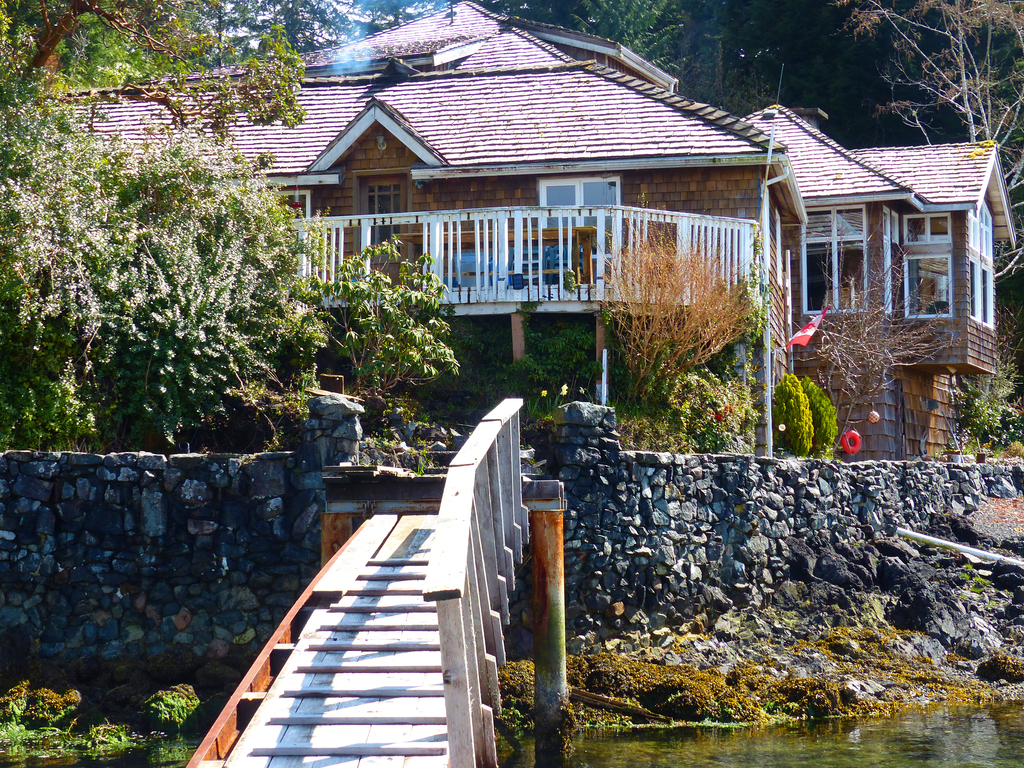
    Write to Read BC’s design response team visited Kyuquot on northwest Vancouver Island. This visit had to take place when the weather was good, as the road from Campbell River to Fair Harbour ferry is busy with logging trucks, and feels safer when dry. They were received by a band committee including Chief Peter Hanson, committee member Daisy Hanson, band administrator Cynthia Blackstone, project coordinator Russell Hanson, and others.

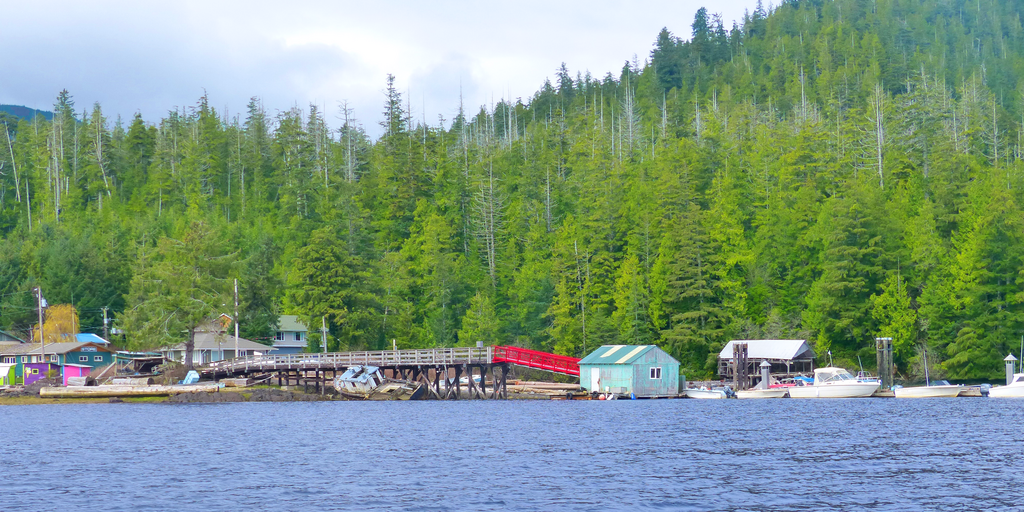
    View of Kyquot village when arriving by ferry.
    A view of Kyquot village when arriving by ferry from Fair Harbour.

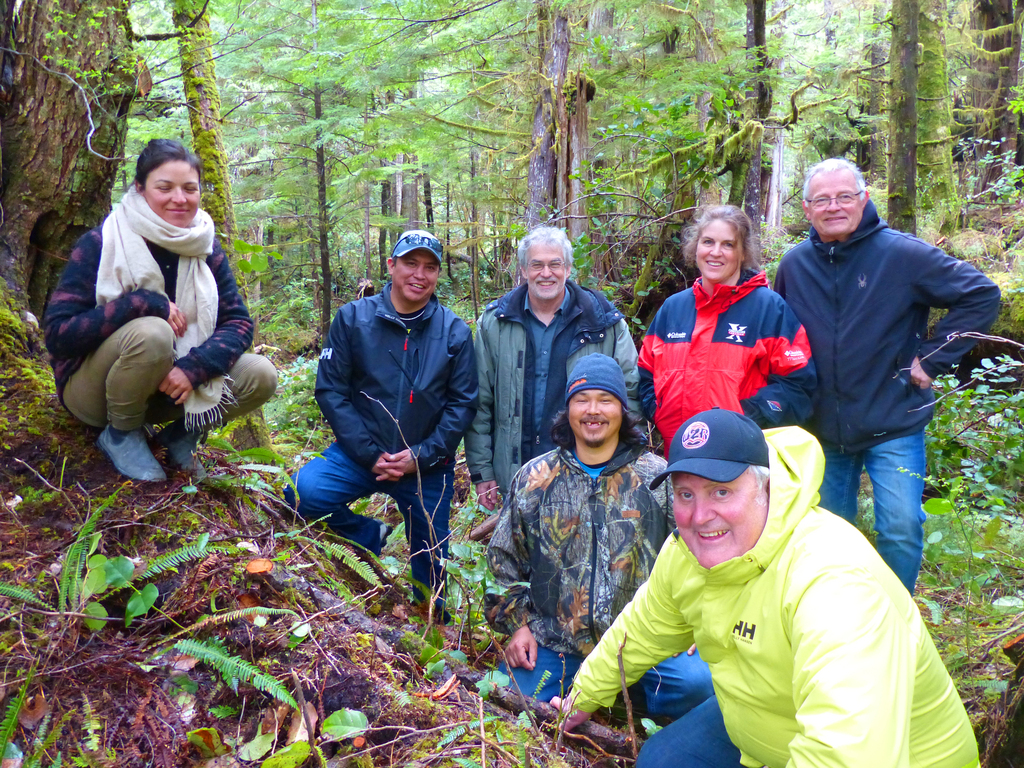
    The Write to Read BC team included co-lead Bob Blacker, architect Scott Kemp, architect intern Kelly Bapty, mechanical engineer Mike Herrold, structural engineer Melissa Kindratsky, big log builder Steve Lawrence, filmmaker Michael McCarthy, financial guru Lawrence Lewis, and master carver Moi Sutherland. During the visit, they stayed with Susan Plensky and her husband Skip.

    Together, the visitors and band committee started the planning process for a library. This concept quickly grew into a community centre that contains a library—in a building that will be built onsite rather than prebuilt and shipped there.

    This ambitious work was named The Big Project.

    Kyquot village.
    A tidal dock that leads up to a reinforced seawall in Kyquot village.

    The visitors and band committee of residents toured the village, and together decided the original site for the planned library was too close to sea level and at threat from any tsunami. To find an alternative site, the entire team hiked up the hill past the school to the site of a planned neighbourhood. The engineers wanted an up-close inspection, so the entire team bushwhacked into rarely-visited forest, where the biomass underneath was 3 m deep. This is the site they found.

    Site of the future Big Project, uphill from Kyquot village.
    Site of the future Big Project, uphill from Kyquot village.

    Steve Lawrence, a big log builder, announced the site was perfect to harvest the timber needed for the community centre. The village will install a mill on the site, to cut the logs themselves. The community will also consider getting involved in the construction, which removes the need to bring in, house, feed, and pay a full construction crew for the length of the project.

    Community involvement

    The band committee heard that the entire village must be actively involved in planning and fundraising from the very beginning of the project. If the village does not pledge enough support and primary funding, The Big Project will not proceed. Fundraising will require a wide variety of events, grants, and donations from the public and businesses.

    Financial planner Lawrence Lewis explained the costs in detail. The scope and success of the project depends on how much the community gets involved. Hiring an outside construction crew is not part of the estimate, which is why the village needs to consider taking on that work.

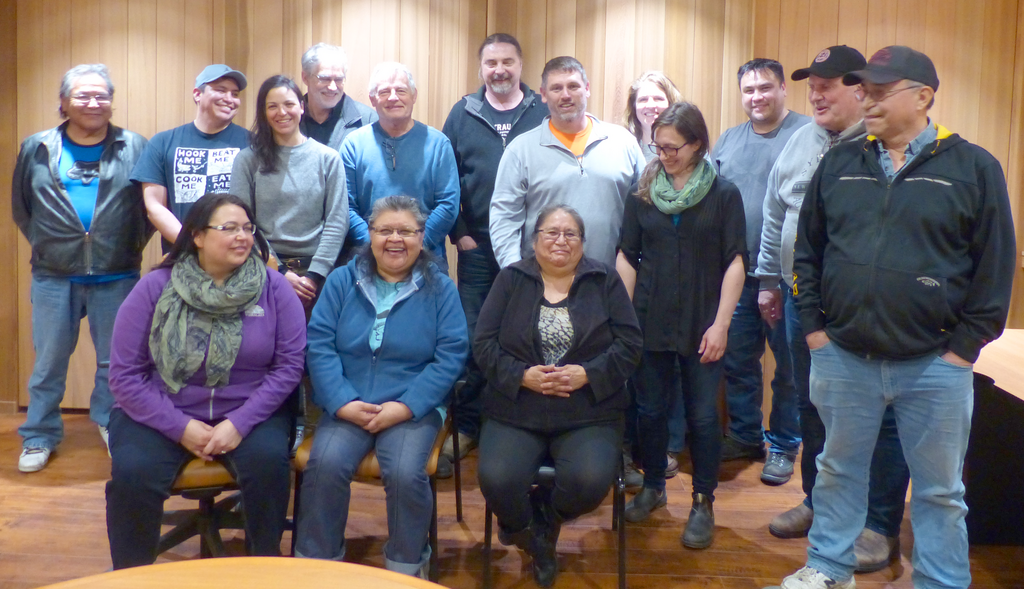
    The band committee and Write to Read BC volunteers in Kyquot village.
    Working together: the band committee and Write to Read BC’s design resposne team in Kyquot village.

    Design and construction

    The Write to Read BC volunteers left the village of Kyuquot satisfied the band has the skills and experience to take on The Big Project. The design response team prepared and published a draft design of a community centre that has a library with Internet connections for its learning centre, a kitchen, meeting rooms for elders and youth, a museum, a gymnasium, and a day care centre.

    After it’s revised and agreed, the design will be handed to Write to Read BC’s construction response team and library response team for the next stages of the project.

  • Nooaitch library opens

    This summer’s grand opening of the Write to Read BC library in Nooaitch was attended by Elders, band members, Judith Guichon, lieutenant-governor of BC, Rotary Club members, Britco Structures, TELUS, and a reporter from Shaw TV.

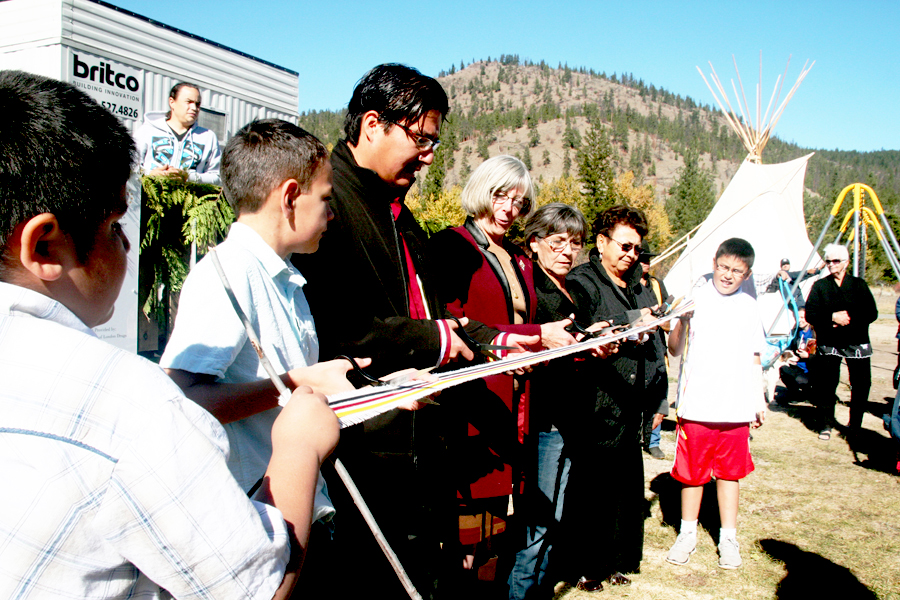
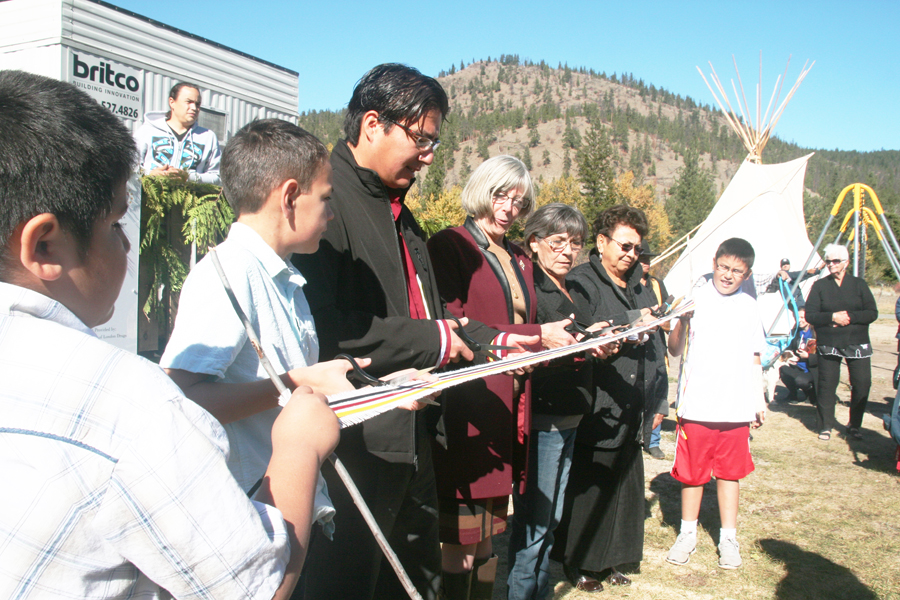
    The ribbon-cutting at the opening of Nooaitch library.
    Children hold the ribbon tight for the ribbon-cutting at the opening of Nooaitch library.

    Britco donated the modular building that houses the library. Rotary Club raised funds and its members volunteered on the project. TELUS provided the high-speed connection so people can attend courses and conferences online in the library’s learning centre.

  • Library with learning centre in Lax Kw’alaams

    After partnering with Write to Read BC, the isolated community of Lax Kw’alaams conceived of a community library that meets their literacy and learning needs.

    Another Write to Read BC partner, Mission Rotary Club, asked its community to contribute $5,000 to the project, and then doubled that with a $5,000 grant. The Rotary Club volunteers also set up the library in October.

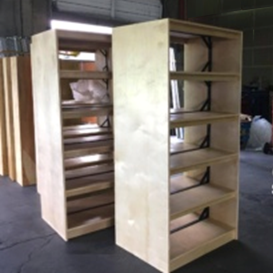
    Shelves awaiting installation.
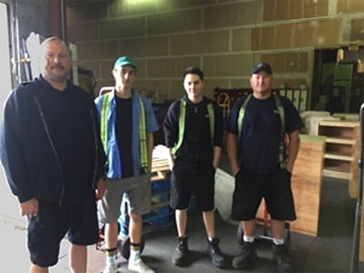
    The loading dock and crew at Bandstra Transportation that ships shelves to Write to Read BC libraries.

    This new library in Lax Kw’alaams, formerly known as Port Simpson, has shelves of books to read, comfortable seating, and computers for remote attendance in courses and conferences in its learning centre.

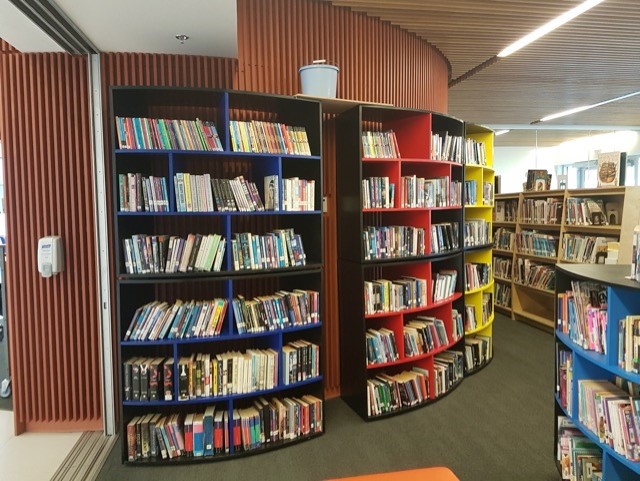
    Curved shelves of books at the Lax Kw'alaams library and learning centre.
    Shelves of books in Lax Kw’alaams library.
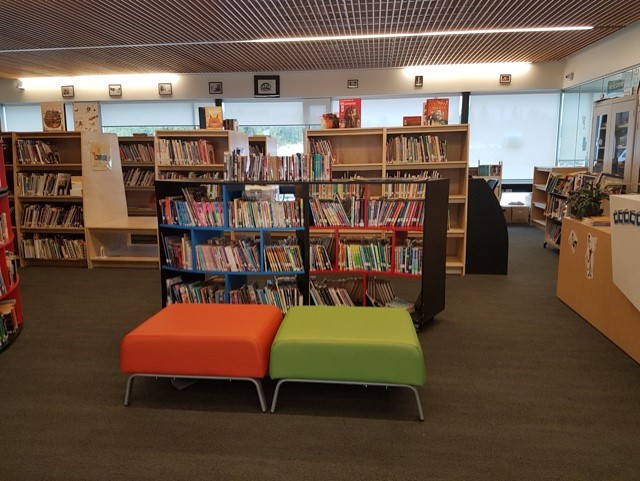
    Seats and shelves of books at the Lax Kw'alaams library and learning centre.
    Seating and more shelves of books in the library in Lax Kw’alaams, BC.
  • Opening a library in Nooaitch

    A library opening today in Nooaitch, BC, also represented a new kind of library for Write to Read BC. The new facility, near Merritt, BC, not only offers books and recorded media. It also has Internet-connected computers that offer remote access to courses and conferences. The Nooaitch library was Write to Read’s eleventh partnership to install libraries in isolated, Indigenous communities across BC.

    At the Nooaitch opening, Chief Marcell Shackelly said the library is a tool that builds a vision for their band’s future.

    The previous Chief, Joyce Sam, partnered with Write to Read BC to start the Nooaitch project. Sam is excited to see how the band will use the new building. “It’ll get us together,” she told a Merritt Herald reporter, adding that it’s a place for children to read quietly, or for learners to study for an exam. “All the tools are there, the resources are there,” Sam said.

    The opening was a festive event. Judith Guichon, the lieutenant-governor of BC, also attended.

    The ribbon-cutting ceremony at Nooaitch's library opening, near Merritt, BC.
    Two band chiefs and the lieutenant-governor of BC cut a ribbon to open Nooaitch library