Tag: remote

  • Study: Libraries serve Indigenous children and adults alike

    A recent study found that adults in isolated, Indigenous communities use libraries as much as children do, sometimes more. The 2025 study looked at the long-term impact of Indigenous-led libraries installed in partnership with Write to Read BC.

    This research was made possible with Simon Fraser University’s CERi funding. The study’s Indigenous researcher gathered data from isolated communities that installed an indigenous-led library with us.

    School libraries

    Many communities installed a library connected to their local school. Obviously, these spaces get significant use by children.

    However, adults also want to use reading materials and programs about culture and language. That’s why some schools welcome adults, too. For example, Nisaika Kumtuks school in Nanaimo set specific hours for family members to use material in its library.

    Rather than in a school, many communities installed books and computers a separate community facility. Both children and adults can use these, but they are harder to fund, according to some study participants. “There is funding for libraries attached to schools, but not necessarily for community-specific libraries,” the study’s author reports.

    Nevertheless, over the past 15 years most libraries installed with Write to Read BC are community libraries.

    Community libraries

    In addition to support for reading—including reading about Indigenous cultures and languages—these spaces are also community-building hubs. This is one of the benefits that attracts community members. Often, libraries are a showcase of local culture and history. One participant mentioned plans to create a museum alongside the library.

    In addition to these adult-oriented activities, community libraries also help educate children. Since 20% of the youth living on reserves attend school online, community libraries often have a role in childhood education.

    Unfortunately, older libraries in the Write to Read BC program did not all include computers and high-speed Internet. Some participants told the researcher that “a designated space” for online learners would be “a helpful addition to their community.” This would benefit adults and children alike.

    Findings from the CERi study were first presented in October, 2025.

    Research on the impact of Indigenous-led libraries installed together with Write to Read BC in isolated BC communities.
  • Daylu Dena library books coming soon

    The co-leads of Write to Read BC plan to travel to Daylu Dena’s new library in early November 2025. They will deliver books and computers.

    The books will provide the indigenous focus that the community envisioned for its library.

    The computers and high-speed Internet connection will allow the library to offer remote access to online courses and conferences. Librarians typically refer to this as a learning centre.

  • T’exelcemc

    About the community

    The T’exelcemc, or people of Williams Lake First Nation, is in the central interior of BC, in the Cariboo region, at the city of Williams Lake. Its main Indian Reserve is Williams Lake Indian Reserve No. 1, also known as Sugarcane.

    About the library

    The library in Little Chiefs Elementary school, in T’exelcemc First Nation, Williams Lake, was installed in partnership with Write to Read BC. It is our 20th library.

  • Gitsegukla

    About the community

    Gitsegukla is is on the southeast side of the Skeena River adjacent to the Kitseguecla River mouth, in west-central BC’s Skeena region. This indigenous community is about 100 km northwest of Smithers and about 110 km northeast of Terrace.

    About the library

    Write to Read BC installed its 19th library here, in the Gitsegukla elementary school. Its sponsors included the Rotary Club of Terrace-Skeena Valley, the Rotary Club of Peachland, and the Jack Gin Family Foundation.

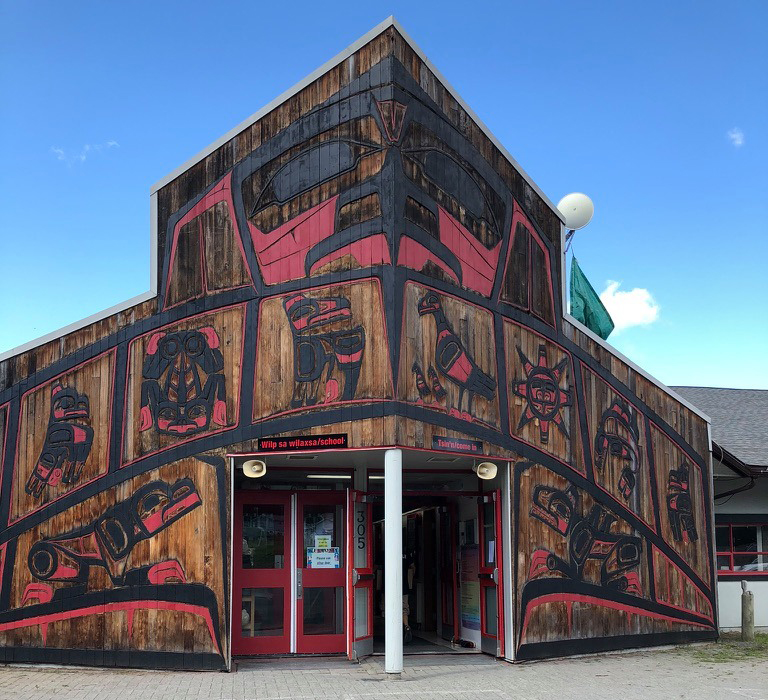
    The entrance of Gitsegukla school and library.
    A literacy-focused addition to the community school.
  • Tsi-Deldel

    About the community

    The Tsi-Deldel or Tŝideldel First Nation is in the western Chilcotin district of the BC’s central Interior region. Its offices are located on Redstone Reserve. It includes smaller reserves around Redbrush and Puntzi Lake. It is sometimes referred to as the Alexis Creek Indian Band.

    Tsi-Deldel First Nation’s traditional way of life includes fishing, hunting, and plant gathering. Community members fish for salmon and trout, and gather berries and medicinal plants in the surrounding rivers, lakes, mountains and traditional areas. These practices have been a part of its way of life for generations and continue to be an essential part of its culture today.

    About the library

    Write to read BC installed its 18th library here. Its sponsors included the Rotary Club of the Sunshine Coast, and the Jack Gin Family Foundation.

  • Rocky Pines, Lower Nicola Indian Band

    About the community

    Lower Nicola Indian Band, is one of the interior Salish first peoples in the south-central interior of BC. Its community and offices are located at Shulus, also known as Lower Nicola, just west of Merritt, BC, between BC’s lower mainland and Kamloops.

    About the library

    Write to Read BC placed its 17th library in Rocky Pines, or Lower Nicola Indian Band. It was sponsored by the Rotary Club of Richmond Sunrise.

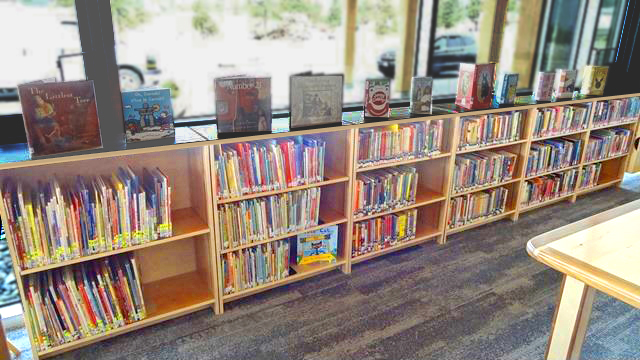
    Over 1,000 books on the shelves of Rocky Pines library.
  • Ahousaht

    About the community

    Ahousaht First Nation is a coastal community on Vancouver Island in BC. It includes much of Clayoquot Sound, and is the largest First Nation on the west coast of Vancouver Island by population. It has 2,400 members.

    Ahousaht First Nation’s core values are to respect one another, teach one another, care for one another, and help one another​, and to know that everything is one—everything is interconnected. The community also publishes a dictionary of Ahousaht words.

    About the library

    Write to Read BC’s 15th library was installed here. Its sponsors included the Rotary Club of Vancouver Arbutus, and the Rotary Club of Steveston.

  • Quatsino

    About the community

    Quatsino is a west-coast village on Quatsino Sound in northern Vancouver Island, BC. It is accessible by boat and float plane. Quatsino is near Coal Harbour and Port Alice. The largest town in this region of BC is Port Hardy, an hour northeast by boat and motor vehicle.

    Quatsino residents are employed in the forest, fishing, and eco-tourism industries. Some professionals also live there and practice their professions via the internet.

    About the library

    Write to Read BC installed its 14th library here. The Rotary Club of Whistler Millennium was its sponsor.

  • Tsay Keh Dene

    About the community

    The Tsay Keh Dene First Nation is a Sekani band in the Omineca region of northern BC’s interior. Its territories, settlements, and reserves are around Williston, about 550 kilometres north of Prince George.

    The people of Tsay Keh Dene hunted, trapped, fished, gathered food and herbs, and traditionally lived on this territory in the Rocky Mountain Trench. Tsay Keh Dene means People of the Mountain.

    The community is vibrant, created through hard work and commitment to its values, beliefs, and principles. This includes striving for sustainable growth and improving quality of life of its members. It does this through sound governance and responsible growth.

    About the library

    In partnership with the community Write to Read BC installed its 13th library here. Its sponsors included Rotary Club of Prince George Yellowhead, and Britco (now Boxx Modular).

  • Nooaitch

    About the community

    Nooaitch First Nation is in the southern interior region of BC, with its reserve community and offices in Merritt. The main urban centre is in the Nicola Country region, between the Lower Mainland and Kamloops.

    The Nooaitch First Nation reserve has a population of about 250 people.

    Economically, forestry is important to this community. In response to pine beetle infestation, in 2007 the band agreed to harvest 20,000 m³ of timber annually over a 5 years, in its traditional territory.

    About the library

    Nooaitch First Nation’s vision for its library included video-conferencing. As a result, other partners donated computers and screens, to make that vision a reality. This library can offer remote participation in courses and conferences, in its learning centre. In partnership with the community, this was the 12th library Write to Read BC installed. Sponsors included Rotary Club of Merritt, and Britco Structures (now Boxx Modular).