
Tag: children

  • Round reading room, square learning centre

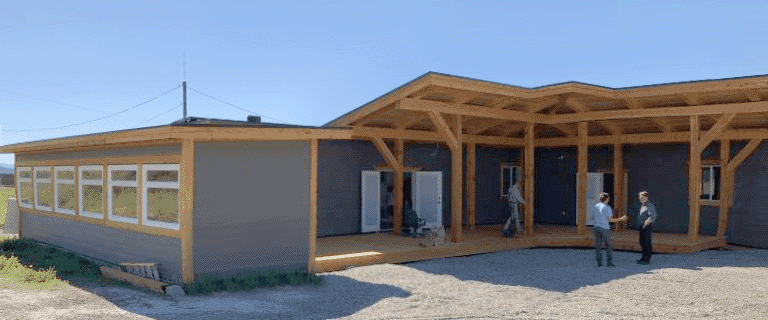
    A few years ago, Aboriginal Housing Society of Prince George approached Write to Read BC about installing an on-site library. A successful site visit was arranged this year. After inspecting the space with Housing Society leaders, one Write to Read BC volunteer described it in one word: “Wow!” The space is perfect for an Aboriginal-led library.

    The building has a round reading room, “shaped like a tipi.” It’s lighting mimics the northern lights. The reading room’s location is excellent for the community. It is physically connected to a daycare centre and surrounded by Indigenous housing.

    The Housing Society also hopes to install a learning space in a second room. The visiting volunteer described this room as “a square box at the moment.” However, the space will make a good learning centre once it is appropriately furnished. Write to Read BC’s volunteer teams are experienced at partnering with communities to transform spaces such as this.

    Aboriginal Housing Society of Prince George’s library plans were inspired by another Write to Read BC library collaboration, in Hazelton. For the potentially similar Prince George project, various people contributed their thoughts. Ideas ranged from floating shelves that can spotlight selected books to possible library programming by a local literacy group.

    In a post-visit discussion this month, Write to Read BC volunteers showed their readiness to engage. One experienced volunteer identified potentially costly logistics. Another intends to ask a Rotary Club to contribute funding. About $30,000 may be needed, depending on Aboriginal Housing Society of Prince George‘s vision for its library and learning centre.
  • Tl’esqox Library: ”Refresh” book list is half way

    In the Caribou-Chilcotin region, the Tl’esqox Library refresh is underway. This involves culling books from its shelves, and compiling a list of replacements. Already, the community selected about half the books for this list.

    Due to many recent births in the area, the library wants to include children’s books and materials on its list. This will support the community’s new Head Start program for children from infancy through 4 years of age.

    The community invited members of Write to Read BC’s library response team to visit Chilcotin (also called Riske Creek) to help with the Tl’esqox Library refresh. The goal is to complete the work by September.

    Part of the work is supported by a grant from the Four Pillars Society. This is a not-for-profit organization created to invest and distribute a $2.8-billion settlement fund from a class-action lawsuit.

    Photo of several one-story buildings, connected by a walkway and permanent awning. Several people are talking or walking in front of the small complex.
    Photo: The previously completed library, attached to a multi-generational centre. This centre included early learning, youth, and Elders programs, and a recording studio for language and culture revitalization. Now, the library is getting a refresh.
  • Conference attendees respond to Write to Read BC projects

    During a presentation about Indigenous BC libraries, attendees at 2026 BC Library Conference expressed interest and engaged with the panel of presenters. The conference is an annual event sponsored by BC Library Association.

    Panel shared a recently completed impact study of Write to Read BC’s collaborative projects with isolated Indigenous communities. After the presentation, the audience shared their own experiences as librarians. They also asked questions about process, to learn how to better serve indigenous readers in public libraries.

    Indigenous groups in public libraries

    One librarian noted that, in the past decade, public libraries in Canada have taken “hugely positive steps” by adding Indigenous books and content to their collections. The librarian said, “There’s a lot more programming focused on Indigenous history in Canada, including the horrible impact of Indian Residential Schools.”

    Others noted public libraries have actively recruited local Indigenous residents to be on their library boards.

    Another librarian said: “In our library we reach out to two local First Nation communities,” but added that this work has no government funding. “The province doesn’t really provide enough funding to cover the costs,” said the librarian.

    Members of the audience were not asked to identify themselves, so their comments aren’t attributed.

    Processing books

    One librarian asked about how Write to Read BC’s volunteers process books for Indigenous libraries.

    Indigenous libraries installed with Write to Read BC have new books from Indigenous publishing houses in their collection. They may also have a selection of other books. The Write To Read volunteers classify all these books using the Dewey Decimal system.

    A panel presenter noted that Indigenous youth in particular want to learn it. Knowing Dewey Decimal allows them to go into a public library knowing where to find the books they’re interested in.

    After the conference presentation, several librarians asked about volunteering with Write to Read BC to process books.

    Self-directed, Indigenous-led libraries

    Rather than support public libraries in making space for Indigenous readers, Write to Read BC takes a different approach. Its volunteers partner with isolated Indigenous communities to design and and install the library they themselves want.

    The focus has been on isolated communities that have no other library nearby. However, Write to Read BC has also partnered with Indigenous-led organizations and schools that want a library.