Write to Read BC volunteer Margaret Fletcher will speak to the Community-Led interest group of BC Library Association, or BCLA. Fletcher will discuss how Write to Read BC partners on projects in isolated communities across BC. She’ll also talk about the impact these projects have on social barriers and reinforcing community culture. This includes the installation of Internet-connected computers that provide remote access to courses and conferences through these learning centres.
The association’s interest group meets quarterly, with its next meeting in December.
The BCLA Community-Led interest group is about a community-led service approach, which consists of community consultation, needs assessments, metrics, and ongoing monitoring of services and programs. The interest group’s members want to connect and collaborate with community members to better support their needs.
At its core, the community-led model is about reducing or eliminating barriers to library services and programs. Another key factor to the community-led approach is staff training and development within the communities.
Write to Read BC has been selected to participate in a panel discussion at the conference for Libraries, Archives and Museums Nova Scotia (LAMNS). The panel will discuss its partnerships with isolated BC communities to install indigenous-led libraries.
The panel takes place on Friday, October 22, and includes our co-lead Bob Blacker, co-lead Dr Shirley-Pat Gale, and volunteers Louise Ormerod, Sarah Dupont, and Gordon Yusko.
The conference theme is Moving Forward Together: Collaboration and innovation to meet changing needs. The theme highlights the resilience of the three sectors—libraries, archives, and museums—as they developed ways to collaborate with communities from a distance due to Covid-19.
Several members of isolated BC communities attended a virtual conference about Indigenous communities. The conference, sponsored by Libraries, Archives and Museums Nova Scotia, included breakout sessions.
During the breakout sessions, members discussed their experience with Write to Read BC, and made new connections with people from Indigenous communities in other provinces.
Virtual conferences don’t just give remote attendees access to people in other communities. They expose attendees to other ideas and perspectives, and to a broad body of knowledge and potential for collaboration.
Usborne Books at Home is funding $1,000 each for Write to Read BC’s current library projects. A discussion over the summer led to Usborne’s support for the libraries of Gitsegukla, Tsideldel, and Heiltsuk first nations.
With each $1,000 order, Usborne will also provide free shipping and a 25% credit for additional purchases. This helps Write to Read BC make cash donations go even further. Our volunteer team thanks Usborne and its local representative, Louise Toews, for their generosity.
Write to read BC volunteer Wendy Brundage visited Gitsegukla in early September, and will follow up with the Elementary School’s principal Louise Ormerod to consult on the school’s book choices.
Usborne is based in southern Ontario, and has been in business for over 50 years. It’s a past winner of Children’s Book Publisher of the Year. Its mission is to help spread a love of literacy to kids and their families across Canada.
The Lax Kw’alaams library, part of the Write to Read BC project, was featured in a Vancouver Sun article. It describes community reactions to the arrival of new library books.
Excerpt from Vancouver Sun, March 20, 2021.
By Douglas Todd
“Please bring us more books” First Nation librarians ask.
Naomi White still remembers her delight when she saw a barge full of books moving across the inlet to her village of Lax Kw’alaams, north of Prince Rupert.
“It was amazing,” the First Nation librarian said.
Six volunteers from Metro Vancouver helped haul in 14 pallets of books and library furniture so that about 150 school-age children in the small village, 1,000 kilometres north of Vancouver, would get the chance to enhance their literacy.
“If you don’t know how to read, you don’t know how to do anything,” White said, explaining how literacy is the key to more First Nation people advancing into higher education and holding down jobs in the trades, businesses and professions.
“We’re just so isolated here, especially during COVID. Now we’re better able to foster the love of learning. And to pass on that reading is power. The more you know the better off you are,” said White, describing how many young people in the village are keen to learn about the larger world through the library.
After a long drive from Prince George, the installation team arrived in Gitsegukla at 2:45pm on a Tuesday, ready to install a library for the school and community.
The installation took 3 days, and the efforts of an incredible group of volunteers, including members of Write to Read BC’s library response team.
A literacy-focused addition to the community.
On arrival, the library response team swung into action, with the school staff and principal Louise Ormerod. Once the furniture was unloaded, the library response team started organizing the layout of the learning centre, with its internet connection that allows remote attendance at courses and conferences..
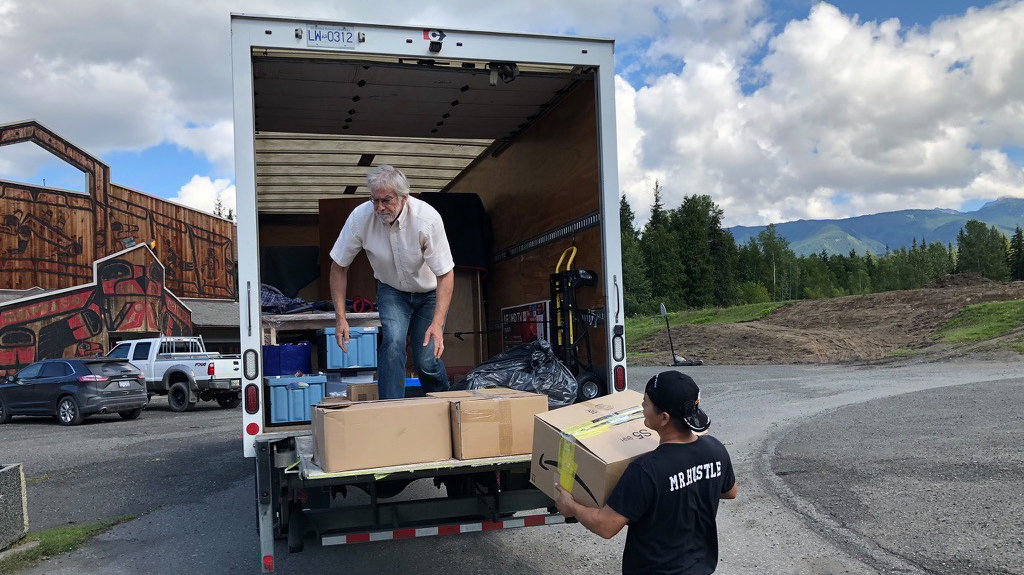
Volunteers unloading a delivery of library books.
Fetching sponsors
On Day 1, the team started early and progressed well. Total Support Services Chief executive officer Chris Gillen made a “quick” 3-hour return trip to Terrace to fetch more shelving tabs and an HDMI cable for the TV.
Chris Gillen of Total Support helps troubleshoot the learning centre’s computers at no cost.
How Total Support Services joined Write to Read BC
At a Victoria-Harbourside Rotary Club meeting a few weeks before the Gitsegukla library and its learning centre were installed, Write to Read BC co-lead Bob Blacker was giving a presentation about the program, by video call. One of the audience members mentioned that her son-in-law was working with First Nations to provide computers, IT solutions, and training. A few days later Bob received a call from Chris at Total Support, expressing interest. As a result of this connection, Write to Read BC now has a supplier of computers and related hardware needed for learning centres. In addition, Total Support will, at no cost to the libraries—provide online support for any computer problems that surface. This has been huge for Write to Read BC, as support for computers has always been a concern; now we do not have to worry about that.
After 3 days of hard work, the Write to Read BC team, along with principal Ormerod and her staff, completed Write to Read’s very first “version 3” learning centre.
We had some hiccups over the three days, which is to be expected, but we were able to prevail. The new library and resource centre looks great.
The team was invited for dinner.
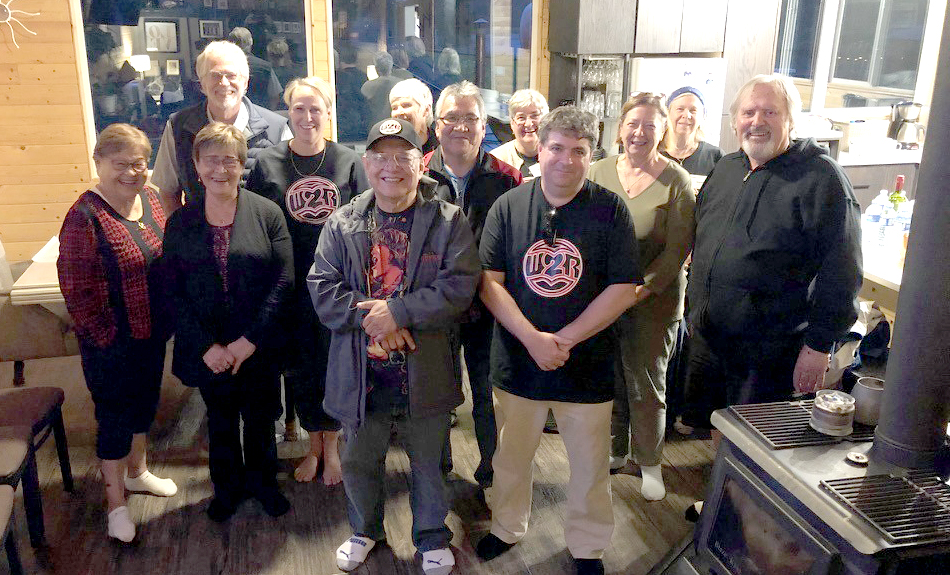
The satisfied team that installed the library and learning centre.
Gitsegukla Chief and council
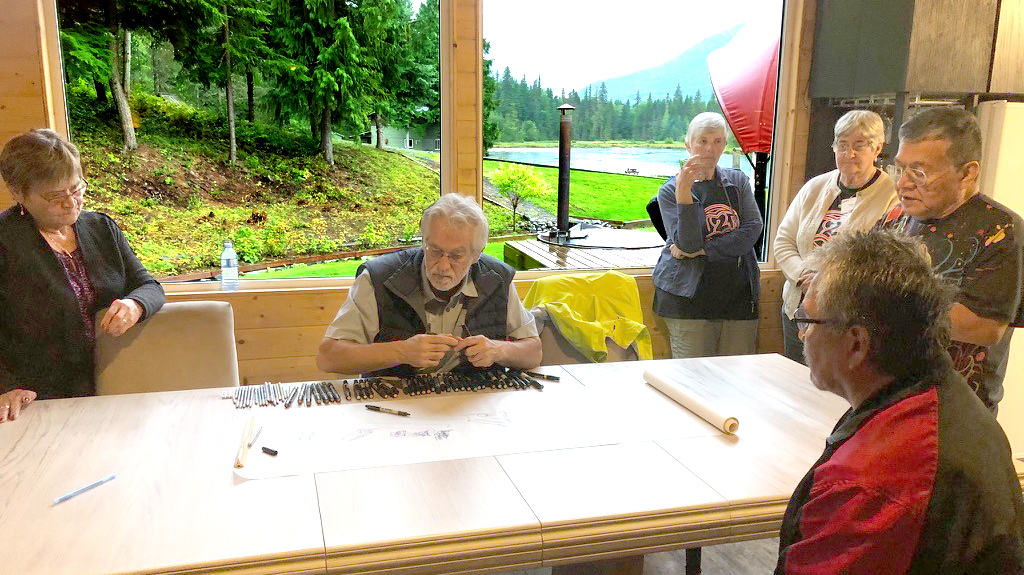
Overlooking Princess Lake, the Write to Read BC team were able to meet with Chief Willie and three council members. This allowed members of the team to chat with key members of the community. The evening ended with a handshake between Chief Willie and Leader of the Write to Read BC team co-lead, Bob Blacker, cementing the agreement and the blossoming friendship and trust with Gitsegukla.
As one of the library response team members said: “This is what makes it all worth it.”
An imagineering session: What does the community’ envision next?
The evening was topped off with an imagineering session, lead by design response team member, Scott Kemp. This was also a new experience for the Write to Read BC team.
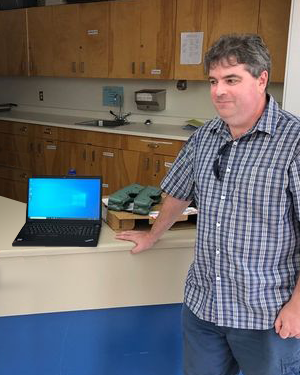
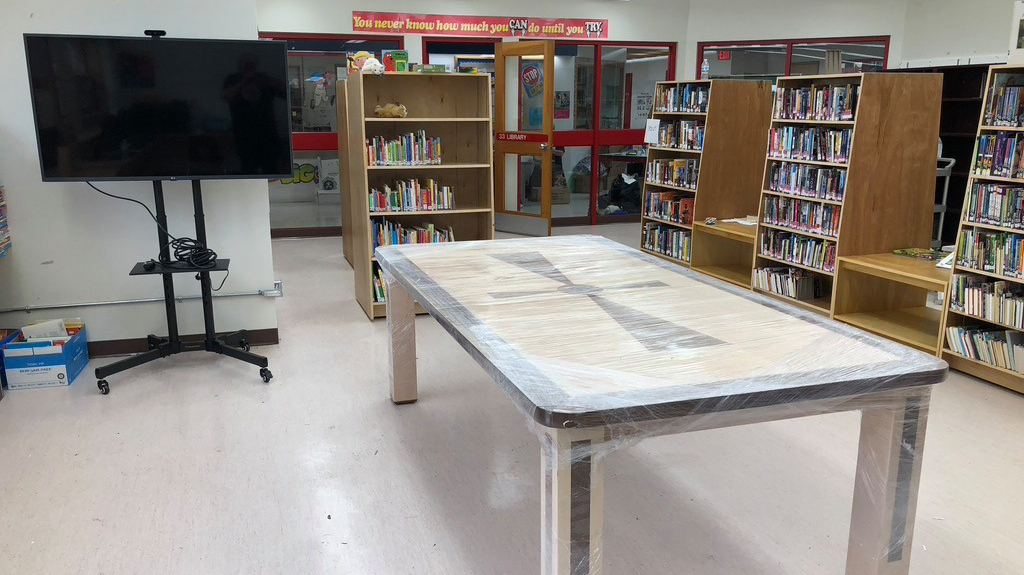
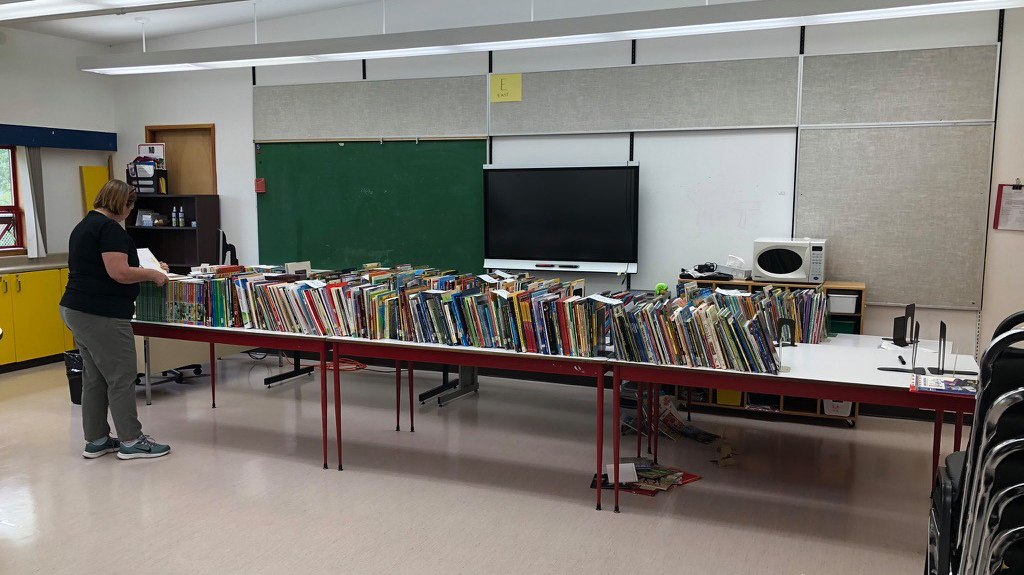
Key components of the learning centre: a large screen and a computer table.At this point still a warehouse of books, this room will soon be a classroom.
Over the next few months, we’ll be installing furniture and books at five locations, ranging from Vancouver to BC’s interior. Most of these libraries are linked to a community school or preschool, including in Squamish Nation, Tsideldel First Nation, Williams Lake First nation, and Aboriginal Mothers Care Centre.
Gitsegukla, in the Skeena region of west central BC, on the southeast side of the Skeena River adjacent to the Kitseguecla River mouth, near New Hazleton, BC.
Learning Centre at Tsideldel First Nation, located in the Chilcotin region of BC’s western central interior.
Littlest People Elementary School, a Homulchesan school in the Squamish Nation, next to the mouth of the Capilano River, in Greater Vancouver.
Aboriginal Mothers Care Centre in Vancouver’s downtown eastside neighbourhood. It’s a place where Aboriginal mothers, babies, and children can come to be together as a family.
Little Chiefs Elementary School library in Williams Lake First Nation, which is located in the Cariboo region of BC’s central interior, at Williams Lake.
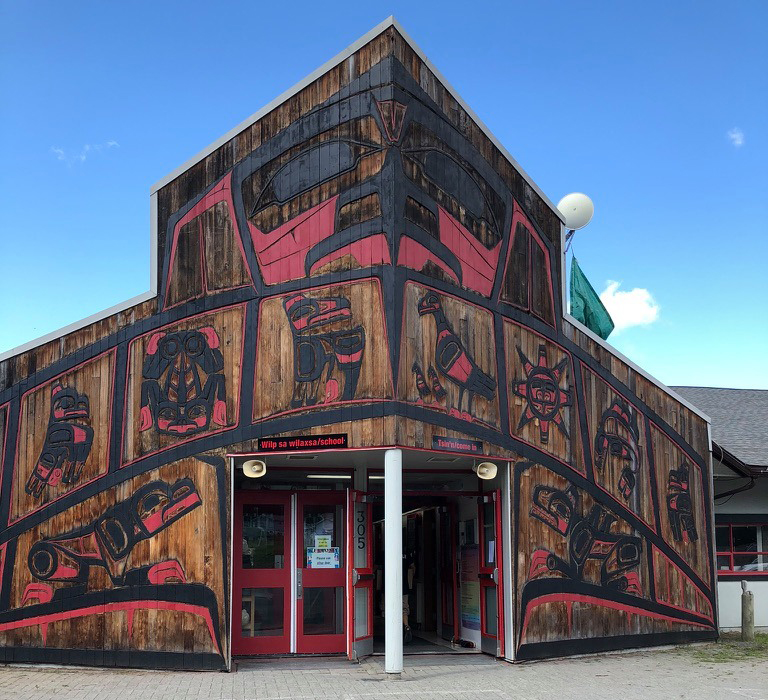
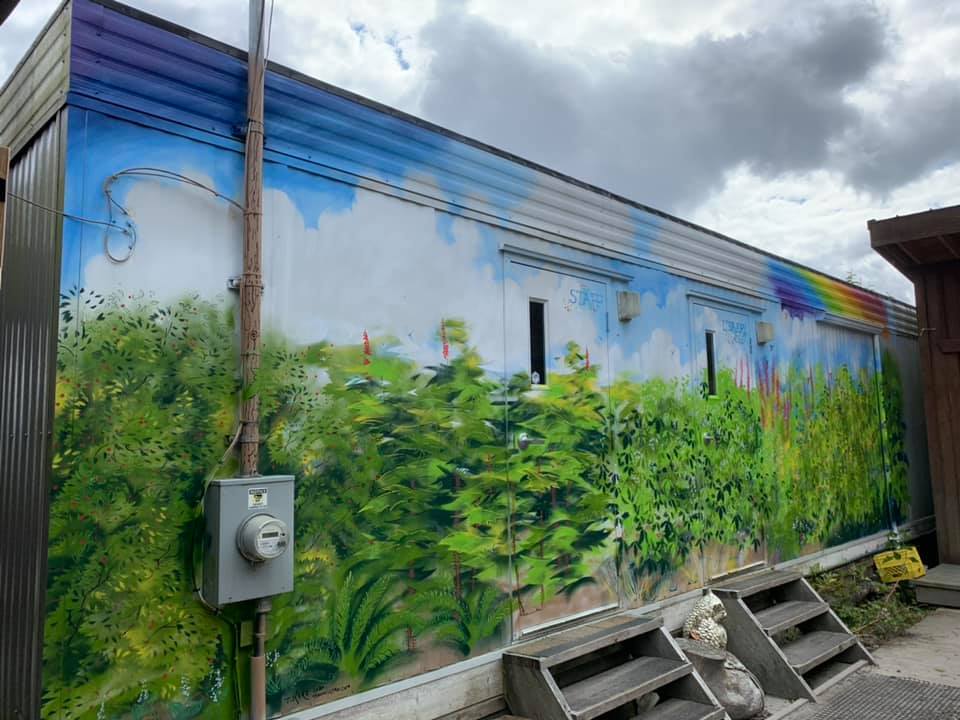
Need to brighten up your cloudy day? Stop by our Bella Bella library/office and check out this beautiful new mural by Thomas Kero! Photos don’t do it justice. There are so many hidden creatures and special features nestled into the summertime foliage.
A mural painted on the Bella Bella library. Kero wants the town to be as beautiful as the surrounding landscape.
Write to Read BC’s 17th library is getting ready for its official opening, after the recent installation of shelves and books by Write to Read BC volunteers.
Preparations involved a trip on the high seas by BC Ferry to the Nanaimo Correctional Centre to pick up furniture build for the library, and a visit to the Write to Read storage locker, provided by U-Lock Storage, to pick up a shipment of books.
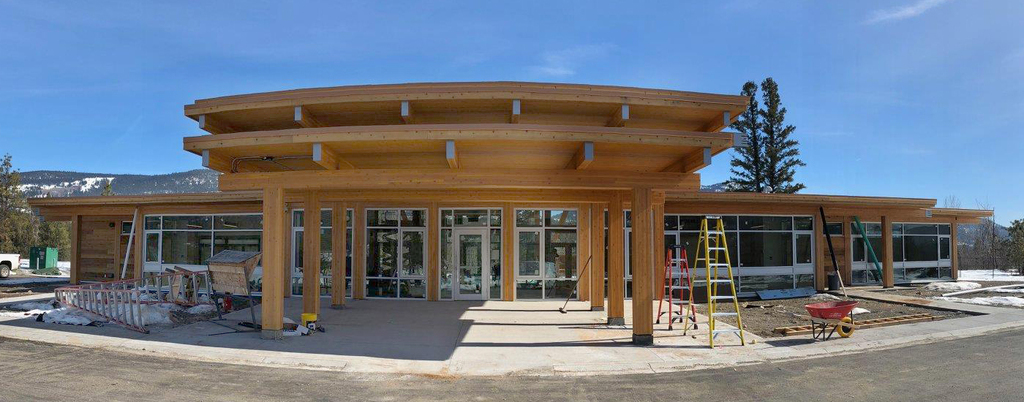
The final touches: the outside of the Rocky Pines community building before the library was installed in one of its rooms.
The library response team, volunteers Margaret, Carol, Liz, and Marion, made the trip to the Rocky Pines community, sometimes called the Lower Nicola Indian Band, near Merritt, BC, where they coordinated with local volunteers to prepare the furniture, shelves, and books for the library’s opening. Other volunteers later set up the TV and computers for the library’s learning centre, which will offer remote attendance to courses and conferences via Internet.
Still to come is an amazing donation of new Indigenous-authored books from GoodMinds.com. This donation of 1,000 books for readers from pre-schoolers to adults, is an $18,000 gift to the community.
A team visit to the community centre shows it’s ready for the library response team to install the shelves, seating, books, and technology.
Xeni Gwet’in First Nations Government, part of the Tŝilhqot’in Nation, is about 200 km west of Williams Lake, BC. Tŝilhqot’in is often translated as People of the River, or People of the Blue Water.
About one third of the Xeni Gwet’in community’s 400 members lives on their traditional territory. The people in Xeni Gwet’in maintain their land and their system of governance, as they always have. The land is a unique ecosystem, mountainous, crossed by glacial waterways and covered in forest. The government works towards community self-governance, with an emphasis on unity, respect, trust, and pride in the Tsilhqot’in heritage, language, and culture. The goals of Xeni Gwet’in government are to conserve the natural resources of its territory, keep the ecosystem healthy, in an economically sustainable way.
The band runs the local roads yard as well as a gas-bar, and built a housing subdivision with its own electrical grid, since the community is not connected to the main BC Hydro grid. The band manages its health program, and the local school serves Kindergarten to Grade 8 in three classrooms. Its teachers are long-term residents.
About the library
In partnership with the community, Write to Read BC discussed the vision for a library, which was then designed and constructed.