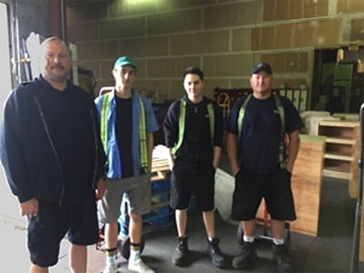
Write to Read BC’s co-lead Bob Blacker reports that the BC Correctional Service, through two of its facilities on Vancouver Island, have agreed to build furniture for Write to Read BC libraries.
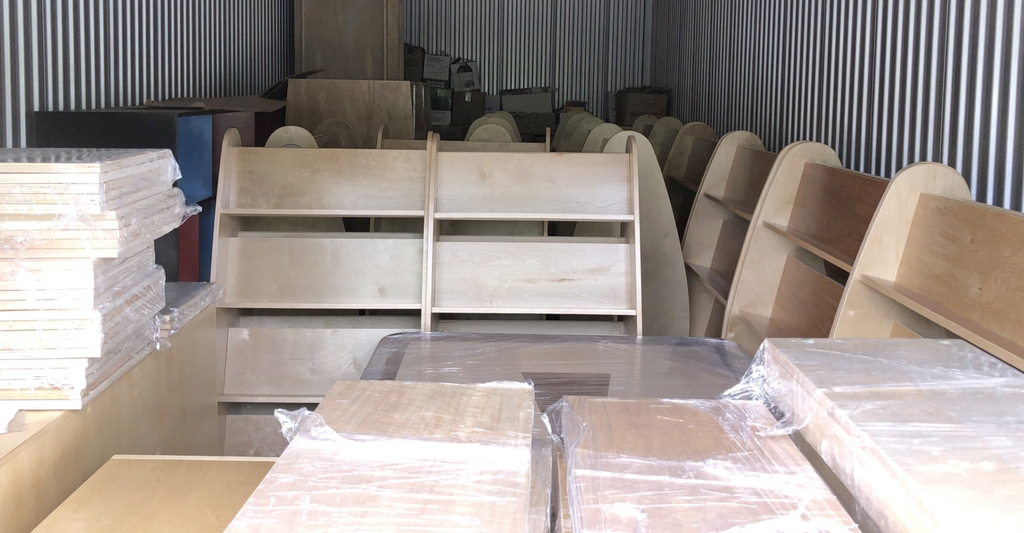
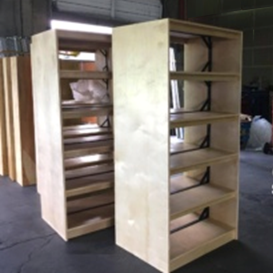
First Nations inmates will build bookshelves, computer stations, coffee tables, and any custom work that may be required for libraries that Write to Read BC installs in isolated, Indigenous communities across BC.
Not only will libraries have a choice of shelving types, the shelving can be custom fitted for each library space.
With the help of Windsor Plywood, Write to Read BC will arrange for the required materials. The Correctional Facilities will build the furniture. Another positive aspect of the agreement is that First Nation inmates will be able to help build the furniture, certainly a win/win for all involved.
Shelves will be picked up by volunteers and taken directly to a waiting library or stores in the Write to Read BC distribution centre in Nanaimo.
Old Massett band members talked about their concept of an Aboriginal library with Write to Read BC team members, recently. They were joined by Beng Leng Favreau of Literacy Haida Gwaii, and Christoph Neufeld from Britco Structures (now Boxx Modular).
Britco is providing modular buildings to house a number of Write to Read BC libraries.
The partnership now needs to find a Rotary Club to adopt this community fundraising project, so work can begin.
The community is very excited that we are preparing to do that. A visit to the community by Steven Point, the governor-general of BC, has also raised interest.
After partnering with Write to Read BC, the isolated community of Lax Kw’alaams conceived of a community library that meets their literacy and learning needs.
Another Write to Read BC partner, Mission Rotary Club, asked its community to contribute $5,000 to the project, and then doubled that with a $5,000 grant. The Rotary Club volunteers also set up the library in October.
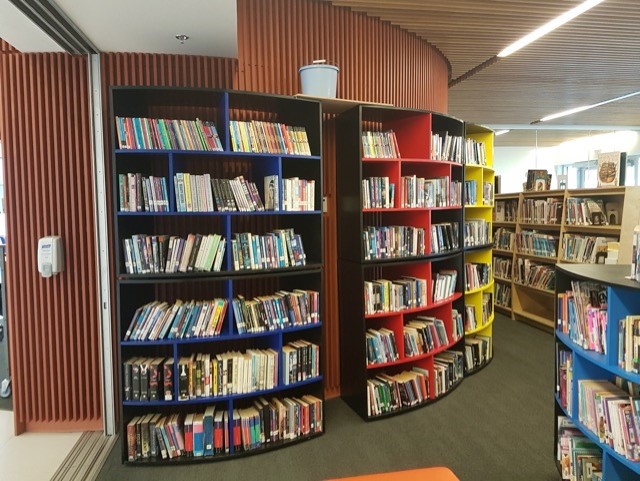
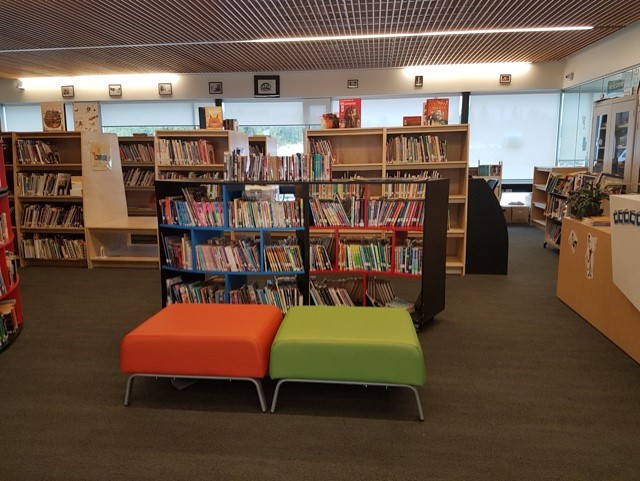
This new library in Lax Kw’alaams, formerly known as Port Simpson, has shelves of books to read, comfortable seating, and computers for remote attendance in courses and conferences in its learning centre.
Shelves of books in Lax Kw’alaams library.Seating and more shelves of books in the library in Lax Kw’alaams, BC.
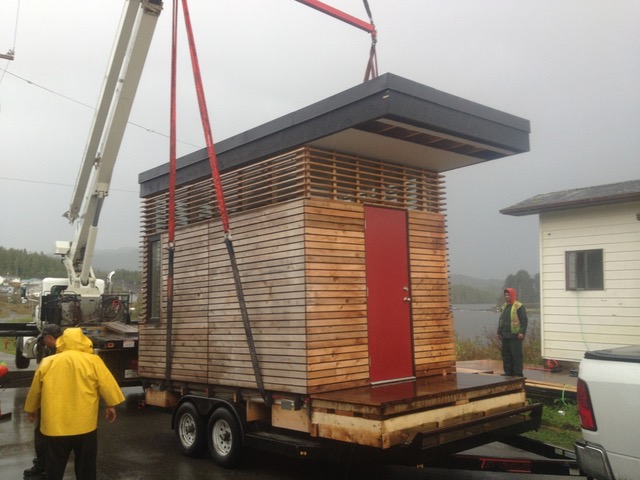
Metlakatla, just north of Prince Rupert, recently welcomed a small, portable library. The entire building was placed on a trailer and then transported from BC’s Lower Mainland by ferry, to serve Metlakatla.
The first step: loading the library onto the ferry.
The library is a compact, 10 m² studio with built-in shelving. It has cedar rainscreen cladding, R20 insulation, tilt-and-turn windows, and high-efficiency LED lighting. The library was donated by Western Camera Building president John MacFarlane. Western Camera is known for constructing tiny buildings for use as offices, storage facilities, and—in this case—as a library.
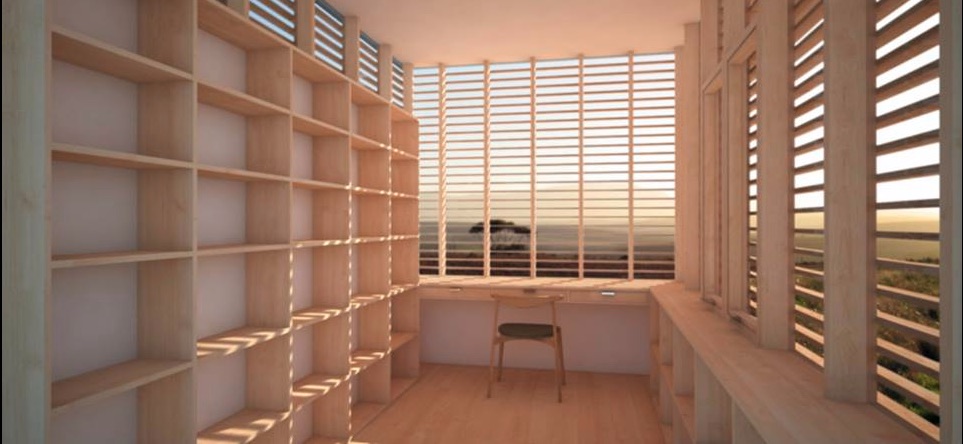
The interior of the library shows space for hundreds of books, and seating for computer use by one person at a time. The floors are easy to clean. Some of the windows open.
Based on the National Building Code for above-ground walls, insulation rated R20 exceeds both the “Good” and “Better” standards for above-ground walls in all zones across BC.
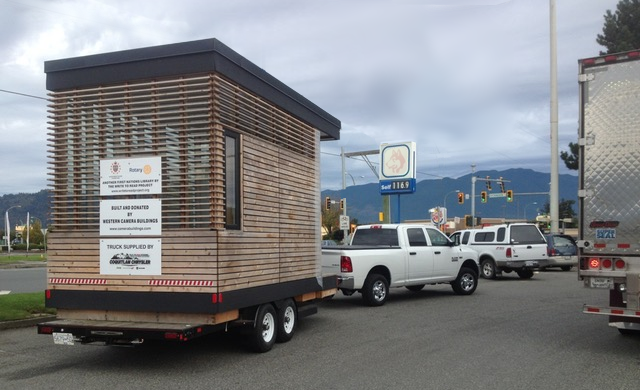
The community library, on a trailer, on its way to Metlakatla.
The library, which the community nicknamed Hobbit House, made the overwater portion of the trip by ferry, a service that BC Ferries provided for free.
On a recent visit to Ditidaht, one Write to Read BC volunteer brought along a digital camera rto donate to the school. He described the camera as “an old Panasonic Lumix SLR” but adds: “It’s amazing what can be accomplished using digital technology. Computers and digital cameras have changed the world in which we live. Pretty soon everybody will be a movie maker.”
That includes the 10 high school students at Ditidaht’s community school.
The Lumix camera has a 24× zoom, a Leica glass lens, built-in image stabilization to reduce motion blur, and a memory card. It shoots great photos. It was given to the teacher for use by the high school students.
Students to make a digital diary
From January to June 2014, high school students will use the camera to take photos of their daily life: going to school, playing, at home, with friends, in the community. Students can also take photos in the woods and on the water.
The camera’s memory card can store thousands of images, and the students are encouraged to photograph everything they see. Their teacher, Eva Clarke, will select the best images and store them on a computer.
The learning objectives of this project are to:
learn digital photography.
learn to see and document village life.
self-publish a book—perhaps an e-book.
A digital diary that shows what life is like in the Ditidaht village can introduce people to a place few will ever get to visit in person. By using a camera, connecting people from elsewhere to an isolated community like Ditidaht is as easy as point and shoot.
The project runs from January to June, 2014.
Ditidaht teacher Eva Clarke will choose the best images that students take of their life in and around the village.