Tag: literacy

  • Libraries impact literacy, identity, decolonisation

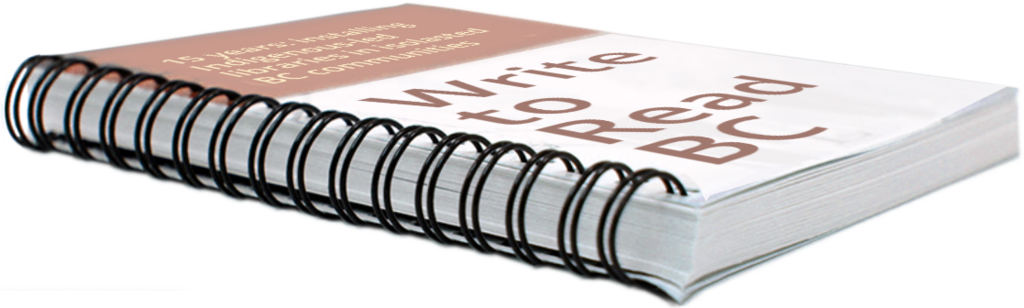
    For Indigenous communities, the benefits of community libraries range from literacy, to community development, to decolonisation. These are findings from a pre-publication copy of a study that assesses Write to Read BC partnerships with isolated communities.

    The study assesses the effectiveness of indigenous-led libraries in isolated BC communities. Simon Fraser University’s Community-Engaged Research initiative (CERi) arranged the study to evaluate Write to Read BC’s ongoing libraries project. The research was conducted in 2025, and the report will be published in spring 2026.

    In the pre-publication copy, some findings of the academic literature review are:

    • A library has the most impact when it’s an integrated part of the community. This refers to more than a physical location that’s easy to visit; it’s about contributing to community identity. A community’s vision for itself needs to include a library.
      — From M Asselin and R Dorion, 2013.
    • Printed and digital material in Indigenous-led libraries needs to present indigenous culture as equal, not inferior, to Western culture. This is because libraries can alter the social status of Indigenous communities previously shaped by Western sovereignty. In effect, a library can help counter the dispossession of traditional lands and historical prohibitions on language and cultural practice.
      — From B Parkin, H Harper, I Wallace, and P Mickan, 2020.
    • Libraries are essential for diversity of culture and language. In isolated indigenous communities, libraries can counter the loss of knowledges and languages, including through online content. That’s because unequal in-home access to digital information makes online participation harder for some.
      — From B Parkin, H Harper, I Wallace, and P Mickan, 2020.
    • Libraries can step beyond traditional concepts of learning as passive, focused on rote methods and recitation. Indigenous storytelling can play a part in learning, including remotely or via recordings. Basically, a library can embrace inclusion.
      — From M Asselin and R Dorion, 2013, and from M Kovach, 2017.
    • Community libraries are often initially created to foster literacy. But they become a way to support community engagement, social exchange, and cultural resiliency.
      — From R Sarjeant-Jenkins and K Walker, 2015.

    Funding and sources

    The research described here was made possible with Simon Fraser University’s CERi funding. The researcher’s analysis included these sources:

    • Asselin, M., & Doiron, R. (2013). Linking Literacy and Libraries in Global Communities (1st ed.). Routledge.
    • Ball, J. (2004). As if Indigenous knowledge and communities mattered: Transformative education in First Nations communities in Canada. American Indian Quarterly, 454-479.
    • Burgess, M. A. (2017). Investigating the impact upon First Nations students on reserve, in relation to their elementary school experience (Doctoral dissertation, University of Northern British Columbia).
    • Froehlich Chow, A., Wahpepah, K., Humbert, M. L., Houser, N., Brussoni, M., Erlandson, M., … & Ali, F. (2025). Nature’s Way-Our Way: A Journey Through the Co-Creation and Sharing of an Indigenous Physical Literacy Enriched Early Years Initiative. Engaged Scholar Journal, 11(1), 18-35.
    • Kovach, M. (2017). Doing indigenous methodologies. The SAGE handbook of qualitative research, 383-406.
    • Helen Klieve, Bev Fluckiger. (2015). Towards an evidence base: Exploring the impact of community-based literacy programs in remote Indigenous communities. Australasian Journal of Early Childhood, 40(2), 89–98.
    • McMahon, R., McNally, M. B., Nitschke, E., Napier, K., Alvarez Malvido, M., & Akçayir, M. (2024). Codesigning community networking literacies with rural/remote Northern Indigenous communities in Northwest Territories, Canada. Journal of Computer-Mediated Communication, 29(1).
    • Morcom, L. (2014). Determining the role of language and culture in First Nations schools: A comparison of the First Nations Education Act with the policy of the Assembly of First Nations. Canadian Journal of Educational Administration and Policy, (163).
    Research on the impact of Indigenous-led libraries installed together with Write to Read BC in isolated BC communities.
  • Value in isolated libraries: SFU study

    An Indigenous-led study at Simon Fraser University will sum up 15 years of Write to Read BC library projects. The study assessed 15 years of completed projects. These projects are partnerships with Indigenous communities to design and install the library they want. In a preview of the findings, the study found that project partners—isolated indigenous communities across BC—gained substantially. The gains show up in several ways.

    Firstly, at a community-wide level libraries are places where people connect, the study found. It reports that Write to Read BC libraries foster resiliency and increase active community participation. That’s in part because the libraries also become community hubs.

    Secondly, individual or “autonomous” library use is also connected to increased productivity within communities.

    Thirdly, the effect on literacy is positive. The study found an increased interest in literacy related to community libraries installed by Write to Read BC.

    Lastly, the Indigenous-led study noted several community challenges indirectly related to libraries. For example, due to shifts in literacy funding, schools have been absorbing community-based programs. Also, expanding those community programs increases the demand for meeting space. A community library can ease the demands on schools and provide another place to host programs.

    Full details of the findings will be available when the research report is published in the spring of 2026. The study, which Write to Read BC requested, received funding from SFU Community-Engaged Research Initiative, or SFU CERi. This program helps community organisations understand the effectiveness of their efforts. The research applied Indigenous cultural insight of a Simon Fraser University (SFU) graduate student.

    Write to Read BC leaders and the Rotary Club of Steveston-Richmond recently got a preview of the study. That’s because the Rotary Club is a significant funder of the Indigenous-led libraries that Write to Read BC volunteers install. Over the past 15 years, these partnerships have resulted in about two dozen libraries in isolated communities across BC.

    Research on the impact of Indigenous-led libraries installed together with Write to Read BC in isolated BC communities.
  • Assessing the impact of Write to Read BC

    An independent researcher is evaluating the long-term impacts and community perspectives of the Write to Read BC Project, at its request. Working closely with Indigenous leaders, educators, and community members, this research “will culminate in an assessment report that will guide the re-framing and Indigenization of the Write to Read BC Project.”

    The assessment is provided by a program at Simon Fraser University that helps SFU graduate students collaborate with non-profit groups and community groups. The program supports research projects that provide plain-language answers to community-driven research questions at low or no cost to the community partner.

    The Write to Read BC study will focus on

    • Community collaboration and data collection.
    • Literature and media review.
    • Data analysis and reporting.

    The research takes place in 2025. Next, a prepublication will be available for review. Finally, the official report will be published in spring 2026.

    Community collaboration and data collection

    The study will:

    • collaborate with Indigenous leaders, educators, and community members to gather perspectives on the impact of active and inactive learning centres.
    • conduct interviews, facilitate protocol-guided information-sharing sessions, and ensure respectful, ethical data collection.
    • assist in developing “case stories” from selected communities, ensuring informed consent and cultural sensitivity.
    • document and organize qualitative data to inform the final project report and analysis.

    Literature and media review

    The study will:

    • conduct a literature review focusing on the intersections of Indigenous knowledge systems and colonial education practices.
    • review and summarize “grey literature” and media related to the Write to Read BC project, including speeches, audio/video recordings, and planning documents.
    • gather and analyse quantitative data on educational outcomes (such as Kindergarten to Grade 12 graduation rates, post-secondary enrolment) in communities with Write to Read BC centres.
    • identify gaps in the literature or data and recommend additional resources to address these gaps.

    Data analysis and reporting

    The study will:

    • analyse qualitative and quantitative data to understand changes in community engagement, cultural connectedness, language revitalization, and educational impacts associated with Write to Read BC learning centres.
    • assist in preparing interim reports, summaries, and visual presentations to share findings with project stakeholders.
    • draft a final report, weaving Indigenous knowledge, community insights, and statistical data into a cohesive narrative.
    • assist in developing recommendations for future iterations of Write to Read BC and strategies to support its ongoing sustainability and alignment with Indigenous sovereignty.
    Research on the impact of Indigenous-led libraries installed together with Write to Read BC in isolated BC communities.
  • Tsawassen

    About the community

    The Tsawwassen First Nation is in greater Vancouver, in BC’s lower mainland. Its name means “land facing the sea”. Traditionally, its lands covered a what is now Pitt Meadows, New Westminster, and several gulf islands off the mainland’s west coast. It has lands close to the south arm of the Fraser River, and just north of the border with the USA at Point Roberts.

    Tsawassen First Nation has a youth centre on site that includes a gymnasium, weight room, art room, teen lounge, and teaching kitchen. It has areas for music, dance, and media that allow for scheduled and drop-in classes. There is after-school care for young children.

    The centre also has a library.

    About the library

    Write to Read BC installed the library in partnership with the Tsawwassen First Nation Youth Centre.

  • Xwemelch’stn School

    About the community

    The Squamish Nation is based in BC’s lower mainland, in West Vancouver, North Vancouver, and Squamish, BC. It includes 26 First Nations reserves around the Capilano River, Mosquito Creek, and Seymour River on the north shore of Burrard Inlet in North Vancouver, along the Squamish River, and in Gibsons and Port Mellon in Howe Sound.

    One of Squamish Nation’s schools, Capilano Littlest Ones, brings together 130 Indigenous and non-Indigenous students in the Norgate area of urban North Vancouver. The school and its library bring together Indigenous and non-indigenous citizens, to break down social barriers, build bridges across cultures, and re-establish positive relationships. Capilano Littlest Ones is a community school under the auspices of North Vancouver School District.

    About the library

    Write to Read BC installed a library in Capilano Littlest Ones Xwemelch’stn School. Its sponsors included the Rotary Club of West Vancouver Sunrise.

  • Aboriginal Mother Centre

    About the organisation

    Aboriginal Mother Centre offers housing in Vancouver, BC, for mothers and their young children, who are at risk of homelessness or child welfare intervention. The program offers suites for mothers and children under the age of nine.

    The program focuses on mothers giving back to their community, for example by helping with the Elders program by serving food, cleaning up tables, distributing food to take home, and engaging with Elders.

    Aboriginal Mother Centre also offers family-wellness programs for mothers to enhance their skills and abilities as parents, and help them on their life journeys. Each week, the centre also offers parenting workshops, housing- and resources workshops, life-skills workshops and self-care workshops.

    About the library

    Write to Read BC placed a library in the Aboriginal Mothers Centre. The library’s sponsors included the Rotary Club of Whistler Millennium.

  • T’exelcemc

    About the community

    The T’exelcemc, or people of Williams Lake First Nation, is in the central interior of BC, in the Cariboo region, at the city of Williams Lake. Its main Indian Reserve is Williams Lake Indian Reserve No. 1, also known as Sugarcane.

    About the library

    The library in Little Chiefs Elementary school, in T’exelcemc First Nation, Williams Lake, was installed in partnership with Write to Read BC. It is our 20th library.

  • Gitsegukla

    About the community

    Gitsegukla is is on the southeast side of the Skeena River adjacent to the Kitseguecla River mouth, in west-central BC’s Skeena region. This indigenous community is about 100 km northwest of Smithers and about 110 km northeast of Terrace.

    About the library

    Write to Read BC installed its 19th library here, in the Gitsegukla elementary school. Its sponsors included the Rotary Club of Terrace-Skeena Valley, the Rotary Club of Peachland, and the Jack Gin Family Foundation.

    Write to Read BC volunteers were challenged by this library. The need to avoid spreading COVID-19, the work took place, during a school holiday, when students were offsite. Out-of-town volunteers who brought shelving, furniture, books, and computer equipment did not socialise or stay with with community members.

    This library had a positive impact on the community.

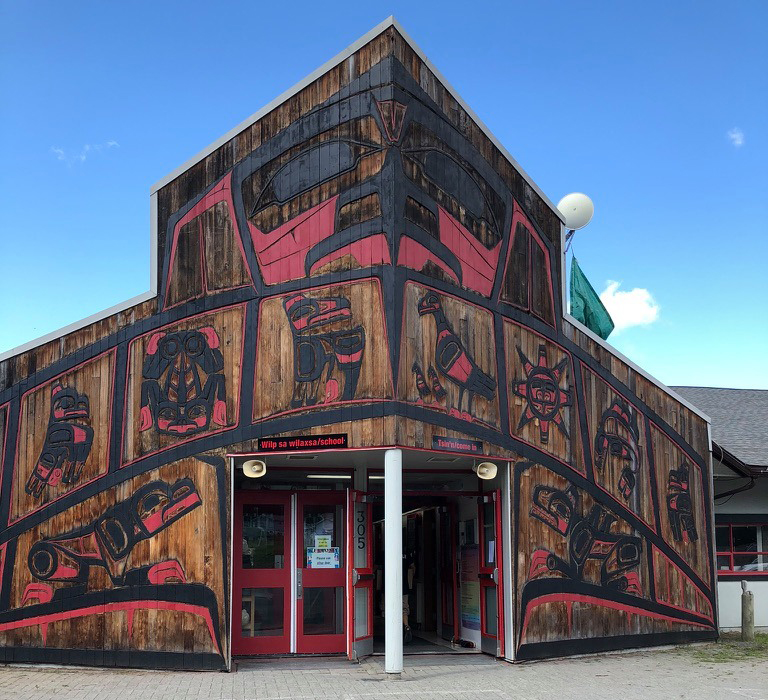
    The entrance of Gitsegukla school and library.
    A literacy-focused addition to the community school.
  • Tsi-Deldel

    About the community

    The Tsi-Deldel or Tŝideldel First Nation is in the western Chilcotin district of the BC’s central Interior region. Its offices are located on Redstone Reserve. It includes smaller reserves around Redbrush and Puntzi Lake. It is sometimes referred to as the Alexis Creek Indian Band.

    Tsi-Deldel First Nation’s traditional way of life includes fishing, hunting, and plant gathering. Community members fish for salmon and trout, and gather berries and medicinal plants in the surrounding rivers, lakes, mountains and traditional areas. These practices have been a part of its way of life for generations and continue to be an essential part of its culture today.

    About the library

    Write to read BC installed its 18th library here. Its sponsors included the Rotary Club of the Sunshine Coast, and the Jack Gin Family Foundation.

  • Rocky Pines, Lower Nicola Indian Band

    About the community

    Lower Nicola Indian Band, is one of the interior Salish first peoples in the south-central interior of BC. Its community and offices are located at Shulus, also known as Lower Nicola, just west of Merritt, BC, between BC’s lower mainland and Kamloops.

    About the library

    Write to Read BC placed its 17th library in Rocky Pines, or Lower Nicola Indian Band. It was sponsored by the Rotary Club of Richmond Sunrise.

    Over 1,000 books on the shelves of Rocky Pines library.