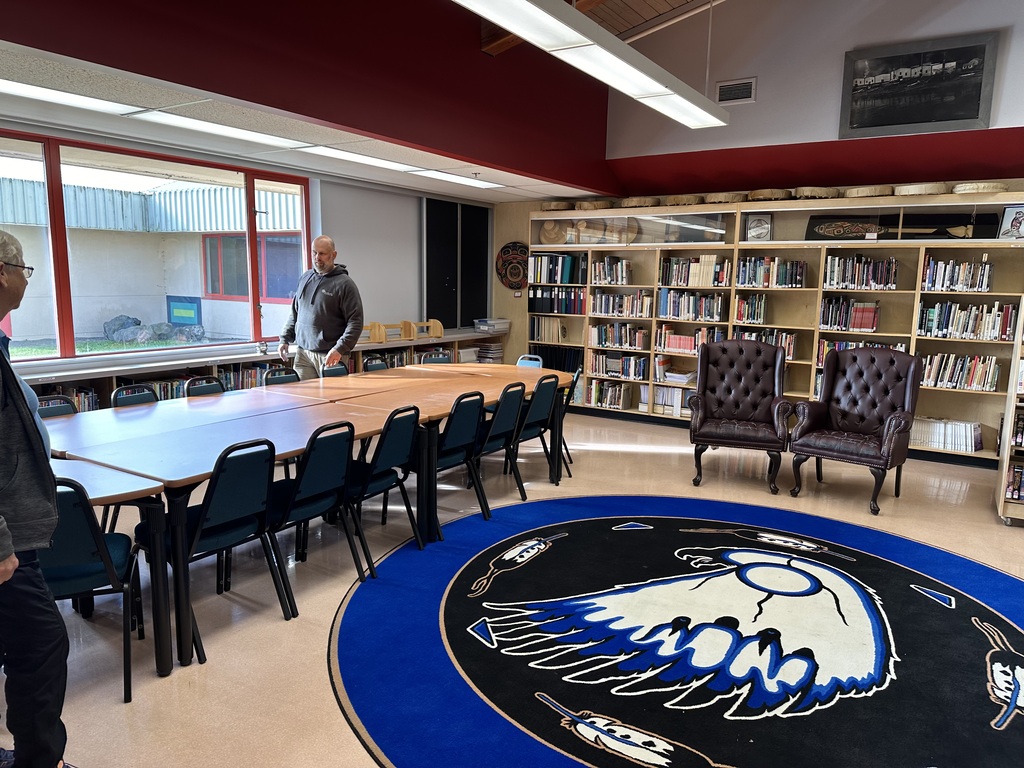
The Squamish Nation is based in BC’s lower mainland, in West Vancouver, North Vancouver, and Squamish, BC. It includes 26 First Nations reserves around the Capilano River, Mosquito Creek, and Seymour River on the north shore of Burrard Inlet in North Vancouver, along the Squamish River, and in Gibsons and Port Mellon in Howe Sound.
One of Squamish Nation’s schools, Capilano Littlest Ones, brings together 130 Indigenous and non-Indigenous students in the Norgate area of urban North Vancouver. The school and its library bring together Indigenous and non-indigenous citizens, to break down social barriers, build bridges across cultures, and re-establish positive relationships. Capilano Littlest Ones is a community school under the auspices of North Vancouver School District.
About the library
Write to Read BC installed a library in Capilano Littlest Ones Xwemelch’stn School. Its sponsors included the Rotary Club of West Vancouver Sunrise.
The T’exelcemc, or people of Williams Lake First Nation, is in the central interior of BC, in the Cariboo region, at the city of Williams Lake. Its main Indian Reserve is Williams Lake Indian Reserve No. 1, also known as Sugarcane.
About the library
The library in Little Chiefs Elementary school, in T’exelcemc First Nation, Williams Lake, was installed in partnership with Write to Read BC. It is our 20th library.
Gitsegukla is is on the southeast side of the Skeena River adjacent to the Kitseguecla River mouth, in west-central BC’s Skeena region. This indigenous community is about 100 km northwest of Smithers and about 110 km northeast of Terrace.
About the library
Write to Read BC installed its 19th library here, in the Gitsegukla elementary school. Its sponsors included the Rotary Club of Terrace-Skeena Valley, the Rotary Club of Peachland, and the Jack Gin Family Foundation.
Write to Read BC volunteers were challenged by this library. The need to avoid spreading COVID-19, the work took place, during a school holiday, when students were offsite. Out-of-town volunteers who brought shelving, furniture, books, and computer equipment did not socialise or stay with with community members.
Nisaika Kumtuks is an elementary school in Nanaimo. It opened its doors in September 2014 as is the first urban aboriginal public school on Vancouver Island. At its start, if offered children from Kindergarten to grade 4 an Aboriginal focused curriculum.
Nisaika Kumtuks means “ours to know” in the Chinook language.
The school started in the Boys and Girls Clubs of Central Vancouver Island in Nanaimo, BC, with additional support from Nanaimo Aboriginal Centre, Mid Island Métis Nation, School District 84.
About the library
Write to Read BC installed its 16th library for the students and their family members. Sponsors included the Rotary Clubs of Nanaimo and Lantzville.
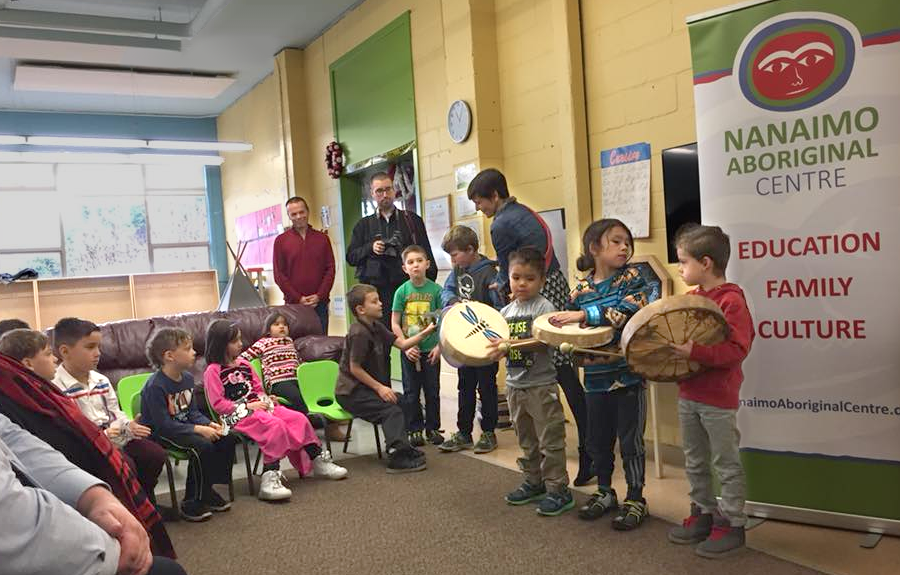
Children drumming at the opening ceremony of their school library.
Previously, students at Nanaimo’s Nisaika Kumtuks Elementary Centre walked to the public library for books. After the ribbon-cutting, they had a library in their school building.
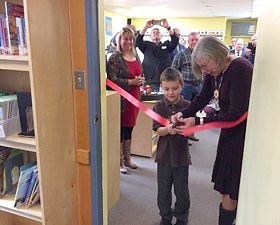
Cutting the ribbon on opening day.
The library offers tablets, computers, and video conferencing, the library has books for children and adults that students and their families can use.
The present-day Heiltsuk Band of Indians, formerly Bella Bella, are the main descendants of Hailhzaqvla-speaking peoples who inhabited an area of approximately 15,000 km² in the central coastal region of BC. Heiltsuk traditional territory extends from the southern tip of Calvert Island, up Dean and Burke Channels as far as Kimsquit and the head of Dean Inlet to the northeast, and up the Mathieson and Finlayson Channels to the north. It includes Roscoe, Cousins, and Spiller Inlets, Ellerslie Lake, the outer coast regions of Milbanke Sound, Queens Sound, the Goose Island Group, and Calvert.
The word Heiltsuk
Heiltsuk, according to grandmother Hilistis Beatrice Brown’s personal communication, originally referred to all Aboriginal people or groups elsewhere. For example, the Gitsxan would have been referred to as Heiltsuk. Over time, as Indian Bands and reserves were established, the present-day Heiltsuk Band was initially registered as the Bella Bella Band, then renamed to Heiltsuk as its formal Title name.
There is also reference to Heiltsuk meaning to speak and act in the right way, which reflects a traditional value that was a foundation of our principles and relations.
Heiltsuk College
The Heiltsuk College is a First-Nation-owned community college in Bella Bella. It offers post-secondary academic programs and training. Waglisla Adult Learning Centre is a seamless adjunct of Heiltsuk College and it offers upgrading programs from basic literacy to Adult Dogwood Grade 12 graduation. This educational institution has been in place for approximately 40 years and is housed in a church basement and in two aging portable trailers.
Aboriginal Student Transitions handbook
Based on the history of successful transitions of Heiltsuk College students from Bella Bella to off-reserve continued education or training, IAHLA took notice and wanted to research what made our college unique in this way. When Joann Green was an instructor, she developed a College Survival Skills mini-course that was a mandatory course for any student who planned to leave the community to attend further education or training elsewhere. Its focus is life skills training, but also gave students a practical tool for navigating systems in the city, such as the transit buses, applying for rental housing, etc. The student supports didn’t end when a student left town—they continued to be supported long distance and received encouragement, Heiltsuk food gifts, or whatever else was required to make their transitions easier. IAHLA worked together with UVIC and NVIT to do create the Handbook, and out of this came the ongoing practice of hosting aboriginal students on campuses in order to give them direct experiences and inspire them to move forward. Several Heiltsuk university students have participated and benefited from this initiative including Jessica Humchitt, who is enrolled in Health Sciences at SFU. This wrap-around service is seen as a best practice because it is a natural process that not only supports but also dignifies students.
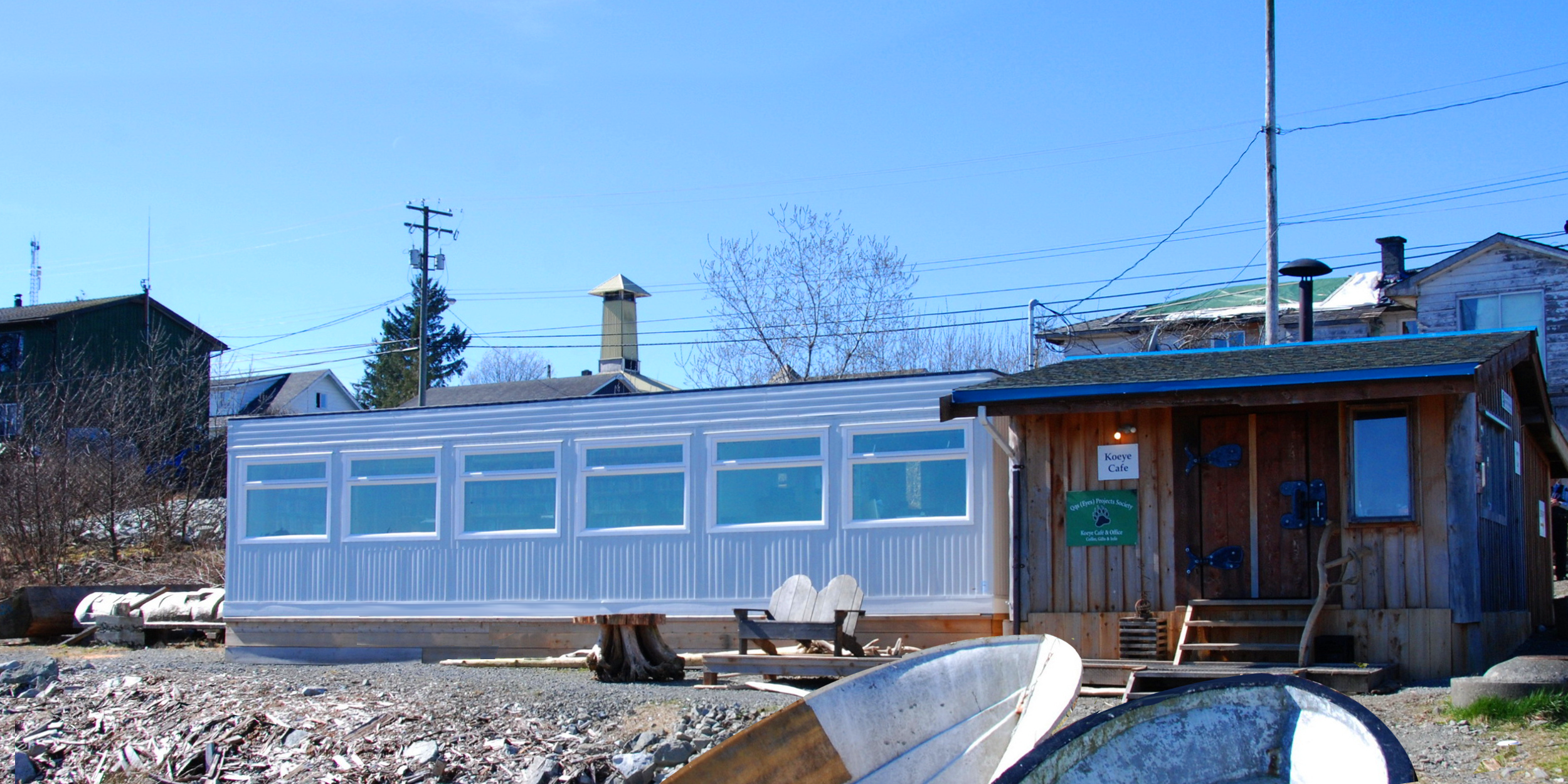
Facing the shore is the Write to Read BC library in Bella Bella, along with a wooden deck, chairs, table of the Koeye Café. Two boats are pulled up onto the shore.
About the library
In 2019, the community planned an immediate temporary space for an Employment Centre, and a multipurpose structure that would include Heiltsuk College, MCFNTS, and Employment and Training Centre by 2020.
The Bella Bella library is the fifth Write to Read BC library. Sponsors included Rotary Club of Steveston, and Britco Structures (now Boxx Modular).
Leaders of Lheidli T’enneh First Nation, educators, and Write to Read BC volunteers have discussed the community’s vision for an indigenous-led library. A library offers support for programs that interest the community.
Also, the library’s collection will represent Indigenous communities.
The Gitanmaax Band are Gitxsan people live where the Skeena and Bulkley rivers meet, in north-western BC near Hazelton. Gitanmaax was the name of the winter village, which became the current reserve. Gitanmaax means People who Fish by Torchlight.
The Gitanmaax Band currently has about 800 members living in the community, and about twice as many more living elsewhere.
Every 2 years, members elect a Chief and 12 council members. Each council member is appointed a portfolio of services that the band administration delivers to the community:
Community-member services, including education, social development, child and youth wellbeing, and health.
Infrastructure and community services, including lands, housing, public works, and public safety.
Professional services, including administration, finance, economic development, band membership, legal counsel, and company management.
About the library
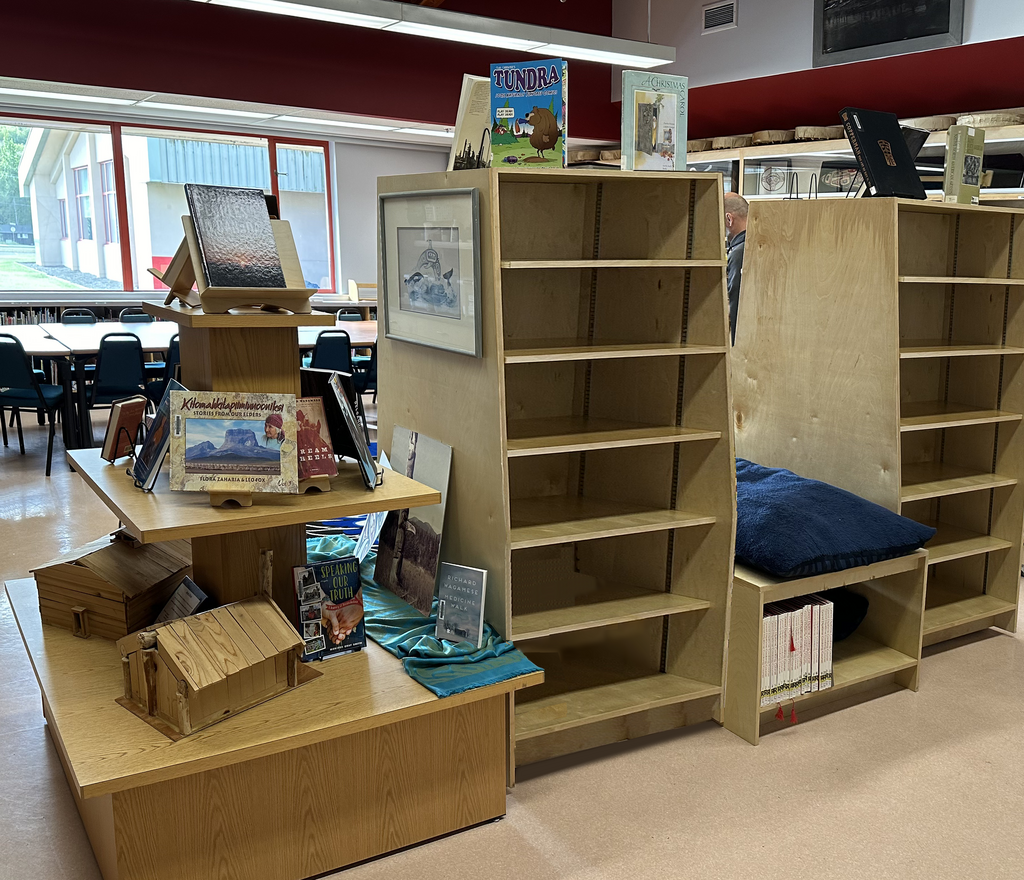
Gitanmaax installed a library in its Hazelton First Nation Resource Centre. The community and council did this in collaboration and partnership with Write to Read BC. The library includes display cases for important cultural objects, wooden models of traditional Indigenous housing, and books about a range of Indigenous cultures and lands.
The newly installed books and important cultural objects.
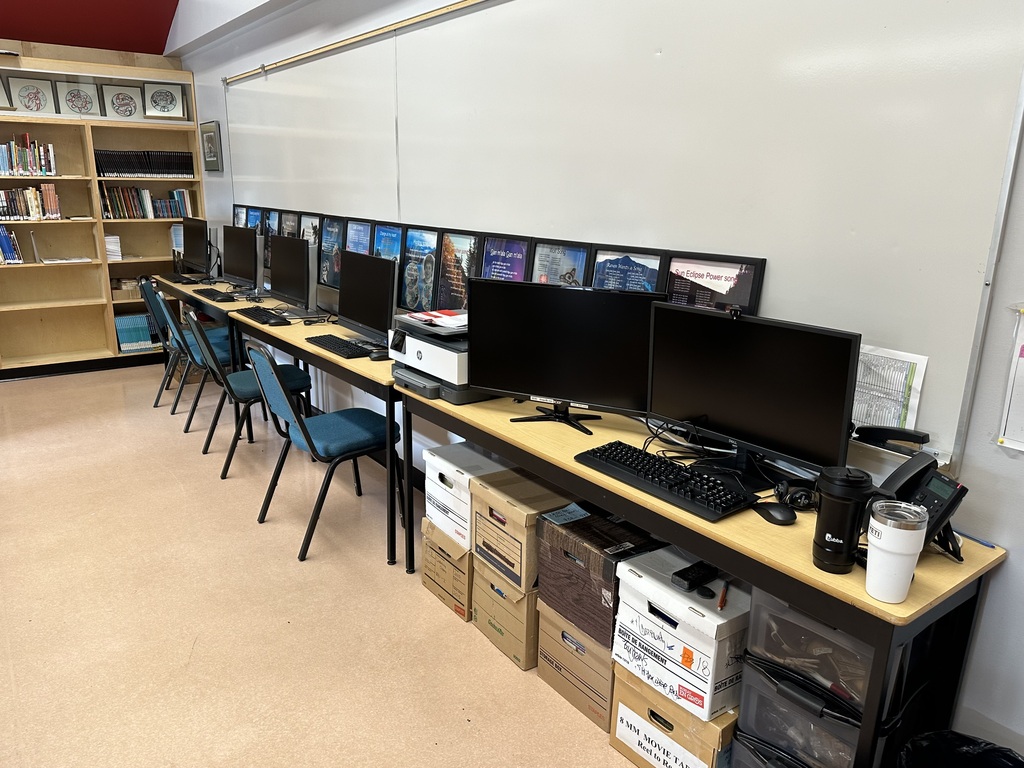
The library has tables and seating for working and meeting. Along one wall, it has computers and screens to allow remote attendance at online courses and conferences, in its learning centre.
Four workstations and a printer, with the capacity to grow the library’s learning centre.
Near the village of Hazelton, Write to Read BC volunteers recently delivered custom shelving required for the community’s school library. The shelves will also display important cultural objects, in both enclosed and open displays.
New shelving, to be filled with books by the library response team. On the left is an open display case that shows framed historical photos and wooden models of traditional Indigenous housing.
The school’s plan is nearing completion. The shelves were built for the library by Nanaimo Correctional Centre.
This is the 23rd library the Write to Read BC project will install in isolated communities across BC, in partnership with the community.
When Gitsegukla elementary school principal Louise Ormerod talks about her school’s journey from failure to success—not just for the Kindergarten to Grade 7 students, but also for adult learners in the community—Write to Read BC gets part of the credit.
School risked getting shut down
In 2018 the BC Ministry of Education assessed the school. It failed. The ministry said the school would be closed if it didn’t resolve the 21 violations ministry auditors found. The community also knew the school was poor. Some families left the community so their children could get an education. New teachers quickly left.
But two years later, when auditors returned, they found a vast improvement. The school was “teaching to the curriculum” and meeting BC Ministry of Education standards. Auditors observed the school had found the resources every elementary school needs. Literacy rates increased 400%. Teachers stayed.
Ministry auditors told Ormerod that hers was the only audited school that did not have a single violation that year. Ormerod credits her staff and the community’s commitment to saving education in their community. She says Write to Read BC not only played a role, but made it easy, by being prpared and by knowing who to call to solve various problems. As for the library Write to Read BC installed, Ormerod says, “we had the best library and learning centre we could have ever asked for to support that learning.”
The story on video
In this 9½-minute video of an online talk, Ormerod tells the story of her school’s journey.
School principal Louise Ormerod talks about improving literacy and numeracy at her school.
Ormerod also gives advice to other schools who want to develop a library of their own:
Give the library a formal opening, with all the fanfare it deserves, to acknowledge the accomplishment. Gitsegukla school missed theirs because of Covid-19 restrictions.
Identify a champion who’s passionate about maintaining the facility once it’s launched.
Open the library after hours, so adult community members can use the library, and can attend online courses by using the library’s learning centre.
Get trained to manage a digital lending system.
Ormerod credits the expertise and connections of Write to Read BC’s volunteers, and the fundraising efforts of the Rotary Club for helping to make success possible for Gitsegukla Elementary and the whole community.
Success despite COVID-19
The community, the school, and Write to Read BC installed a library while complying with COVID-19 restrictions. The shelving, furniture, books, and computer equipment were installed during a school holiday, because students were offsite then. Obviously, the out-of-town volunteers could not socialise or stay with community members.
One of Squamish Nation’s urban schools, Capilano Littlest Ones Xwemelch’stn School, celebrated its new library in November 2022. The school is on Squamish land in Greater Vancouver.
The school brings together 130 Indigenous and non-Indigenous students in the Norgate area of urban North Vancouver. The school and its library help break down social barriers, build bridges across cultures, and re-establish positive relationships. Capilano Littlest Ones is a community school under the auspices of North Vancouver School District.