Usborne Books at Home is funding $1,000 each for Write to Read BC’s current library projects. A discussion over the summer led to Usborne’s support for the libraries of Gitsegukla, Tsideldel, and Heiltsuk first nations.
With each $1,000 order, Usborne will also provide free shipping and a 25% credit for additional purchases. This helps Write to Read BC make cash donations go even further. Our volunteer team thanks Usborne and its local representative, Louise Toews, for their generosity.
Write to read BC volunteer Wendy Brundage visited Gitsegukla in early September, and will follow up with the Elementary School’s principal Louise Ormerod to consult on the school’s book choices.
Usborne is based in southern Ontario, and has been in business for over 50 years. It’s a past winner of Children’s Book Publisher of the Year. Its mission is to help spread a love of literacy to kids and their families across Canada.
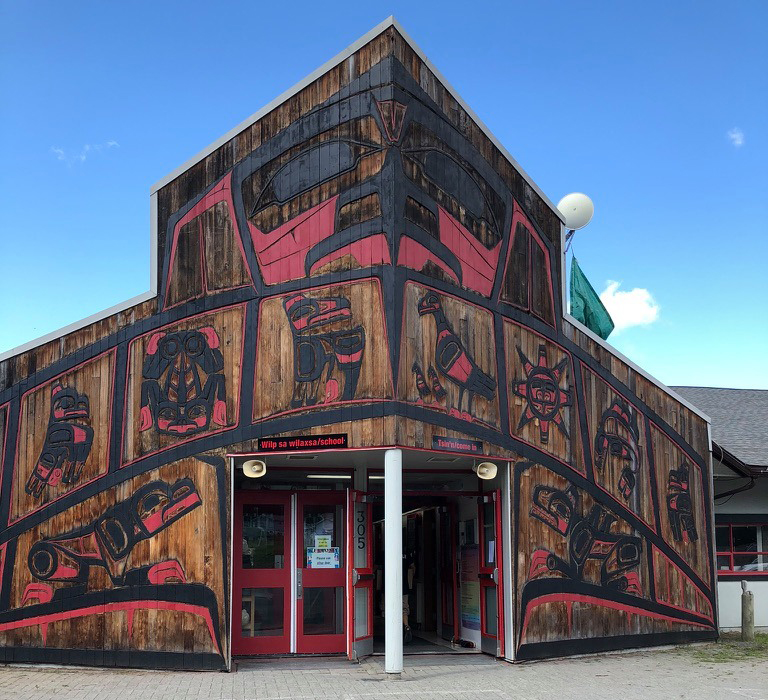
After a long drive from Prince George, the installation team arrived in Gitsegukla at 2:45pm on a Tuesday, ready to install a library for the school and community.
The installation took 3 days, while the school was closed for holidays. To comply with COVID-19 restrictions, the out-of-town volunteers obviously could not socialise or stay with community members. The efforts of the volunteers, including members of Write to Read BC’s library response team, were planned from start to finish.
A literacy-focused addition to the community.
On arrival, the library response team swung into action, with the school staff and principal Louise Ormerod. Once the furniture was unloaded, the library response team started organizing the layout of the learning centre, with its internet connection that allows remote attendance at courses and conferences..
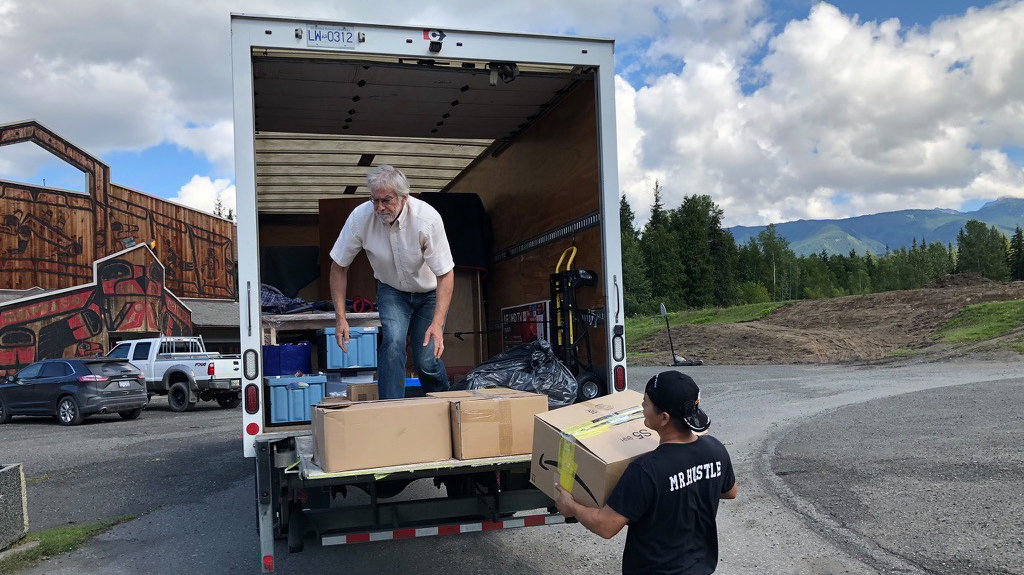
Volunteers unloading a delivery of library books.
Fetching sponsors
On Day 1, the team started early and progressed well. Total Support Services Chief executive officer Chris Gillen made a “quick” 3-hour return trip to Terrace to fetch more shelving tabs and an HDMI cable for the TV.
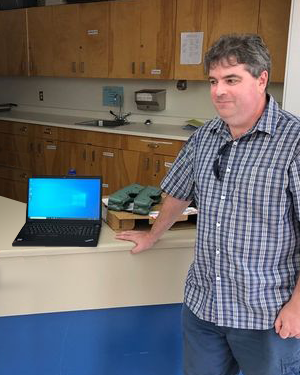
Chris Gillen of Total Support helps troubleshoot the learning centre’s computers at no cost.
How Total Support Services joined Write to Read BC
For a Victoria-Harbourside Rotary Club meeting a few weeks before the Gitsegukla library were installed, Write to Read BC co-lead Bob Blacker gave a presentation about the program, by video call. One of the audience members mentioned that her son-in-law was working with First Nations to provide computers, IT solutions, and training. A few days later Bob received a call from Chris at Total Support, expressing interest. As a result of this connection, Write to Read BC now has a supplier of computers and related hardware needed for learning centres. In addition, Total Support will, at no cost to the libraries—provide online support for any computer problems that surface. This has been huge for Write to Read BC, as support for computers has always been a concern; now we do not have to worry about that.
After 3 days of hard work, the Write to Read BC team, along with principal Ormerod and her staff, completed Write to Read’s very first “version 3” learning centre.
We had some hiccups over the three days, which is to be expected, but we were able to prevail. The new library and resource centre looks great.
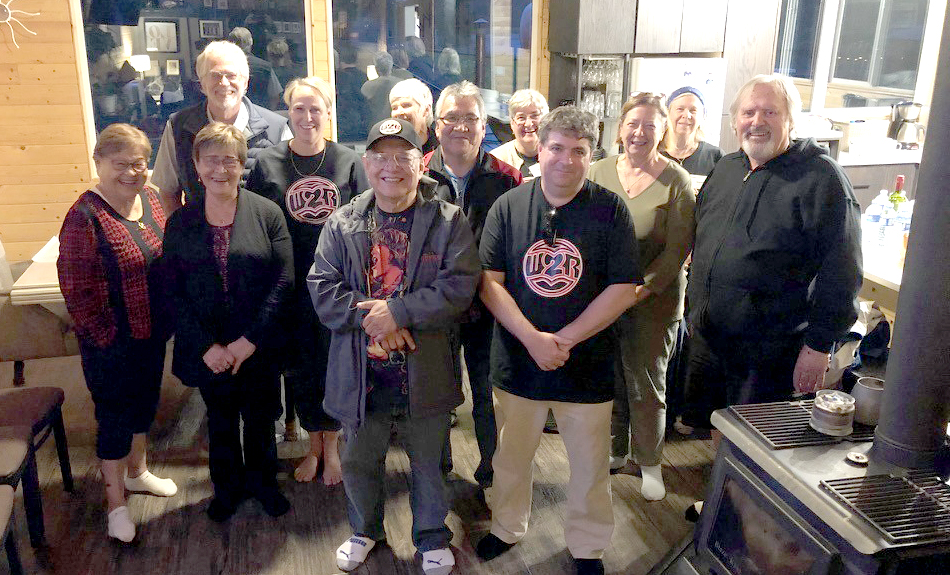
Masks off for the group photo: The satisfied team that installed the library and learning centre.
Preceded by planning and design
The team leads recalled the process that led to the installation of this library.
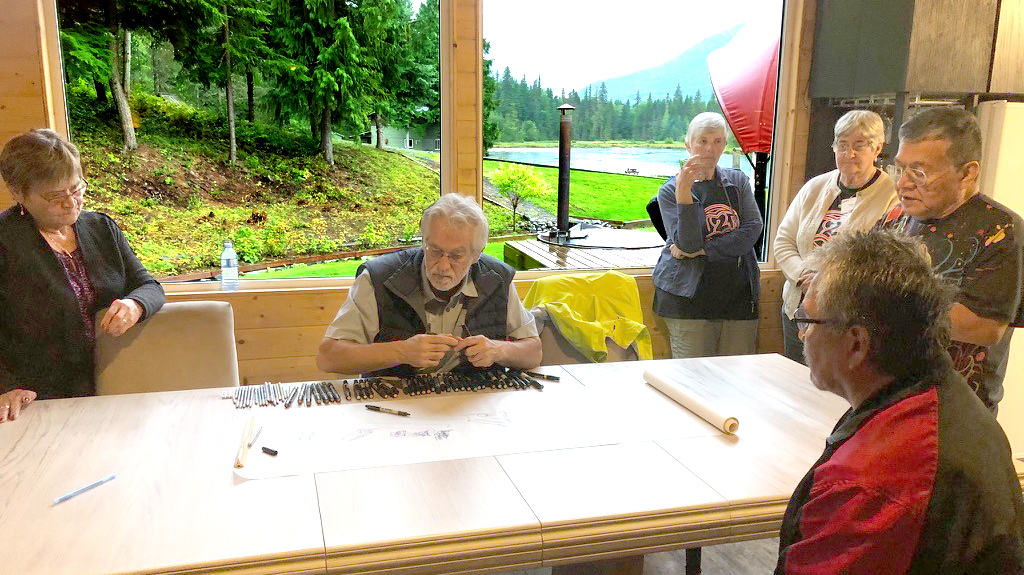
The Write to Read BC team met with Chief Willie and three council members, overlooking Princess Lake. This meeting allowed members of the team to chat with key members of the community. The evening ended with a handshake between Chief Willie and Write to Read BC team co-lead, Bob Blacker, cementing the agreement and the blossoming friendship and trust with Gitsegukla.
As one of the team members said: “This is what makes it all worth it.”
An earlier imagineering session: What does the community’ envision next?
The evening was topped off with an imagineering session, lead by design response team member, Scott Kemp. This was also a new experience for the Write to Read BC team.
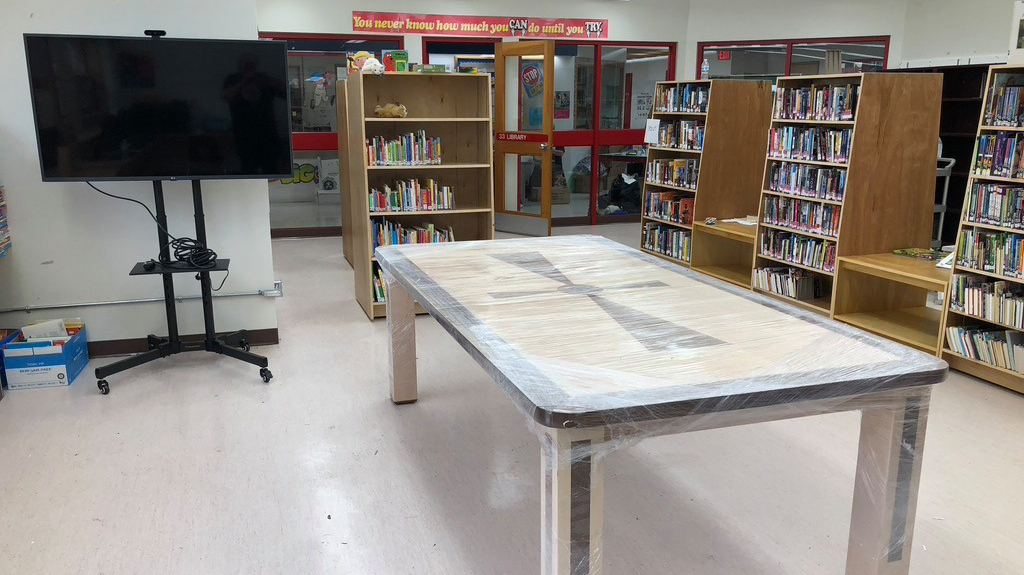
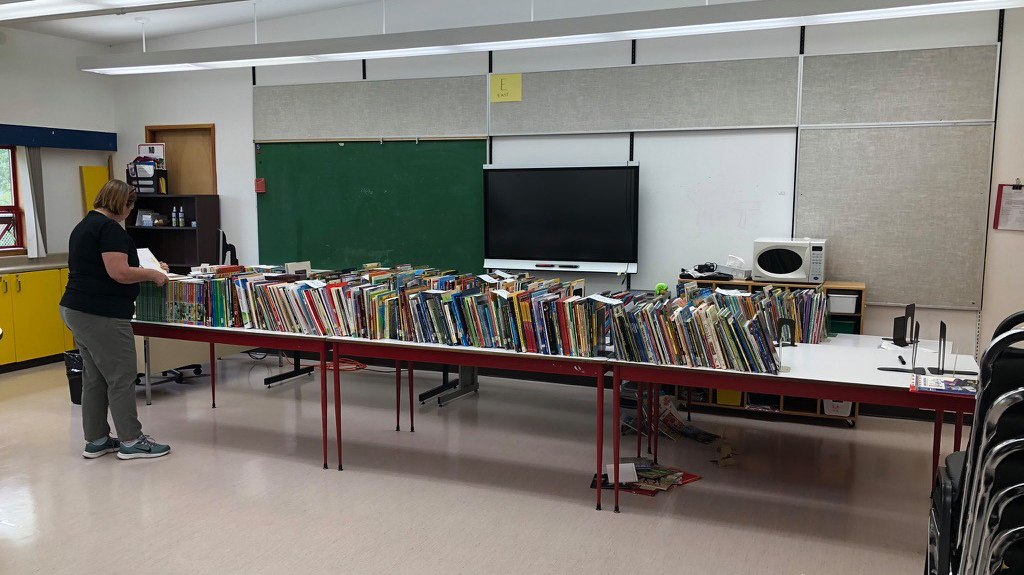
Key components of the learning centre: a large screen and a computer table.At this point still a warehouse of books, this room will soon be a classroom.
Over the next few months, we’ll be installing furniture and books at five locations, ranging from Vancouver to BC’s interior. Most of these libraries are linked to a community school or preschool, including in Squamish Nation, Tsideldel First Nation, Williams Lake First nation, and Aboriginal Mothers Care Centre.
Gitsegukla, in the Skeena region of west central BC, on the southeast side of the Skeena River adjacent to the Kitseguecla River mouth, near New Hazleton, BC.
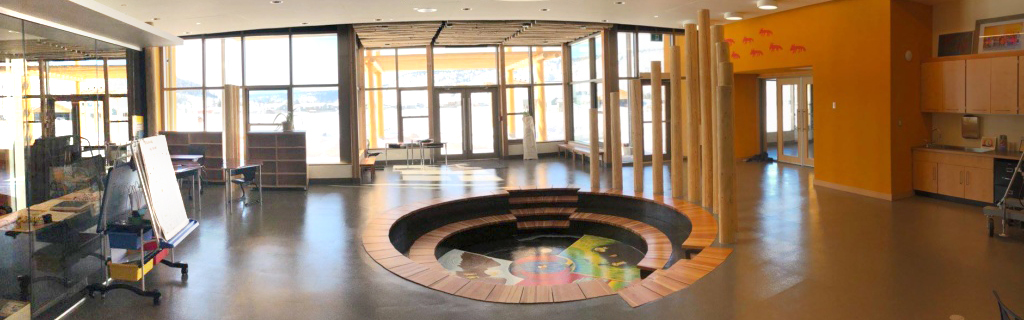
Learning Centre at Tsideldel First Nation, located in the Chilcotin region of BC’s western central interior.
Littlest People Elementary School, a Homulchesan school in the Squamish Nation, next to the mouth of the Capilano River, in Greater Vancouver.
Aboriginal Mothers Care Centre in Vancouver’s downtown eastside neighbourhood. It’s a place where Aboriginal mothers, babies, and children can come to be together as a family.
Little Chiefs Elementary School library in Williams Lake First Nation, which is located in the Cariboo region of BC’s central interior, at Williams Lake.
Write to Read BC’s design response team visited the Sxoxomic Community School at Esk’etemc, and ended up designing a library with the kids. Although the students are not designers, they have clear ideas about how to lay out their library.
This beautiful new school did not yet have a library.
Our co-lead Dr Shirley-Pat Gale heard from new elementary school’s principal that the school does not yet have a library.
Gale, brought in Write to Read BC’s design response team, architect Scott Kemp, and co-lead Bob Blacker. The team mixed with grade 7 students, and magical things happened.
During an amazing lunch-and-design session with the kids, the team designed its layout, including where the new shelving would be placed. The shelves will be made by the Nanaimo Correctional Centre. All that remains is for library response team lead Margaret Fletcher to visit the school to review what books they’d like, and then the school can contact our Aboriginal book distributor GoodMinds.com and Jeff Burnham to purchase the aboriginal authored books that will make their library suit the community.
This was Write to Read BC’s first design session with students from an elementary school, and it was a success.
Write to Read BC celebrated the grand opening of its 16th library and learning centre, Nisaika Kumtuks school, the little school with a huge heart.
Lieutenant-governor of BC Judith Guichon attended, along with members of the school.
One of the students, David, greeted Guichon, before taking part in a procession. The children performed a drumming song, and read a story for Guichon. To conclude the ceremony, the school library received its formal name—one that its students chose.
In addition to books that appeal to students from Kindergarten to Grade 4, the school also offers online attendance to online courses and conferences from its learning centre. The library is equipped with four iPads, 2 all-in-one Hewlett Packard computers, and a TV with video conferencing capabilities. This benefit the students as well as their parents. School principal Heather Goodall will open the school library to parents of its students. This gives parents have access to the Internet and to online learning, as well.
The TV screen, a donation that Write to Read BC arranged, was a pleasant surprise to Goodall.
The shelving was made especially for the library by inmates at the Nanaimo Correctional Centre. Write to Read BC co-lead Bob Blacker said: “They do amazing work, and are very proud of their contribution to our libraries.”
This BC community worked very hard to build their school, but unfortunately did not have funding for a library. Write to Read BC will visit the Stz’uminus school and meet with the principal, Tim Harris, and see what we can do.
Located on Stuart Lake near Fort Saint James the Principal of the Community School Eric Di Nozi contacted Write to Read BC for assistance to regenerate their school library and make it into a community library.
Write to Read BC visited the community in November 2015 to discuss partnership and proejct possibilities. We agreed Write to Read BC will provide shelves and books. Our library response team is putting together books, and shelving will have to be made by Nanaimo Correctional Centre.
Two Rotary clubs will be involved. One will collect the books and computer hardware. The other will deliver the shelving and assist in putting the library together. We anticipate doing this during the summer, an optimal time for travelling to the community.
This small, BC community is in the process of designing and building a new pre-school with the help of Scott Kemp, who is also our Write to Read BC architect.
The community is adding to the building design a portion that will serve as a community library. This project is a partnership with Write to Read BC.
Quatsino is located northwest of Port Hardy, on the BC coast.
Write to Read BC volunteers joined the village of Quatsino to officially open its new library on February 7, 2017. Quatsino community leaders and lieutenant-governor of BC Judith Guichon also joined the ceremony.
The village is on Vancouver Island, 15km south of Port Hardy. Most of its residents of Quatsino work in forestry, fishing, and eco-tourism.
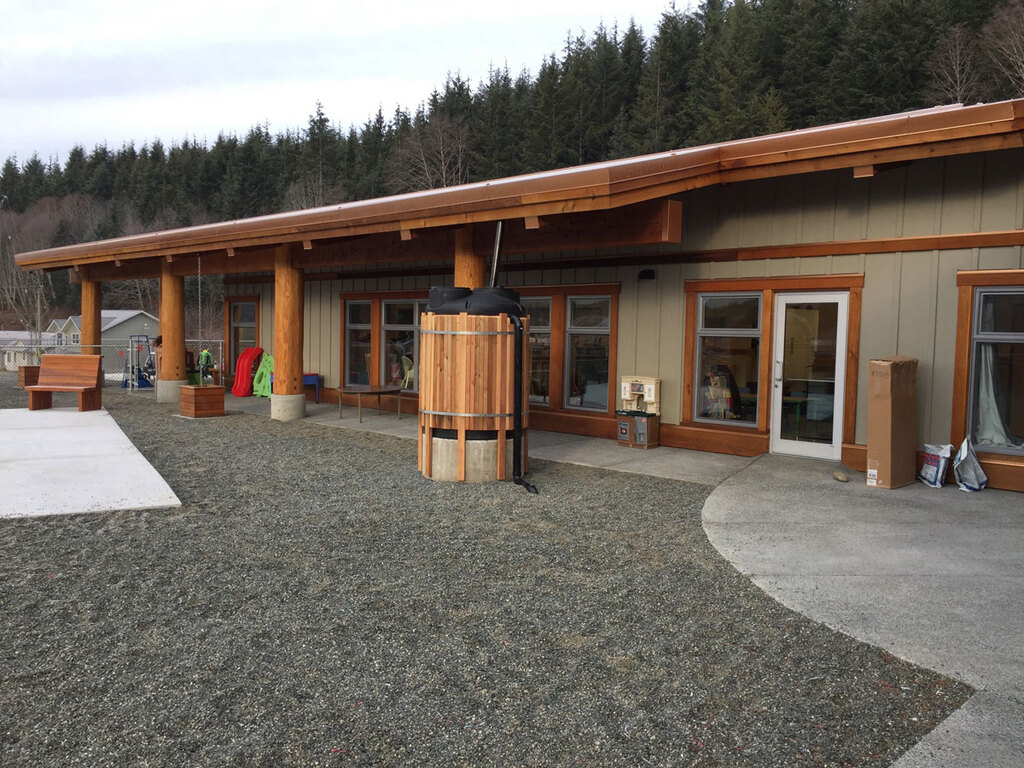
The beautiful Quatsino library in ludes a day care centre.
On a recent visit to Ditidaht, one Write to Read BC volunteer brought along a digital camera rto donate to the school. He described the camera as “an old Panasonic Lumix SLR” but adds: “It’s amazing what can be accomplished using digital technology. Computers and digital cameras have changed the world in which we live. Pretty soon everybody will be a movie maker.”
That includes the 10 high school students at Ditidaht’s community school.
The Lumix camera has a 24× zoom, a Leica glass lens, built-in image stabilization to reduce motion blur, and a memory card. It shoots great photos. It was given to the teacher for use by the high school students.
Students to make a digital diary
From January to June 2014, high school students will use the camera to take photos of their daily life: going to school, playing, at home, with friends, in the community. Students can also take photos in the woods and on the water.
The camera’s memory card can store thousands of images, and the students are encouraged to photograph everything they see. Their teacher, Eva Clarke, will select the best images and store them on a computer.
The learning objectives of this project are to:
learn digital photography.
learn to see and document village life.
self-publish a book—perhaps an e-book.
A digital diary that shows what life is like in the Ditidaht village can introduce people to a place few will ever get to visit in person. By using a camera, connecting people from elsewhere to an isolated community like Ditidaht is as easy as point and shoot.
The project runs from January to June, 2014.
Ditidaht teacher Eva Clarke will choose the best images that students take of their life in and around the village.