Tag: Write to Read BC

  • Indigenous libraries: impact on confidence, wellness, digital equity

    A Simon Fraser University researcher says Indigenous-led libraries, combined with community schools, have benefits beyond learning and literacy. A recent study of 20 Indigenous-led BC libraries listed many more benefits. These include social confidence, community inclusion, wholistic literacy, emotional wellness, digital equity, as well as generative learning. Let’s examine these findings more closely.

    The findings are part of a study of Write to Read BC’s library-building partnerships with isolated communities. The study results are scheduled to be published in the spring of 2026. Simon Fraser University’s Community-Engaged Research initiative (CERi) arranged the study to evaluate Write to Read BC’s ongoing libraries project.

    Context: Indigenous education in BC

    By embedding Indigenous culture in what teachers teach, schools in First Nations communities improve accomplishment and fulfilment for their elementary students. M.A. Burgess reported this in a University of Northern BC doctoral dissertation in 2017. Burgess further reported that community engagement and collaborative decision-making is key to grounding the school experience in the local culture.

    Libraries have similar benefits for the community, not just for school-age children. When Indigenous communities co-create and co-deliver school programs, students experience high levels of community support and participation. Interestingly, this applies both to schoolchildren and family members. Indigenous-led community libraries play a part in this. Tasha Riley and 3 others reported this in their 2025 work on digital literacy in remote Indigenous community.

    Benefits: Indigenous community libraries in BC

    Indigenous community libraries often work alongside community schools and literacy programs in isolated communities. In BC, First Nations schools are funded through Indigenous Services Canada, and are often run independently from the provincial government. Libraries are funded with the support of non-profit organisations and projects such as Write to Read BC.

    The benefits of Indigenous-led libraries for education include:

    • Social confidence and community inclusion. Community libraries can improve literacy as well as the confidence of individuals and social groups. Ongoing, positive community inclusion and active participation is key.
    • Wholistic literacy and emotional wellness. Libraries in isolated communities help people connect reading and writing skills with meaning and purpose. This experience can be intellectual, emotional, social, and cultural. People can also experience this through an online computer, using a library’s online learning centre. Rob McMahon and others reported this in Codesigning community networking, in 2024. They found that being connected to others enhances social and emotional well-being.
    • Digital equity. Libraries that have an online learning centre rebalance the “digital divide” isolated Indigenous communities experienced historically. Given the global scale and adoption of digital technologies, online learning is crucial for all students. With it, they can develop their capacity for critical engagement rather than passive consumption of content. Critical digital literacy lets community members use global learning platforms, knowledge networks, and economic forums. Clearly, this can then inform Indigenous self-government.
    • Generative learning. Education delivered in the community that involves other community members will maintain and strengthen the community. This occurs by integrating new ideas and information with existing knowledge. Jessica Ball reported this in American Indian Quarterly in 2004. She reported that the benefits of library use and learning extend beyond the students themselves. This is often in ways that cannot be predicted or measured. Ball wrote that the spontaneous generation of new knowledge and new behaviour is essential to keep living communities alive.

    The research for this report was conducted in 2025. The report, in its final form, will be published in the spring 2026.

    Research on the impact of Indigenous-led libraries installed together with Write to Read BC in isolated BC communities.
  • Study: Libraries serve Indigenous children and adults alike

    The preview of an upcoming study reports adults in isolated, Indigenous communities use libraries as much or more than children. The study is assessing at the long-term impact of Indigenous-led libraries installed in partnership with Write to Read BC.

    This research was made possible with Simon Fraser University’s CERi funding. The study’s Indigenous researcher gathered data from isolated communities that installed an indigenous-led library with us. The research was conducted in 2025, and the report will be published in spring 2026.

    School libraries

    Many communities installed a library connected to their local school. Obviously, these spaces get significant use by children.

    However, adults also want to use reading materials and programs about culture and language. That’s why some schools welcome adults, too. For example, Nisaika Kumtuks school in Nanaimo set specific hours for family members to use material in its library.

    Rather than in a school, many communities installed books and computers a separate community facility. Both children and adults can use these, but they are harder to fund, according to some study participants. “There is funding for libraries attached to schools, but not necessarily for community-specific libraries,” the study’s author reports.

    Nevertheless, over the past 15 years most libraries installed with Write to Read BC are community libraries.

    Community libraries

    In addition to support for reading—including reading about Indigenous cultures and languages—these spaces are also community-building hubs. This is one of the benefits that attracts community members. Often, libraries are a showcase of local culture and history. One participant mentioned plans to create a museum alongside the library.

    In addition to these adult-oriented activities, community libraries also help educate children. Since 20% of the youth living on reserves attend school online, community libraries often have a role in childhood education.

    Unfortunately, older libraries in the Write to Read BC program did not all include computers and high-speed Internet. Some participants told the researcher that “a designated space” for online learners would be “a helpful addition to their community.” This would benefit adults and children alike.

    Findings from the CERi study were first presented in October, 2025.

    Research on the impact of Indigenous-led libraries installed together with Write to Read BC in isolated BC communities.
  • Value in isolated libraries: SFU study

    An Indigenous-led study at Simon Fraser University will sum up 15 years of Write to Read BC library projects. The study assessed 15 years of completed projects. These projects are partnerships with Indigenous communities to design and install the library they want. In a preview of the findings, the study found that project partners—isolated indigenous communities across BC—gained substantially. The gains show up in several ways.

    Firstly, at a community-wide level libraries are places where people connect, the study found. It reports that Write to Read BC libraries foster resiliency and increase active community participation. That’s in part because the libraries also become community hubs.

    Secondly, individual or “autonomous” library use is also connected to increased productivity within communities.

    Thirdly, the effect on literacy is positive. The study found an increased interest in literacy related to community libraries installed by Write to Read BC.

    Lastly, the Indigenous-led study noted several community challenges indirectly related to libraries. For example, due to shifts in literacy funding, schools have been absorbing community-based programs. Also, expanding those community programs increases the demand for meeting space. A community library can ease the demands on schools and provide another place to host programs.

    Full details of the findings will be available when the research report is published in the spring of 2026. The study, which Write to Read BC requested, received funding from SFU Community-Engaged Research Initiative, or SFU CERi. This program helps community organisations understand the effectiveness of their efforts. The research applied Indigenous cultural insight of a Simon Fraser University (SFU) graduate student.

    Write to Read BC leaders and the Rotary Club of Steveston-Richmond recently got a preview of the study. That’s because the Rotary Club is a significant funder of the Indigenous-led libraries that Write to Read BC volunteers install. Over the past 15 years, these partnerships have resulted in about two dozen libraries in isolated communities across BC.

    Research on the impact of Indigenous-led libraries installed together with Write to Read BC in isolated BC communities.
  • Promoting Write to Read BC with BCLA librarians

    Today, Write to Read BC announced the launch of this updated website to members of BC Library Association, or BCLA. That’s because BCLA members are well placed to promote the Write to Read BC project. The announcement also mentions an upcoming impact study about communities that have an indigenous-led library.

    BC Library Association logo.

    The role of librarians

    Librarians focus on advocacy, professional development, and support of intellectual freedom. BCLA members work to ensure everyone has equitable access to information, ideas, and works of the imagination. In contrast, Write to Read BC does the same by following the lead of First Nations communities.

    The announcement to BCLA

    This is what today’s announcement covered:

    On this National Day for Truth and Reconciliation it’s fitting to announce two things about the long-lasting Write to Read BC project.

    1. There is a new website, writetoreadbc.org.
    2. An impact study is in its final stages, with a report scheduled to be released in November.

    As many of you know, former lieutenant-governor of BC Steven Point envisioned and initiated this project during his time in that role between 2007 and 2012. A key partner in making the project a reality was his aide-de-camp at the time, Bob Blacker, an active member of a Rotary Club. CBC carried a story about this joint effort in May of 2014, as did various newspapers.

    Fast forward and along the way to 2025, Write to Read BC has collaborated with numerous Indigenous communities, under their leadership, to plan and install highly local libraries and learning centres. The new website documents these multiple efforts going back to 2011.

    Funding and support for the new website and the impact report was generously provided by SFU’s Main Street Research Shop. It collaborates with community partners, students, and faculty members to address community questions and concerns through research. The SFU Indigenous Student Centre has been equally generous in contributing in-kind support for a portion of the work schedule to co-supervise both the research and the web development.

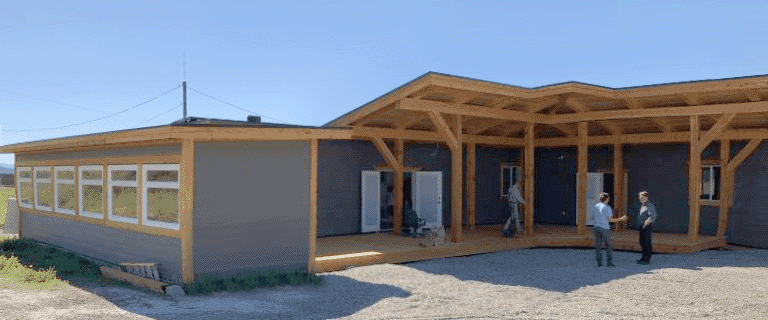
  • Daylu Dena library books coming soon

    The co-leads of Write to Read BC plan to travel to Daylu Dena’s new library in early November 2025. They will deliver books and computers.

    The books will provide the indigenous focus that the community envisioned for its library.

    The computers and high-speed Internet connection will allow the library to offer remote access to online courses and conferences. Librarians typically refer to this as a learning centre.

  • Assessing the impact of Write to Read BC

    An independent researcher is evaluating the long-term impacts and community perspectives of the Write to Read BC Project, at its request. Working closely with Indigenous leaders, educators, and community members, this research “will culminate in an assessment report that will guide the re-framing and Indigenization of the Write to Read BC Project.”

    The assessment is provided by a program at Simon Fraser University that helps SFU graduate students collaborate with non-profit groups and community groups. The program supports research projects that provide plain-language answers to community-driven research questions at low or no cost to the community partner.

    The Write to Read BC study will focus on

    • Community collaboration and data collection.
    • Literature and media review.
    • Data analysis and reporting.

    The research takes place in 2025. Next, a prepublication will be available for review. Finally, the official report will be published in spring 2026.

    Community collaboration and data collection

    The study will:

    • collaborate with Indigenous leaders, educators, and community members to gather perspectives on the impact of active and inactive learning centres.
    • conduct interviews, facilitate protocol-guided information-sharing sessions, and ensure respectful, ethical data collection.
    • assist in developing “case stories” from selected communities, ensuring informed consent and cultural sensitivity.
    • document and organize qualitative data to inform the final project report and analysis.

    Literature and media review

    The study will:

    • conduct a literature review focusing on the intersections of Indigenous knowledge systems and colonial education practices.
    • review and summarize “grey literature” and media related to the Write to Read BC project, including speeches, audio/video recordings, and planning documents.
    • gather and analyse quantitative data on educational outcomes (such as Kindergarten to Grade 12 graduation rates, post-secondary enrolment) in communities with Write to Read BC centres.
    • identify gaps in the literature or data and recommend additional resources to address these gaps.

    Data analysis and reporting

    The study will:

    • analyse qualitative and quantitative data to understand changes in community engagement, cultural connectedness, language revitalization, and educational impacts associated with Write to Read BC learning centres.
    • assist in preparing interim reports, summaries, and visual presentations to share findings with project stakeholders.
    • draft a final report, weaving Indigenous knowledge, community insights, and statistical data into a cohesive narrative.
    • assist in developing recommendations for future iterations of Write to Read BC and strategies to support its ongoing sustainability and alignment with Indigenous sovereignty.
    Research on the impact of Indigenous-led libraries installed together with Write to Read BC in isolated BC communities.
  • Tsawassen

    About the community

    The Tsawwassen First Nation is in greater Vancouver, in BC’s lower mainland. Its name means “land facing the sea”. Traditionally, its lands covered a what is now Pitt Meadows, New Westminster, and several gulf islands off the mainland’s west coast. It has lands close to the south arm of the Fraser River, and just north of the border with the USA at Point Roberts.

    Tsawassen First Nation has a youth centre on site that includes a gymnasium, weight room, art room, teen lounge, and teaching kitchen. It has areas for music, dance, and media that allow for scheduled and drop-in classes. There is after-school care for young children.

    The centre also has a library.

    About the library

    Write to Read BC installed the library in partnership with the Tsawwassen First Nation Youth Centre.

  • Xwemelch’stn School

    About the community

    The Squamish Nation is based in BC’s lower mainland, in West Vancouver, North Vancouver, and Squamish, BC. It includes 26 First Nations reserves around the Capilano River, Mosquito Creek, and Seymour River on the north shore of Burrard Inlet in North Vancouver, along the Squamish River, and in Gibsons and Port Mellon in Howe Sound.

    One of Squamish Nation’s schools, Capilano Littlest Ones, brings together 130 Indigenous and non-Indigenous students in the Norgate area of urban North Vancouver. The school and its library bring together Indigenous and non-indigenous citizens, to break down social barriers, build bridges across cultures, and re-establish positive relationships. Capilano Littlest Ones is a community school under the auspices of North Vancouver School District.

    About the library

    Write to Read BC installed a library in Capilano Littlest Ones Xwemelch’stn School. Its sponsors included the Rotary Club of West Vancouver Sunrise.

  • Aboriginal Mother Centre

    About the organisation

    Aboriginal Mother Centre offers housing in Vancouver, BC, for mothers and their young children, who are at risk of homelessness or child welfare intervention. The program offers suites for mothers and children under the age of nine.

    The program focuses on mothers giving back to their community, for example by helping with the Elders program by serving food, cleaning up tables, distributing food to take home, and engaging with Elders.

    Aboriginal Mother Centre also offers family-wellness programs for mothers to enhance their skills and abilities as parents, and help them on their life journeys. Each week, the centre also offers parenting workshops, housing- and resources workshops, life-skills workshops and self-care workshops.

    About the library

    Write to Read BC placed a library in the Aboriginal Mothers Centre. The library’s sponsors included the Rotary Club of Whistler Millennium.

  • T’exelcemc

    About the community

    The T’exelcemc, or people of Williams Lake First Nation, is in the central interior of BC, in the Cariboo region, at the city of Williams Lake. Its main Indian Reserve is Williams Lake Indian Reserve No. 1, also known as Sugarcane.

    About the library

    The library in Little Chiefs Elementary school, in T’exelcemc First Nation, Williams Lake, was installed in partnership with Write to Read BC. It is our 20th library.