Category: Community

Profile of a village, a town, or an (often urban) organisation, where Write to Read BC installs a library.

  • Tsawassen

    About the community

    The Tsawwassen First Nation is in greater Vancouver, in BC’s lower mainland. Its name means “land facing the sea”. Traditionally, its lands covered a what is now Pitt Meadows, New Westminster, and several gulf islands off the mainland’s west coast. It has lands close to the south arm of the Fraser River, and just north of the border with the USA at Point Roberts.

    Tsawassen First Nation has a youth centre on site that includes a gymnasium, weight room, art room, teen lounge, and teaching kitchen. It has areas for music, dance, and media that allow for scheduled and drop-in classes. There is after-school care for young children.

    The centre also has a library.

    About the library

    Write to Read BC installed the library in partnership with the Tsawwassen First Nation Youth Centre.
  • Xwemelch’stn School

    About the community

    The Squamish Nation is based in BC’s lower mainland, in West Vancouver, North Vancouver, and Squamish, BC. It includes 26 First Nations reserves around the Capilano River, Mosquito Creek, and Seymour River on the north shore of Burrard Inlet in North Vancouver, along the Squamish River, and in Gibsons and Port Mellon in Howe Sound.

    One of Squamish Nation’s schools, Capilano Littlest Ones, brings together 130 Indigenous and non-Indigenous students in the Norgate area of urban North Vancouver. The school and its library bring together Indigenous and non-indigenous citizens, to break down social barriers, build bridges across cultures, and re-establish positive relationships. Capilano Littlest Ones is a community school under the auspices of North Vancouver School District.

    About the library

    Write to Read BC installed a library in Capilano Littlest Ones Xwemelch’stn School. Its sponsors included the Rotary Club of West Vancouver Sunrise.

  • Aboriginal Mother Centre

    About the organisation

    Aboriginal Mother Centre offers housing in Vancouver, BC, for mothers and their young children, who are at risk of homelessness or child welfare intervention. The program offers suites for mothers and children under the age of nine.

    The program focuses on mothers giving back to their community, for example by helping with the Elders program by serving food, cleaning up tables, distributing food to take home, and engaging with Elders.

    Aboriginal Mother Centre also offers family-wellness programs for mothers to enhance their skills and abilities as parents, and help them on their life journeys. Each week, the centre also offers parenting workshops, housing- and resources workshops, life-skills workshops and self-care workshops.

    About the library

    Write to Read BC placed a library in the Aboriginal Mothers Centre. The library’s sponsors included the Rotary Club of Whistler Millennium.

  • T’exelcemc

    About the community

    The T’exelcemc, or people of Williams Lake First Nation, is in the central interior of BC, in the Cariboo region, at the city of Williams Lake. Its main Indian Reserve is Williams Lake Indian Reserve No. 1, also known as Sugarcane.

    About the library

    The library in Little Chiefs Elementary school, in T’exelcemc First Nation, Williams Lake, was installed in partnership with Write to Read BC. It is our 20th library.

  • Gitsegukla

    About the community

    Gitsegukla is is on the southeast side of the Skeena River adjacent to the Kitseguecla River mouth, in west-central BC’s Skeena region. This indigenous community is about 100 km northwest of Smithers and about 110 km northeast of Terrace.

    About the library

    Write to Read BC installed its 19th library here, in the Gitsegukla elementary school. Its sponsors included the Rotary Club of Terrace-Skeena Valley, the Rotary Club of Peachland, and the Jack Gin Family Foundation.

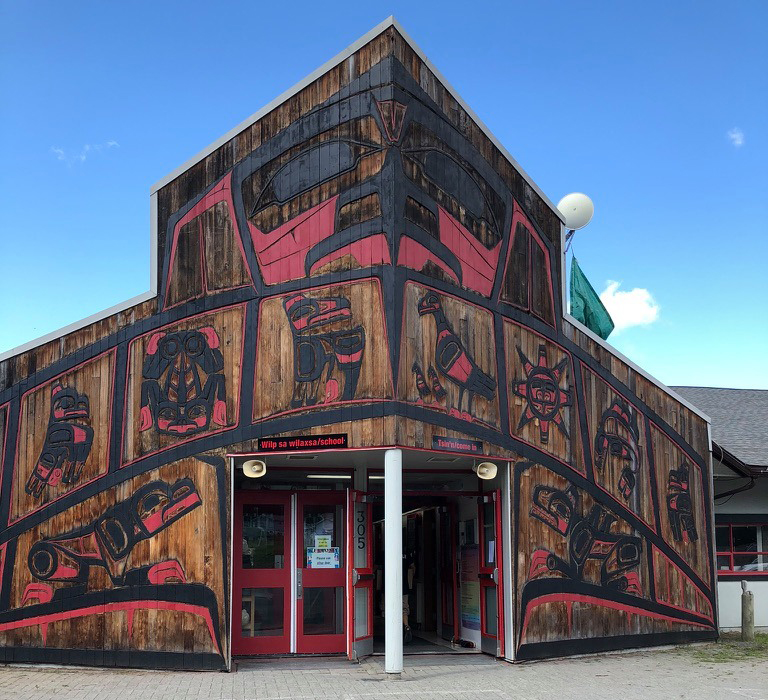
    The entrance of Gitsegukla school and library.
    A literacy-focused addition to the community school.
  • Tsi-Deldel

    About the community

    The Tsi-Deldel or Tŝideldel First Nation is in the western Chilcotin district of the BC’s central Interior region. Its offices are located on Redstone Reserve. It includes smaller reserves around Redbrush and Puntzi Lake. It is sometimes referred to as the Alexis Creek Indian Band.

    Tsi-Deldel First Nation’s traditional way of life includes fishing, hunting, and plant gathering. Community members fish for salmon and trout, and gather berries and medicinal plants in the surrounding rivers, lakes, mountains and traditional areas. These practices have been a part of its way of life for generations and continue to be an essential part of its culture today.

    About the library

    Write to read BC installed its 18th library here. Its sponsors included the Rotary Club of the Sunshine Coast, and the Jack Gin Family Foundation.

  • Rocky Pines, Lower Nicola Indian Band

    About the community

    Lower Nicola Indian Band, is one of the interior Salish first peoples in the south-central interior of BC. Its community and offices are located at Shulus, also known as Lower Nicola, just west of Merritt, BC, between BC’s lower mainland and Kamloops.

    About the library

    Write to Read BC placed its 17th library in Rocky Pines, or Lower Nicola Indian Band. It was sponsored by the Rotary Club of Richmond Sunrise.

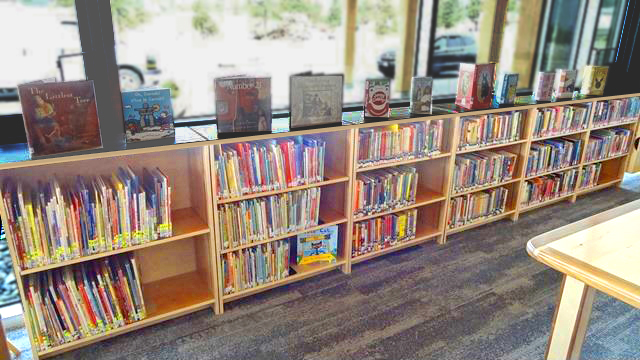
    Over 1,000 books on the shelves of Rocky Pines library.
  • Nisaika Kumtuks Elementary School

    About the organisation

    Nisaika Kumtuks is an elementary school in Nanaimo. It opened its doors in September 2014 as is the first urban aboriginal public school on Vancouver Island. At its start, if offered children from Kindergarten to grade 4 an Aboriginal focused curriculum.

    Nisaika Kumtuks means “ours to know” in the Chinook language.

    The school started in the Boys and Girls Clubs of Central Vancouver Island in Nanaimo, BC, with additional support from Nanaimo Aboriginal Centre, Mid Island Métis Nation, School District 84.

    About the library

    Write to Read BC installed its 16th library for the students and their family members. Sponsors included the Rotary Clubs of Nanaimo and Lantzville.

    The public school celebrated the official opening of its first library, with lieutenant-governor of BC Guichon.
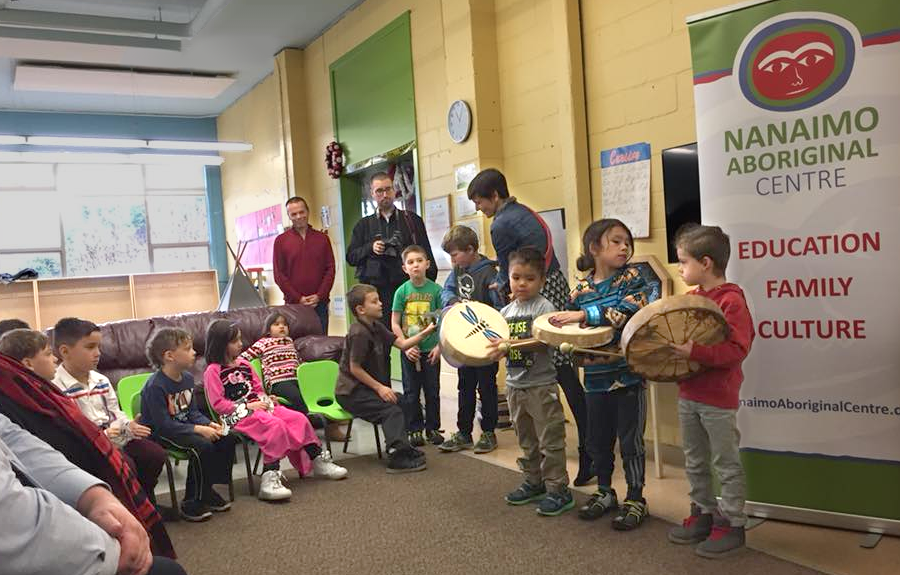
    Children drumming at the opening ceremony of their school library.

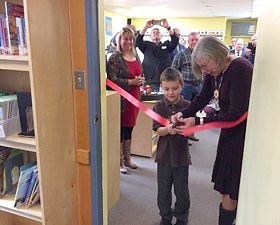
    Previously, students at Nanaimo’s Nisaika Kumtuks Elementary Centre walked to the public library for books. After the ribbon-cutting, they had a library in their school building.

    Cutting the ribbon at Nisaika Kum’Tuks Elementary Centre.
    Cutting the ribbon on opening day.

    The library offers tablets, computers, and video conferencing, the library has books for children and adults that students and their families can use.

  • Ahousaht

    About the community

    Ahousaht First Nation is a coastal community on Vancouver Island in BC. It includes much of Clayoquot Sound, and is the largest First Nation on the west coast of Vancouver Island by population. It has 2,400 members.

    Ahousaht First Nation’s core values are to respect one another, teach one another, care for one another, and help one another​, and to know that everything is one—everything is interconnected. The community also publishes a dictionary of Ahousaht words.

    About the library

    Write to Read BC’s 15th library was installed here. Its sponsors included the Rotary Club of Vancouver Arbutus, and the Rotary Club of Steveston.

  • Quatsino

    About the community

    Quatsino is a west-coast village on Quatsino Sound in northern Vancouver Island, BC. It is accessible by boat and float plane. Quatsino is near Coal Harbour and Port Alice. The largest town in this region of BC is Port Hardy, an hour northeast by boat and motor vehicle.

    Quatsino residents are employed in the forest, fishing, and eco-tourism industries. Some professionals also live there and practice their professions via the internet.

    About the library

    Write to Read BC installed its 14th library here. The Rotary Club of Whistler Millennium was its sponsor.