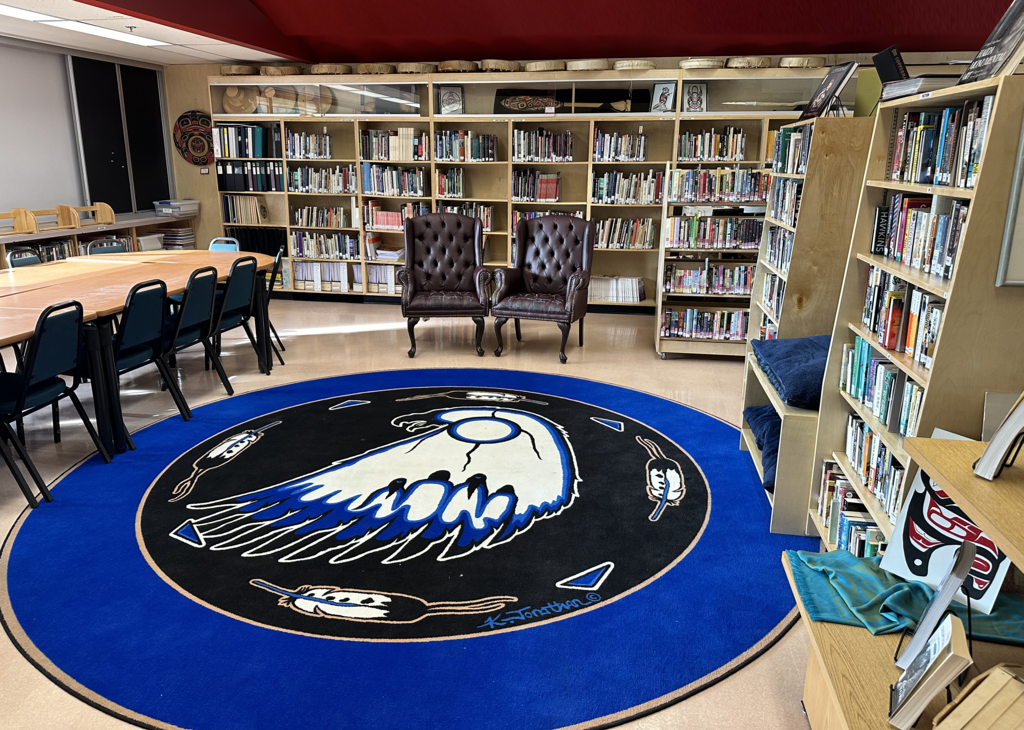
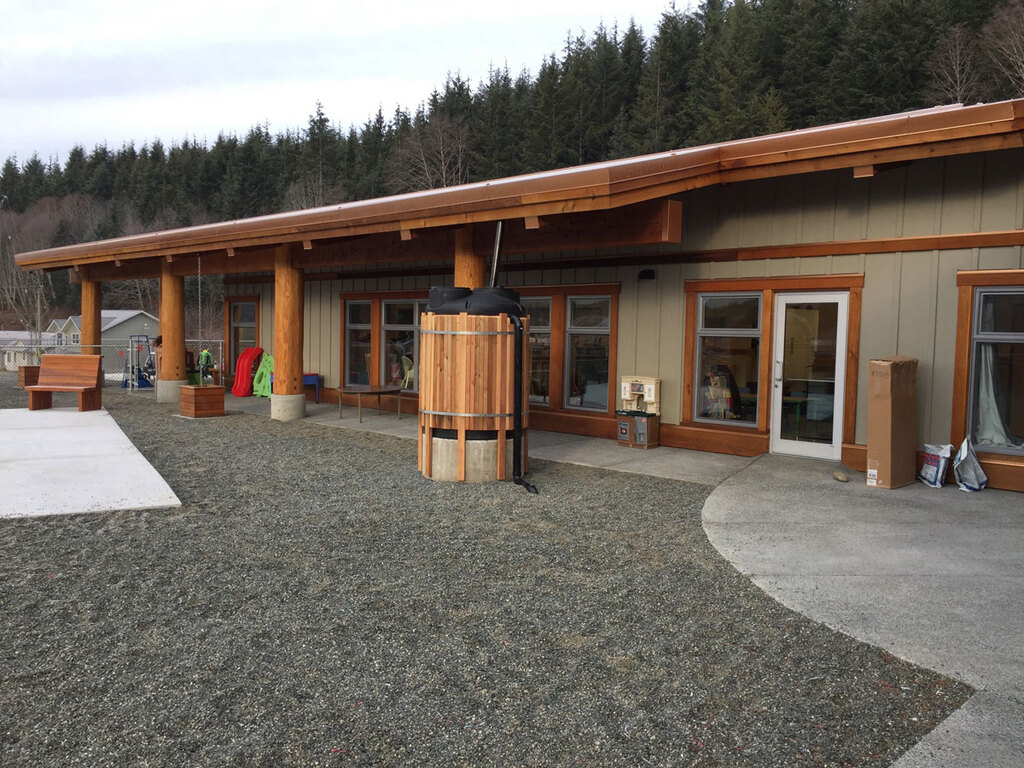
Gitanmaax opened its library in the Hazelton First Nations Resource Centre in the fall of 2024. The community and council did this in collaboration and partnership with Write to Read BC.
This Indigenous-led library has a collection of books about Indigenous cultures and lands. Its tables and seating, for working and meeting, are also available for community groups to use.
Archive
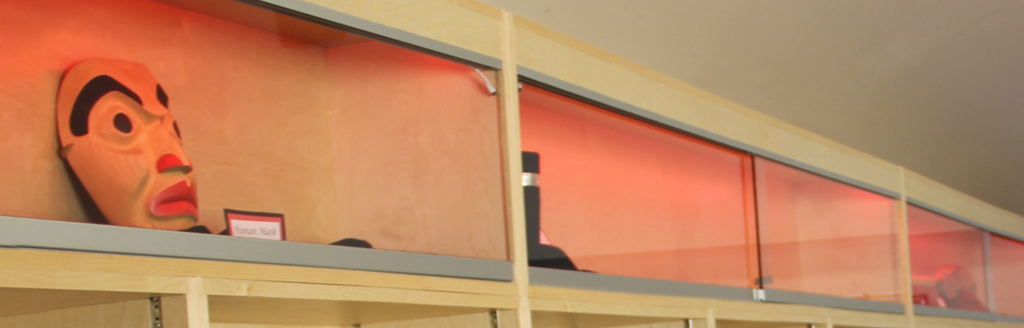
The library includes display cases for important cultural objects, wooden models of traditional Indigenous housing.
Learning centre
Along one wall, the library has computers and screens, which allow remote attendance at online courses and conferences. This connects Gitanmaax to communities across BC and the world.
During the COVID-19 pandemic, widely recognised in 2020, several public health measures were adopted. This included lockdowns and limitations on travel and of access to public spaces, such as libraries and community hubs.
As reported in 2020 and 2021, Indigenous communities used wholistic knowledge of health and previous pandemics to quickly protect vulnerable community members and reduce the spread of the virus. Nonetheless, health researchers reported in 2023 that the impact of COVID-19 was disproportionately higher among some—but not all—Indigenous communities.
Understandably, many Write to Read BC’s partners in isolated BC communities continue to take a cautious approach to visitors. This affects Write to Read BC projects. Before the pandemic, previous consultation and collaboration happened face to face. In time, when the partnering communities are ready, this work can continue. When invited, Write to Read BC volunteers will be ready to actively continue our partnerships across BC.
Usborne Books at Home is funding $1,000 each for Write to Read BC’s current library projects. A discussion over the summer led to Usborne’s support for the libraries of Gitsegukla, Tsideldel, and Heiltsuk first nations.
With each $1,000 order, Usborne will also provide free shipping and a 25% credit for additional purchases. This helps Write to Read BC make cash donations go even further. Our volunteer team thanks Usborne and its local representative, Louise Toews, for their generosity.
Write to read BC volunteer Wendy Brundage visited Gitsegukla in early September, and will follow up with the Elementary School’s principal Louise Ormerod to consult on the school’s book choices.
Usborne is based in southern Ontario, and has been in business for over 50 years. It’s a past winner of Children’s Book Publisher of the Year. Its mission is to help spread a love of literacy to kids and their families across Canada.
In April, Write to Read BC members identified 10 libraries eligible for funding from the Supporting Indigenous Libraries Today foundation, or SILT. Its goal is to support Indigenous communities that do not currently have a public library, and to help existing First Nations public libraries to expand.
SILT foundation is set up by Goodminds.com, which donates 5% of sales to the foundation.
SILT supports Write to Read BC with generous funding. In Bella Bella, a Write to Read BC library received books worth $10,000 this summer. SILT also donated over $8,000 to support the Gitsegukla community library in BC with a donation of new books.
Write to Read BC co-lead, Bob Blacker, said: “The response to these books from our communities has been amazing. For the kids, it is the best part of the library. SILT is a true platinum sponsor of our project.” Blacker gives his heartfelt gratitude to Goodminds.com owner Achilles Gentle, and former owner Jeff Burnham.
Burnham is a member of the Write to read BC team of volunteers.
Blacker invites indigenous-led libraries in BC to contact Write to Read BC for information on how to access and use SILT funds for books.
Write to Read BC celebrated the grand opening of its 16th library and learning centre, Nisaika Kumtuks school, the little school with a huge heart.
Lieutenant-governor of BC Judith Guichon attended, along with members of the school.
One of the students, David, greeted Guichon, before taking part in a procession. The children performed a drumming song, and read a story for Guichon. To conclude the ceremony, the school library received its formal name—one that its students chose.
In addition to books that appeal to students from Kindergarten to Grade 4, the school also offers online attendance to online courses and conferences from its learning centre. The library is equipped with four iPads, 2 all-in-one Hewlett Packard computers, and a TV with video conferencing capabilities. This benefit the students as well as their parents. School principal Heather Goodall will open the school library to parents of its students. This gives parents have access to the Internet and to online learning, as well.
The TV screen, a donation that Write to Read BC arranged, was a pleasant surprise to Goodall.
The shelving was made especially for the library by inmates at the Nanaimo Correctional Centre. Write to Read BC co-lead Bob Blacker said: “They do amazing work, and are very proud of their contribution to our libraries.”
With much of the community in attendance, Haida Gwaii opened its new library on April 25, 2017. Community leaders want the aboriginal library to promote literacy and encourage a love of learning in Old Massett.
Old Massett is on the north end of Graham Island in Haida Gwaii, a group of islands off the BC coast, near Alaska.
The idea for this library began with Literacy Haida Gwaii, about three years ago. The community received $60,000 in sponsorship when the literacy society partnered with Write to Read BC, Rotary Club, and Government House.
To get started, the project received $5,000 for books and resources. The library also has two computers, with Internet access. Community members now have access to resources beyond Old Massett.
Judith Guichon, lieutenant-governor of BC, attended the library opening, along with Chris Neufeld of Britco Structures (now Boxx Modular).
Britco sponsors the Write to Read BC project by donating modular buildings and paying to ship them to isolated communities that want a library. The Old Massett module was shipped free of charge by BC Ferries. Vancouver Island Regional Library will help train volunteers to manage the library database. London drugs donated computers.
The CBC’s flagship television news program The National recently featured an 8-minute broadcast about the Write to Read BC project, which was broadcast across Canada. CBC aboriginal affairs reporter Duncan McCue, based in Vancouver, visited a native library in Malahat on Vancouver Island and spoke with several members of the project. Chief Michael Harry says he was pleased the library was built entirely from donated services and fundraising, without any federal or provincial support.
“It’s showed the government that we can do this without them, and that we want to thrive,” said Harry. “But more importantly, we want to create relationships with external communities surrounding us.” The Malahat Kwunew Kwasun Cultural Resource Centre will celebrate its grand opening this summer.
The CBC show mainly told the story of Write to Read BC founders, former lieutenant-governor Steven Point and his former aide de camp Bob Blacker. Point ended his term as lieutenant-governor in 2012 and was reappointed as a provincial court judge, so in his current position he cannot continue as spokesperson. But he’s thrilled to see Write to Read BC continue to grow.
“It’s connecting these folks, breaking down barriers that should never have been there. And they’re coming out to the communities for the first time, saying, ‘We want to help,’” said Point.
Point’s successor, lieutenant-governor of BC Judith Guichon, has enthusiastically endorsed the project since she took over the post. Write to Read BC has installed and opened six libraries, with six more on the way. To date, 30,000 books have been donated.
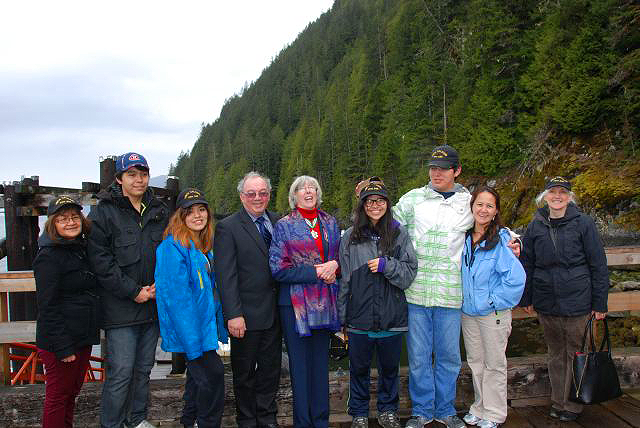
The library opening in Oweekeno was both formal and festive. A Wuikinuxv Elder blessed the building, and Chief Rose Hackett cut the ribbon alongside Judith Guichon, lieutenant-governor of BC and Peter Hansen of Rotary Club Lionsgate.
Volunteers in Oweekeno celebrate the Wuikinuxv community’s new library.
The Chief also presented a ceremonial paddle to the lieutenant-commander of the navy ship HMCS Calgary, at a community dinner with navy crew members, in the Big House.
Local youth then sailed the Rivers Inlet area aboard HMCS Calgary for four hours, as guests.
Also in attendance were members of the RCMP on their regular visit to Oweekeno.
This library was sponsored by the members of the Rotary Club Lionsgate of North Vancouver, who raised the necessary project funds. The modular building was donated by Britco Structures.
The Oweekeno community will employ a librarian to supervise the building. Write to Read BC’s library response team collaborated with local volunteers on the selection and cataloguing of books.
Oweekeno is on the BC coast, south of Bella Bella, accessible only by boat or plane.
The cost of the project was $60,000. Moving the modular building by sea from Vancouver to Rivers Inlet cost $20,000, which the Jack Gin Foundation paid.
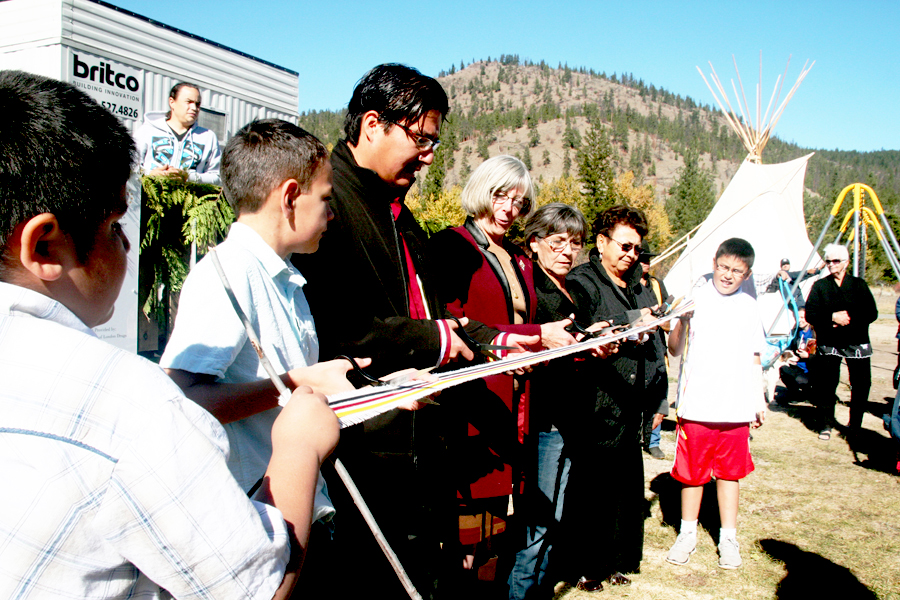
This summer’s grand opening of the Write to Read BC library in Nooaitch was attended by Elders, band members, Judith Guichon, lieutenant-governor of BC, Rotary Club members, Britco Structures, TELUS, and a reporter from Shaw TV.
Children hold the ribbon tight for the ribbon-cutting at the opening of Nooaitch library.
Britco donated the modular building that houses the library. Rotary Club raised funds and its members volunteered on the project. TELUS provided the high-speed connection so people can attend courses and conferences online in the library’s learning centre.
Write to Read BC volunteers joined the village of Quatsino to officially open its new library on February 7, 2017. Quatsino community leaders and lieutenant-governor of BC Judith Guichon also joined the ceremony.
The village is on Vancouver Island, 15km south of Port Hardy. Most of its residents of Quatsino work in forestry, fishing, and eco-tourism.
The beautiful Quatsino library in ludes a day care centre.